The Key of Solomon
(Clavicula Salomonis)
Edited by S. Liddell MacGregor Mathers
Revised by Joseph H. Peterson,
Copyright © 1999, 2004, 2005. All rights reserved. Last updated Sep 30, 2025.
Edited by S. Liddell MacGregor Mathers
Revised by Joseph H. Peterson,
Copyright © 1999, 2004, 2005. All rights reserved. Last updated Sep 30, 2025.
NOTE: A new, reformatted edition of Mathers' edition, with new artwork is now available.
The Key of Solomon is the most famous and important of all Grimoires, or handbooks of Magic. As A.E. Waite has stated (BCM, pg. 58) "At the head of all, and, within certain limits, the inspiration and the source of all, stands the Key of Solomon. ... Mr. Mathers' presentation of the Key of Solomon, which is still in print, though the work of an uncritical hand, must be held to remove the necessity for entering into a detailed account of the contents of that curious work. ... The Key of Solomon can scarcely be judged accurately in the light of its English version, for the translator, preternaturally regarding it as a highly honourable memorial of lawful magic, has excised as much as possible the Goëtic portions, on the ground that they are interpolations, which is of course arbitrary."
Mr. Waite's harsh criticism is hardly justified. In fact, Mathers excised very little. Actually, three of the four significant excisions are operations dealing with love magic (Colorno, chapters 11-13: The experiment of Love, and how it should be performed; The experiment or operation of the fruit; Of the operation of love by her dreams, and how one must practice it. The fourth excision is chapter 14: Operations and experiments regarding hate and destruction of enemies.)
It is true that the Mathers edition would not be considered critical by modern standards of scholarship (but Waite's editions of various esoteric texts leave far more to be desired than Mathers'). Especially wanting are a proper critical apparatus, an analysis of the relation between manuscripts, and better utilization of the Latin and Italian manuscripts. Nevertheless, this edition has stood the test of time.
Of course, none of the manuscripts used by Mathers qualify as "ancient";. The earliest reference is 1303-10 in Peter of Abano's Lucidator dubitabilium astronomiae. The oldest ms. known at this point is a partial manuscript (2 leaves, manuscrit 86½ de la Bibliothèque capitulaire de Trente) that dates to 1380-1410, recently discovered by Matteo Cova. (Cova, Matteo. «Un manuale di negromanzia a Trento: rinvenimento e studio dei più antichi frammenti della Clavicula Salomonis». Studi Trentini - Storia 100, fasc. 1, (2021): 149–76. cited in Gal Sofer's PhD thesis, Solomonic Magic: Texts, History, and Reception, 2022, p. 77 n 93.) There is also a manuscript in Italian, BNF Ital. 1524, dated 1446. It was probably translated from a "copy of the Latin text that was in the library of the Duke Filippo Maria in Pavia in 1426." (Jean-Patrice Boudet, "Magic at Court" in Sophie Page, Catherine Rider, et al., The Routledge History of Medieval Magic, London: Routledge, Taylor & Francis Group, p. 339.) The oldest Latin manuscript (Coxe 25) dates to late 15th century. There is an earlier table of contents though (1260? See J.P. Boudet, Entre Science, appendix). There are however precedents going back further, on which see Richard Greenfield's Traditions of Belief in Late Byzantine Demonology.
Mathers' translation is almost entirely based on French Colorno manuscript exemplars dating 18th century. These are represented by the Kings 288, Harley 3981, and Sloane 3091 manuscripts. Kings 288 and Harl. 3981 indicate they were translated by Abraham Colorno, which phrase is missing from Sl. 3091. Of these Sl. 3091 and Kings 288 are easier to read. Abraham Colorno, a Jewish engineer of Mantua (fl. 1578-1598), translated it into Italian. Kings 288 includes some phrases which are missing from Harley 3981, so the former is probably not a direct ancestor of the latter. Sl. 3091 likewise has some phrases missing from the others, and regularly replaces "Amen" with "Ainsi soit-il" (so be it). Although Mathers felt Sl3091 "has many errors of transcription," I have generally found it to be the most correct of the Colorno group (i.e. between Sl3091, H3981, K288, and L1202.)
In addition, Mathers made significant use of Lansdowne 1202, even though he pronounces it "more concise in style." Its title page reads: "LES VRAIS CLAVICULES DU ROI SALOMON PAR ARMADEL." The wording in L1202 often coincides exactly with the Colorno manuscripts, which convinces me that it was based mainly on a Colorno ancestor. However the frequent deviations and elisions suggest to me that the editor was trying to make a more concise and readable edition, which of course makes its authority less reliable. L1202 displays simple mistakes in some of the Latin passages. It also regularly replaces "Amen" with "Ainsi soit-il". Where K288 differs from H3981, L1202 generally seems to follow the latter. Where Sl3091 differs from the others, L1202 generally follows it. However, L1202 can't be a direct ancestor of Sl3091 since it contains elements missing from the latter, such as the missing Psalm and "Anefeneton" from book 2 chapter 17. Nonetheless, it is safe to say that L1202 is derived from a closely related manuscript.
Also heavily used by Mathers was LES VÉRITABLES CLAVICULES DE SALOMON, Traduites de l'Hebreux en langue Latine Par le Rabin ABOGNAZAR (Lansdowne MSS 1203.) Its inclusion by Mathers is puzzling because it is utterly different in content from the other manuscripts (aside from a few of the pentacles at the end of the manuscript) and really should stand alone as a separate text. Another copy can be found in ms. franç. 25314 de la Bibliothèque nationale.
Additional 10862 is primarily written in Latin, although the descriptions of the pentacles are in Italian. It was written ca. 17th century. Mathers considered it his oldest and sole Latin source, but makes only limited use of it. Contrary to what Mathers wrote, I did not find it particularly difficult to read once I got use to the orthography; likewise it has very few abbreviations: Besides using "&" for "per" (particle and prefix) it frequently uses abbreviations for "-tur" and "-bus" which are sometimes indistinguishable. It doesn't distinguish between u and v, and uniformly uses an archaic form of the ae-ligature (e-caudata). It is somewhat more succinct than the Colorno manuscripts, so may preserve some earlier stage in the evolution of the text. There are also frequent variations from the other manuscripts, many of which are clearly errors. The nature of the mistakes leads me to believe that its archetype was difficult to read. The pentacles are labelled with the appropriate colors. The Latin sometimes corresponds closely with that in Aub. 24, however some of the text differs considerably.
Article 2 of Ad. 10862 is an Italian manuscript titled Zecorbenei, overo Clavicola dal re Salomone. This is no doubt a version of the Zekerboni (or Secorbeni; also compare "Zecorbeni" in Aub. 24) and ascribed to Peter Mora (aka Pietro Mora or Pierre Mora). In Ritual Magic (1949, pp. 135 f., p. 310) E. M. Butler describes Mora as an "alchemist, black magician, said to be a Satanist and poisoner who lived in Milan early in the seventeenth century, and burnt there after having confessed (under torture) to those crimes..." Casanova seems to have possessed a version of the same work under the name Zecor-ben or Zecorben. (Butler, loc. cit., Casanova, History of My Life, translated by Willard Trask, Volumes III & IV, 1967, p. 200).
Sloane 1307 is in Italian, and is also ca. 17th century. Prayers and conjurations are in Latin. It has much material not found in other manuscripts. Some of the material however can be found in Ad. 10862 art. 2 ("Zecorbeni") mentioned above. It is hard to read, except for the mystical names which are carefully done. It shares a lot of readings with Sl. 2383 (see below). Sl. 1307 only has thirteen pentacles, and much of the lettering in them is in Roman letters instead of the Hebrew found in most other manuscripts.
For more details on the individual manuscripts, see the British Library Manuscript catalogue. Also, see MAGIC AND EXPERIMENTAL SCIENCE by Lynn Thorndike, Chapter XLIX: Solomon and the Ars Notoria.
Since Mathers' edition was published, many more manuscripts have been uncovered, including the following:
| Harl. 5596. | British Library, Harleian MS. 5596. Fifteenth century.
One of a number of Greek manuscripts of a text referred to as The Magical Treatise of Solomon.
The complete text has been published by Armand Delatte in
Anecdota Atheniensia (Liége, 1927, pp. 397-445.)
Its contents are very similar to the Clavicula.
It has been described in Richard Greenfield's
Traditions of Belief in Late Byzantine Demonology (Amsterdam: Hakkert, 1988).
This manuscript is also described in some detail by Dennis Duling in the introduction to
his translation of the Testament of Solomon, as it
also contains an incomplete version of the Testament. (in Charlesworth,
The Old Testament Pseudepigrapha, Vol. 1, New York, Doubleday, 1983, pp. 935-987.) |
|---|---|
| C0879 | Princeton University Library, C0879 (Princeton Greek MS. 131) ff. 171-201 "Vasileia Solomomtos," a Greek version of the Clavicula Salomonis. Includes kabbalistic symbols, zodiacal signs, pseudo-Solomonic pentacles, invocations of angels and demons (between 1501-1800). |
| Trente 86½ | Bibliothèque capitulaire de Trente. 2 leaves containing excerpts from Book 2,
dated between 1380-1410.
Recently discovered by Matteo Cova.
(Cova, Matteo. «Un manuale di negromanzia a Trento:
rinvenimento e studio dei più antichi frammenti della Clavicula Salomonis».
Studi Trentini - Storia 100, fasc. 1, (2021): 149–76.
Cited in Gal Sofer's PhD thesis, Solomonic Magic: Texts, History, and Reception,
2022, p. 77 n 93. Also described in Véronèse, "La magie rituelle" in
In Le Moyen Âge et les sciences, édité par Danielle Jacquart et Agostino Paravicini
Bagliani, 617-37. Firenze: SISMEL - Edizioni del Galluzzo, 2021, p. 624.) |
|---|---|
| Coxe 25 | France, now in private collection; formerly Amsterdam, Bibliotheca Philosophica Hermetica BPH 114. Pages 74-138.
Incipit: "Recordare, filii carissime, quoniam ego Salomon quidem quoniam sapientiam habui".
Partly incomplete version with some abbreviated chapters. This is possibly the oldest known complete Latin manuscript.
It is not clear whether or not the BPH will digitize their photocopy. (late 15th ce)
|
| FBH 80 |
London, Warburg Innes Col. ms FBH 80, titled Zecorbeni seu Clavicula Salomonis Regis ex hebraica latinitati donnata sacris pentaculis insignita suoque candori restituta opera Abrahami Colorni.
"Abraham Colorno". 301 pages. (18th ce)
|
VSG 334
 |
The Vadian Collection (Vadianische Sammlung) in St. Gallen Switzerland has an important manuscript which
Scherer (in 1864)
catalogued as 15th century, but is now thought to be dated 1533-1566.
It must be later than 1533, since it quotes verbatim from that edition of Agrippa's De occulta philosophia OP1.43 (on ms. p. 117).
It also includes a quotation from Reuchlin's De arte cabalistica (1517).
The wording of the Clavicula section often agrees with Ghent 1021B. Some of the words in the text are in cipher.
145 pages, parchment, in octavo. Copied by a single hand in loopless bastarda script of highest level of execution ("Gothic hybrida formata"). Written with red, black, purple, and blue inks with decorated Lombardic initials. After p. 16 are pages numbered 16.2, 16.3, 16.4, and 16.5. Pp. 83-84 are missing. Begins: Elenchus, eorum quae continentur in sequenti Lucidario Dñi et preclarissimi Magistri Petri de Abbano. P. 3: In nomine Dei omnipotentis. Incipit Lucidarium Magistri Petri de Abbano in arte Magica. Prologus in eodem Libello. Multi experimentatores diuersimode operantur in hac scientia Diuina, etc. p. 19: Semiphoras Moysi. Incipit: Hic habes Semiphoras Moysi, que dici debent post inuocationem angelorum versus quatuor partes mundi. P. 25: Incipit Liber Clauicule Salomonis, filii Dauid Regis Israel etc. The Hebrew lettering is exceptionally well executed. (2 books to p. 125). The scribe clearly had access to at least two Clavicula manuscripts since he incorporates material from a second. See for example, p. 76, "in alia clavicula inveni circulos huiusmodi...." ("I have discovered in another Clavicula the circle this way...") Pp. 127-144: Ad inveniendum Ugxeazcu [=thesaurum] vel maao [=bona] abscondita.
On last page: Sequuntur varia experimenta Regis Alphonsi. (Last word: festina.) |
| Ghent |
Ghent University, BHSL.HS.1021/B. Titled:
CLAVICULA Salomonis. Secretum secretorum omnium artium magicarum Libri duo Versi ex Lingua greca per sapientissimum virum Thoz Natione grecum
Libri Du{o}.
Has many Christian elements, akin to VSG, Sl. 2383, P1825, and Sl. 3847.
The wording corresponds with VSG.
(16th ce.)
|
| BUD 256 |
Clavicula Salomonis.
Library of the Hungarian Academy of Sciences, Budapest, Hungary Ms. Kaufmann A 256.
Carefully written with carefully executed Hebrew lettering in pentacles.
Like Aub 24, chapters are rearranged more logically.
(18th ce.) |
| D388 | Clavicula Salomonis filii David. Printed book, 48 pages. Title page is vellum.
Most of text is in Latin, with portions also in Dutch and German (Last page, after concluding
Clavicula Salomonis contains a list of the names of God, in German.)
Woodcut B on page 3 has "VX/XXX" in center, and the B has priapus on left and right.
Text commences with "Benedictio Libri. †
Benedicat te Liber Pater + Benedicat te liber Filius..."
Text (p 29) cites Agrippa.
Part of the
Duveen Collection.
University of Wisconsin-Madison, Memorial Library, Special Collections. (n.p., ca 1650)
A manuscript of this ca. 1750 is in the Uni-Leipzig,
Cod. Mag. 85.
|
| Sl. 2383. | British Library Sloane MS. 2383. Titled Clavis libri secretorum.
Not used by Mathers. 63 folios. This manuscript has no pentacles.
It is a small volume (about 5 in wide) with large lettering and a lot of "white space".
Writing varies from very neat and legible to scrawling. Only part of the second book of
Clavicula Salomonis is represented.
It shares many elements with Sl. 3847 (see below), including some Christian elements not
found in the other manuscripts (such as the Te Deum). It also
lacks some of the Christian elements found in Sl. 3847, so
is important in understanding the de-Christianization (or Christianization) of the text.
The Latin of Sl. 2383 does not agree with that of Sl. 3847. It is not clear to me at
this time why. Perhaps it is also an independent translation.
Sl. 2383 also shares many elements with Sl. 1307. (17th ce)
|
| Aub. 24. | Oxford, Bodleian Libraries MS. Aubrey 24.
Titled Zecorbeni sive Claviculae Salomonis libri IV in quibus
I De Praeparementis, II De Experimentis, III De Pentaculis, IV De Artibus.
Written by John Aubrey who noted: "A MSS never yet printed, that I could heare of. Sum Aubrey 1674, May 9.
The book from whence I transcribed this was writt by an Italian, and in a very good hand."
103 folios. In Latin and English.
The wording of this is often identical with Ad. 10862, but lacking many of the mistakes
found in the latter. The text is also fuller than in Ad. 10862, and
is somewhat closer to the Colorno manuscripts.
The text is rearranged in a more logical
order. It is evident that the manuscript he was copying from preserved an earlier
orthography, since he frequently preserves and is occasionally even seen to
correct the older forms: For example, fol 81v he wrote "adiuro", then corrected it
to "adjuro." He also frequently preserves the old e-ogonek form of the ae ligature,
and other archaisms. (1674) |
| BNE 12707 | BIBLIOTECA NACIONAL DE ESPAÑA, Abraham Colorno,
Clavicula Salomonis hebraeorum regis: traducta ex hebraeo in latinum idioma.
Ex mandato suae celsitudinis Mantuae Ducis.
(17th ce) |
| BNF Lat. 14075 |
Paris, BnF.
Toz Graecus. Clavicula Salomonis
Has strong Christian elements.
(17th ce)
|
| BNF Lat. 15127 |
Paris, BnF.
Toz Graecus. Toz graeci philosophi nominatissimi expositio super libros Salomonis de secretis secretorum ad Roboam.
Appends pentacles with no descriptions, but few resemble the pentacles in Colorno/Mathers. Has strong Christian elements.
(17th ce)
|
| BNF Lat. 18510 |
Paris, BnF.
Testamenti sive claviculae Salomonis scientia enucleata ad Roboam.
(18th ce)
|
| GG B134 |
Toronto. Private collection (James, Catalog number B134), once part of
Gerald Gardner’s library
(under ROBOAM).
Gardner seems to have gotten it from Gerald Yorke.
This is a very interesting manuscript, and preserves a number of old readings and material.
The title page reads: Clavicula Regis Salomonis de Secretis Secretorum
317 non-blank pages, includes Clavicula de Secretis (Ars Rabidmadar),
Clavicula Salomonis (separately paginated), and other magic texts.
The spine simply reads "Clavicula".
See CONTENTS for more details. (ca 1720?)
|
| UPenn 1673 |
University of Penn, MS. 1673. Formerly ms. 584, Alnwick Castle.
Clavicula Salomonis Regis. "Abrahamum Coturnium" [i.e. Abraham Colorno.]
121 folios. (18th ce)
|
| BnF Ital. 1524 |
Paris: Bibliothèque nationale de France.
Edition in Gal, Florence, Jean-Patrice Boudet, and Laurence Moulinier-Brogi. "Vedrai mirabilia": un libro di magia del Quattrocento. Roma: Viella, 2017, pp. 362-419..
This is apparently the oldest manuscript known (dated 1446).
|
|---|---|
| Israel Ms. Var. 223 | The Jewish National Library.
Israel Ms. Var. 223:Clavicula Salomonis. 201 pages, 44 pentacles. Italian and Latin. Integrates material from Heptameron,
including portraits of the seven aerial kings (Arcan etc.). (18th-19th ce?)
|
| Cod. Mag. 51. | Segreti varii mirabili et provati per me Gioann Mateo Peccatrice Spagniolo nel Anno 1538. 10 folios, incomplete, no pentacles.
(Ca. 1750)
|
| Plut. 89 sup. 38 | FIRENZE, Biblioteca Medicea Laurenziana, Plut. 89 sup. 38.
Fol. 52r-76r: Clavicula Salomonis. Incomplete and reworked text. Inc.:
"Vos denique exorcizamus atque viriliter imperamus per eum qui dixit: 'et factum est' [...]";
Experimenta circuli (with, in particular, in Fol 67r an
experimentum ad inveniendum tesaurum, in fol 73r a
Circulum ad adloquendum spiritum quod debes operari infra 9 diebus, and in fol 74v an
experimentum ad habenum colloquium cum uno spiritu).
(Dated 1494)
|
| Mich. 276. | Bodleian Library Michael MS. 276. 62 folios.
The title reads Clavicolo di Salomone Re d'Israel figlio de David.
Bound with Hebrew MS. Prayers and conjurations are in Latin, but frequently
exhibit simple mistakes (e.g. "sine mona" for "sine mora").
There are other places where it seems to represent the original text more accurately than Aub. 24 or Ad. 10862,
for example the list of Sephiroth in chapter 5.
The text is much abbreviated compared with the other manuscripts. (17th ce)
|
| UPenn 515. | University of Pennsylvania Ms. Codex 515 - Clavicola magica, e cabalistica. 43 leaves. (18th ce)
|
| Sl. 1309. | 69 folios. Similar content to Sl. 1307. (17th ce)
|
| W | London, Wellcome Institute MS. 4668. Clavicula in Italian and Latin: preceded by 'Tre tavole di Livio Agrippa' 96 pages + 57 folios. Folio. Very carefully written and legible. (ca 1775) |
| Ad. 36674. | British Library, Additional MS. 36674. Titled
The Key of Knowledge. (Mid- to late-16th century.) |
|---|---|
| Sl. 3645. | British Library, Sloane MS. 3675. Seems to be based solely on Ad. 36674. (17th ce) |
| Sl. 3847. | Titled The Clavicle of Solomon, revealed by Ptolomy the Grecian.
Dated 1572, making it one of the earliest manuscripts of the Key of Solomon.
It contains a prologue which corresponds with Mathers' Introduction
(of Iohe Grevis) from Ad. 10862.
This manuscript also has strong Christian elements. Prayers and conjurations are in Latin. (1572)
|
| A1655 | Printed edition titled Clavicule of Solomon, quarto, 125 pages. Mentioned in Nouveaux Mémoires d'Histoire, do Critique, et de Littérature, par M. l'Abbé d'Artigny, Vol. 1, Paris, 1749. p. 36-37. (1655) Cited by Waite, BCM, p. 60, n. 1. |
| Graham | Cleveland Public Library. BF 1601.C5313/1834. 1834 translation (from French) associated with George Graham, a noted balloonist and associate of Frederick Hockley. |
| Gollancz, 1914. | Facsimile published by Gollancz as
Sepher Maphteah Shelomoh (Book of the Key of Solomon)
(Oxford, 1914). The manuscript dates to around 1700.
G. Scholem edited the text in 'Some Sources of Jewish-Arabic Demonology',
in Journal of Jewish Studies, xvi (1965).
It contains a large number of
Greek (such as Sabaoth), Latin, and Italian elements. Also has Christian elements,
such as the use of a cross put in holy water (fol. 37a, cited by Rohrbacher-Sticker
in 'A Hebrew Manuscript of Clavicula Salomonis, Part II.
in the British Library Journal, Vol. 21, 1995, pp. 132.)
It is probably
(as Scholem puts it) a late adaptation of a 'Latin (or rather Italian) Clavicula
text of the renaissance period' (ibid p. 6.).
|
|---|---|
| Or. 6360. | 17th century.
Described by Claudia Rohrbacher-Sticker in 'Maphteah Shelomoh: A New Acquisition of
the British Library' in Jewish Studies Quarterly, vol. 1 (1993/94, p. 263-270.)
|
| Or. 14759. | British Library Oriental MS. 14759. 53 folios. Proved to be a continuation of Or. 6360. Described by Claudia Rohrbacher-Sticker in 'A Hebrew Manuscript of Clavicula Salomonis, Part II.' in the British Library Journal, Vol. 21, 1995, pp. 128-136. |
| AMST Ros 1808 A 9 (aka Ros. 12). |
Bibliotheca Rosenthaliana in Amsterdam.
18th century transcript from a copy by
Judah Perez (London, 1729).
|
| BL Add. 39666. | LA CLAUCULE Magique et Cabalistique du Sage Roy Salomon.
"The text does not, however, correspond with that of other French versions of the
Clavicula in the Museum (e.g. Lansdowne MSS. 1202, 1203, Harley MS. 3981, Sloane MS. 3091, King's MS. 288),
or with the Latin version in Add. MS. 10862. Paper; ff. 132. Quarto."
(Dated 1732)
|
|---|---|
| BN 2346. | Bibliothèque de l'Arsenal, now incorporated into
Bibliothèque de Nationale. 18th century. Title reads
Les Clavicules de Rabbi Salomon.
Mentioned by Grillot de Givry in Witchcraft, Magic & Alchemy,
(New York: Dover, 1931, esp. pp. 342 and figure 315.)
Also mentioned by Waite, BCM p. 59 n 2. |
| BN 2347. | Paris: Bibliothèque nationale de France. Title reads
ZEKERBONI, par Pierre Mora..
The "Premiere pentacule" resembles the lamin from the
Grimoire of Pope Honorious.
Other pentacles are adapted from the magic circles from Heptameron,
as is other material. It also incorporates material from Arbatel,
Agrippa, and Abognazar. (18th ce)
|
| BN 2348. | Bibliothèque de l'Arsenal, now incorporated into
Bibliothèque de Nationale. 18th century. Title reads
Livre de la Clavicule de Salomon, roy des Hébreux.
This is another example of the Colorno class of manuscripts.
Mentioned by Grillot de Givry in Witchcraft, Magic & Alchemy,
(New York: Dover, 1931, esp. pp. 103-106 and figures 75, 162, 311, and 314.) |
| BN 2349. | Bibliothèque de l'Arsenal, now incorporated into
Bibliothèque de Nationale. 18th century. Title reads
Les vrais Clavicules du roy Salomon, traduitte de l'hébreu par Armadel.
This seems to be related to L1202.
Mentioned by Grillot de Givry in Witchcraft, Magic & Alchemy,
(New York: Dover, 1931, esp. pp. 103-106 and figures 76, 81, and plate facing pg. 108.) |
| BN 2350. | Bibliothèque de l'Arsenal, now incorporated into
Bibliothèque de Nationale.
It too contains a prologue corresponding with Mathers' Introduction
(of Iohe Grevis) from Ad. 10862. This time the variation of the name is Tozgrec.
It also calls the craft (or quill) knife "Arthame" and conflates it with the ritual knife.
Mentioned by Grillot de Givry in Witchcraft, Magic & Alchemy,
(New York: Dover, 1931, esp. pp. 103-106 and figure 74.)
Closely related to P1825 and BN2493.
(18th ce)
|
| BN 2493. | Paris, Bibliothèque de l'Arsenal, now incorporated into
Bibliothèque de Nationale. 18th century. Titled
Le secret des secrets, ou le véritable grimoire, par Tosgraec.
French with conjurations in Latin.
198 pages (18th Ce)
|
| BN 2497. | Bibliothèque de l'Arsenal, now incorporated into
Bibliothèque de Nationale. 18th century. Titled
Les vrais Talismans, pentacles, et cercles.
Mentioned by Grillot de Givry in Witchcraft, Magic & Alchemy,
(New York: Dover, 1931, p. 341 and figure 313.) |
| BN 2790. | Bibliothèque de l'Arsenal, now incorporated into
Bibliothèque de Nationale. 18th century. Titled Zekerboni
(compare "Zecorbenei" in Ad. 10862 art. 2 and "Zecorbeni" in Aub. 24)
and ascribed to Peter Mora (aka Pietro Mora or Pierre Mora). Also gives a version of the Seal of Solomon.
Mentioned by Grillot de Givry in Witchcraft, Magic & Alchemy,
(New York: Dover, 1931, pp. 110, 187, 325, and figure 82.)
|
| BN 2791. | Bibliothèque de l'Arsenal, now incorporated into
Bibliothèque de Nationale. 18th century. Titled Livre Second de la
Clavicule de Salomon, ou le véritable Grimoire.
Mentioned by Waite in BCM, p. 59, n. 2.
|
| BN 14783 |
Clavicule de Salamon (sic), mise de latin en françois et rangée selon l'ordre des matières...
Cataloged as 1401-1500, but seems much more recent to me.
|
| BnF Franc. 14787 |
Mélanges astrologiques. III "Roue de Pitagoras" et "Clavicule céleste
Cataloged as "1601-1800".
|
| Wellcome 4655 | Clavicule de Salomon, ou la Clef mistérieuse de la Science cabalistique, pour faciliter l'intelligence de ce que Cornelius Agrippa ... a escrit de plus curieux sur les mistères de la grande Cabale. Copié exactement sur le véritable original de la Bibliotèque du Duc de Mantoüe, traduit de l'hébreu. 1639.
c. 1725.
|
| Wellcome 4659 | La Clavicule ou la Clef de Salomon Roy des Hébreux et fils de David, traduitte de l'hébreux.
(Quarto, 276 images) Mid-18th ce.
|
| Wellcome 4662 |
Livre du Secret des Secrets ou la Clavicule de Salomon qui est le véritable Grimoire contenu en deux livres.
(Quarto, 159 ff.) Late 18th ce.
|
| Wellcome 4664 |
La Clavicule de Salomon des secrets au nom d'Adonay Tetragrammaton.
(74 pp. + 4 bl. leaves 4to. 271/2 × 21 cm.)
(1825?)
|
| Wellcome 4666 |
Les Clavicules de Salomon.
(204 pp.)
(mid-18th ce)
|
| KA 140 | Luzern, Staatsarchiv, Claviculus Salomonis sive obedientia angelorum, 129+21 pages. Includes pentacles. Confiscated by Lucerne authorities in 1718 as part of a lawsuit against necromancers. |
|---|---|
| Belfast MS 27/10/20 | Queen's Unniversity Belfast, Clavicula Salomonis Expugnata, 59 pages. Includes pentacles. |
| Weimar F 5214 (k) | Weimar, Der Herzogin Anna Amalia Bibliothek: 17th ce; Claviculæ-Salomonis oder Die Schlüßel-Salomons des Sohnes Davids. Des größten Philosophen. |
| Al-Miftah al-Azam li-Sulayman al-Hakim | Robert Mathiesen mentioned this in his "The Key of Solomon: Toward a Typology of the Manuscripts." (Societas Magica Newsletter issue 17, Spring 2007). L.W. de Laurence publicised an Arabic version titled Al-Miftah al-Azam li-Sulayman al-Hakim (1916). As far as I can tell it is a simple translation of the Mathers edition into Arabic, using all of Mathers' artwork. |
|---|
| VMN1750 | Titled La véritable magie noire, "1750" (=ca 1790?). As a colportage, this compact printed edition and its reprint by Blocquel ca. 1830 had a considerable influence. A.E. Waite relied on it primarily in his Book of Ceremonial Magic, and translated some passages there. (My new critical edition and translation is now available.) |
|---|---|
| P1641 | Another French version was recently published in Paris, titled Clavicules de Salomon (Paris: Gutenberg, 1980). ISBN 2714413072. 171 p. : ill. en noir et en coul., couv. ill. ; 23 cm + introduction par François Ribadeau Dumas : 16 p. Reprod. en fac-sim. du manuscrit intitulé "La Clavicule de Salomon", 1641, ayant appartenu à la bibliothèque de Stanislas de Guaïta. |
| P1825 | Another French version was recently published in Paris, titled
Clavicules de Salomon, 1825 (Paris: Trajectoire, 1997). ISBN 2841970329.
Unfortunately it has no information whatever regarding the original text. It
is not dependent on Mathers' edition, and seems to be closely related to Sl. 3847.
It contains a prologue which corresponds with Mathers' Introduction
(of Iohe Grevis) from Ad. 10862. This time the variation of the name is Foz Groec
(compare Tozgrec). It has no pentacles. It calls the quill knife "Arthame" (p. 88, 90);
compare this with K288 'artave' corresponding to 'artavus' in the Latin manuscripts.
Also like Sl. 3847, orations are in Latin with similar wording, plus it has strong Christian elements.
|
| Shah |
Idries Shah published a partial edition in his Secret Lore of Magic (New York: Citadel Press, 1958).
|
| De Laurence |
I cannot begin to convey my contempt
for L.W. de Laurence and his bootleg edition of this work, which he retitled The Greater
Key of Solomon (Chicago, 1914). Besides taking credit for Mathers' work, he has made
many alterations to the texts in order to promote his mail-order business. As an example,
he altered the spell in chapter 9 by inserting "after burning one-half teaspoonful
of Temple Incense." He even inserted ordering information directly into the
text. Particularly ironic is his Great Book of Magical Art, Hindoo Magic & Indian Occultism
(1915) which is a rip-off (again without acknowledgement) of Frances Barrett's The Magus,
or Celestial Intelligencer (1801), which in turn is a rip-off of
Agrippa's Occult Philosophy!
|
| Belfond |
   Titre(s) :    Clavicules de Salomon [Texte imprimé] / [La Grande clavicule à travers les âges,
      introduction par François Ribadeau Dumas]
   Publication :  [Paris] : P. Belfond, 1972
   Imprimeur / Fabricant :  61-Alençon : impr. Corbière et Jugain
   Description matérielle :  171 p. : ill. ; 23 cm & fasc. d'introduction (22 p.)
   Collection :  Sciences secrètes
   Note(s) :   Reprod. en fac-sim. du ms. de 1641 intitulé: «La Clavicule de Salomon».
     _ La couv. porte en plus: «ou le Véritable grimoire secretum  secretorum». _ Rel.: 49,50 F
   Autre(s) auteur(s) :   Ribadeau Dumas, François. Préfacier
|
| Perthuis |
   Titre(s) :    Clavicules [Texte imprimé]de Salomon [ @ ], véritable secrets [?sic?] des secrets,
      révélation des opérations magiques
   Publication :  Paris : [Perthuis,], 1966
   Description matérielle :  In-16 (15 cm), 96 p., ill. 18 F. [D. L. 8624-66]
|
This edition is still a work in progress, and feedback is welcome. I am especially interested in hearing of additional Latin and Italian manuscripts.
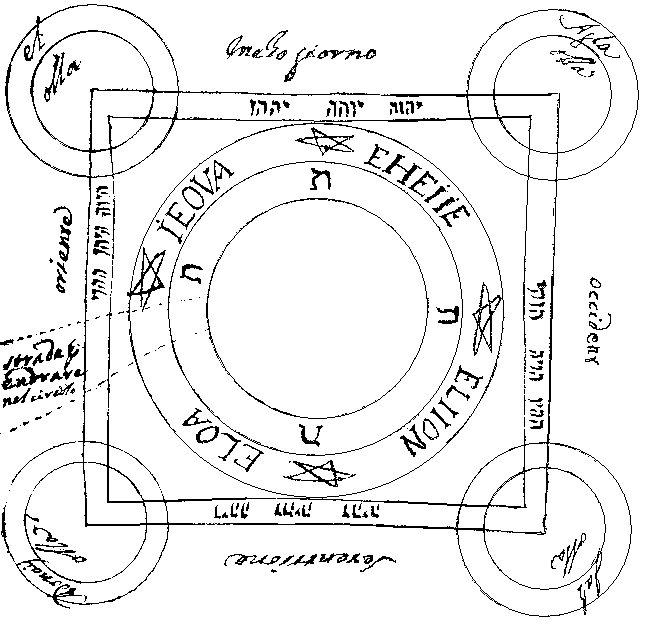
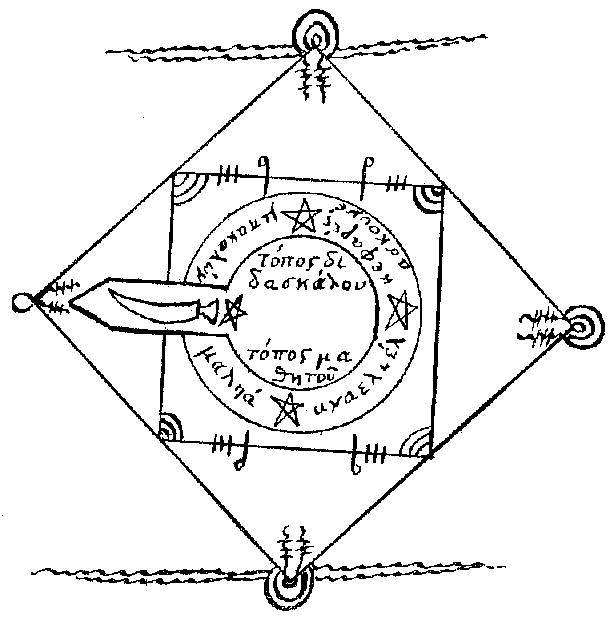
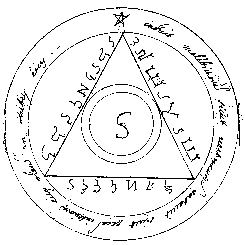
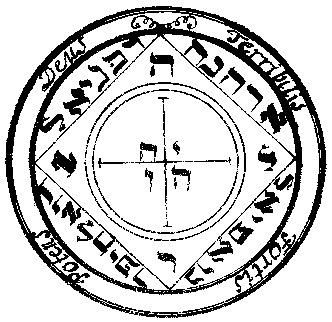
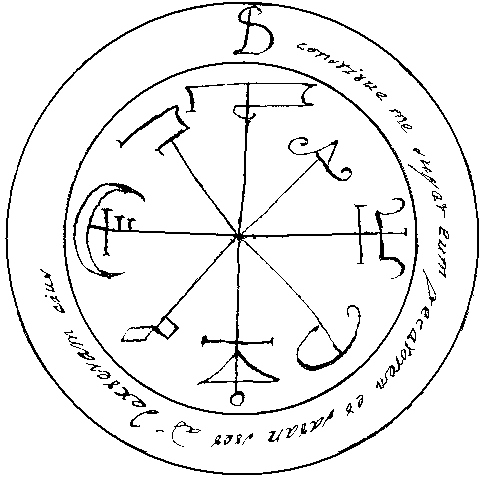
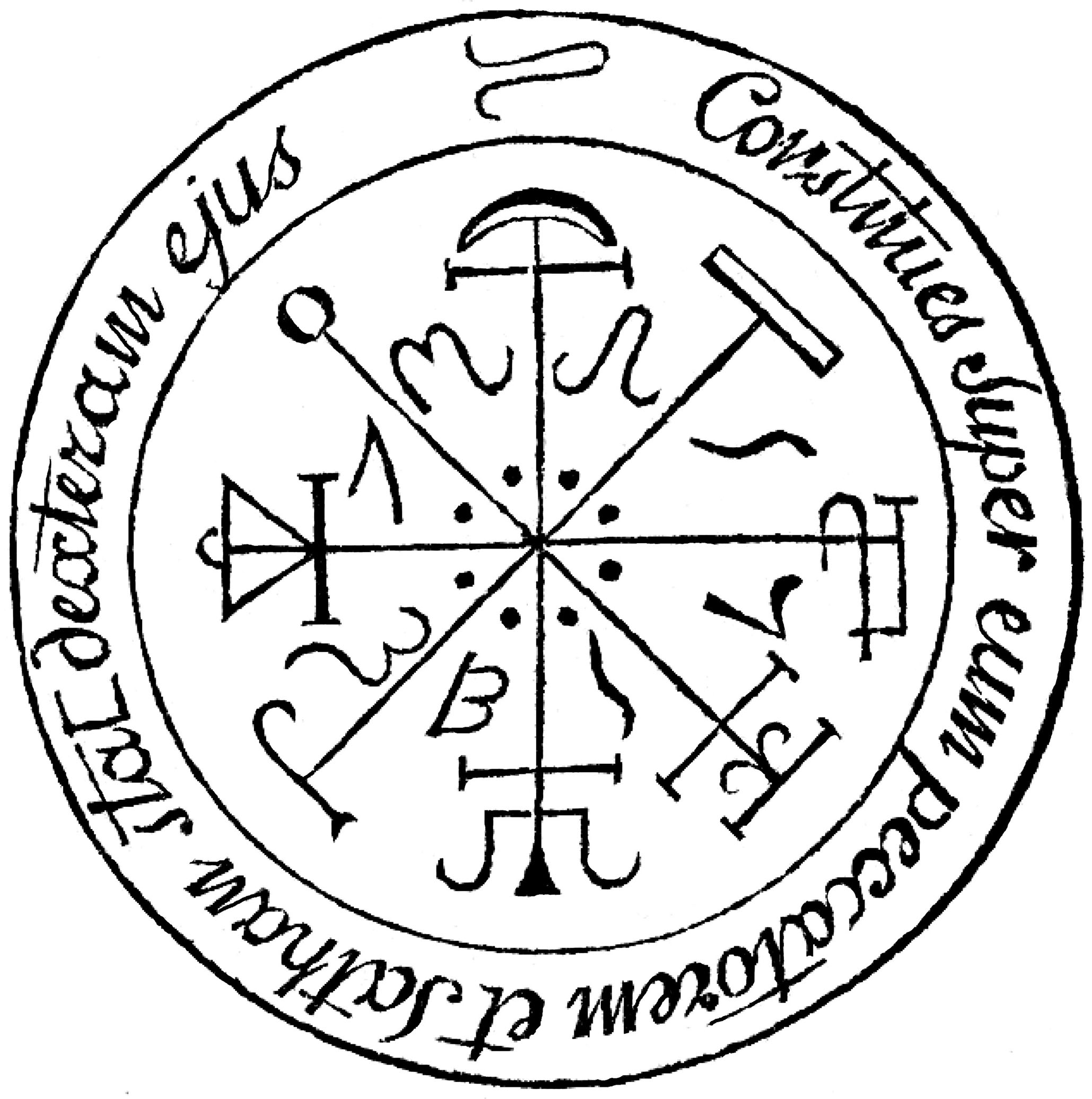
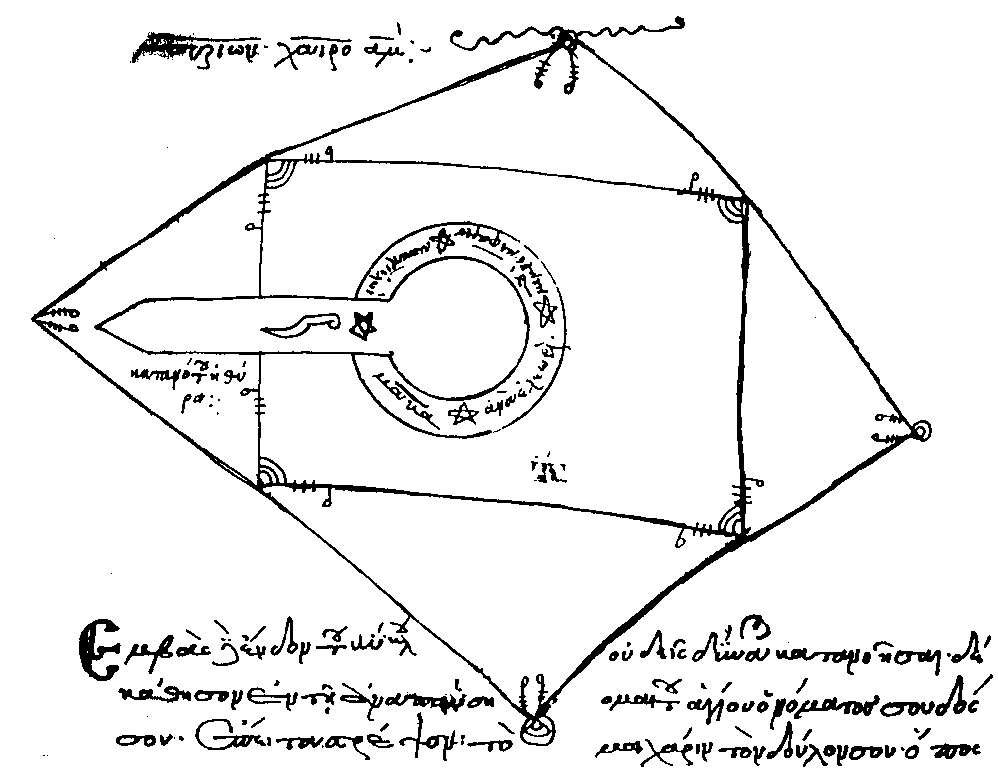
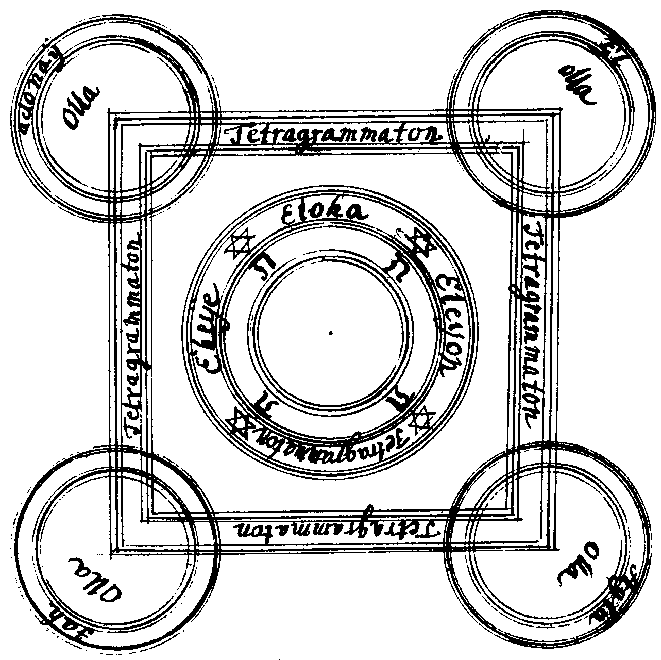
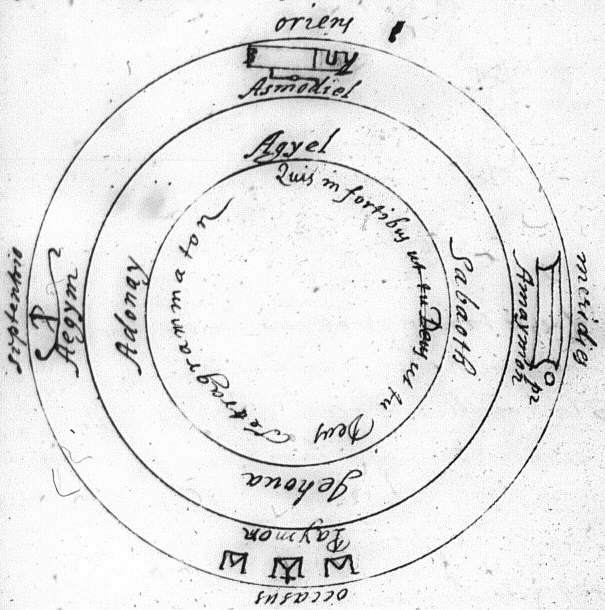
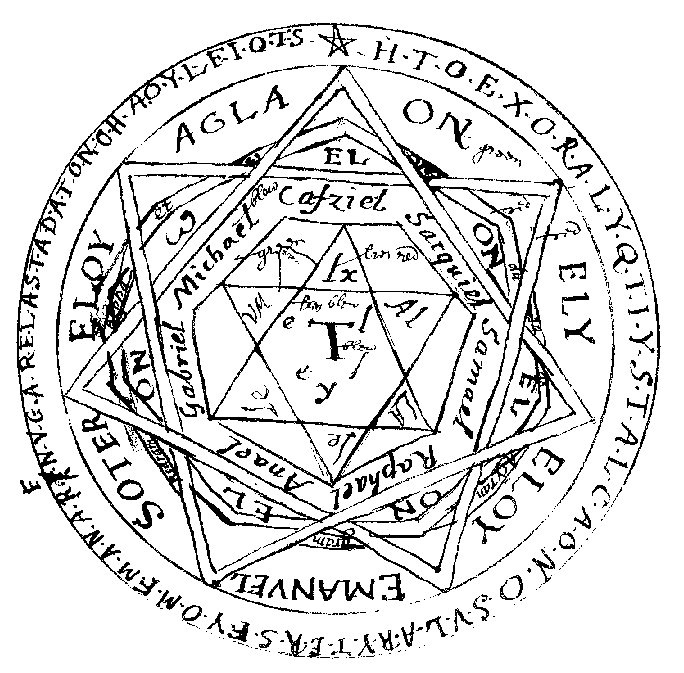
I have omitted Mathers' diagrams from this e-text, since they are available in a low cost edition from Weiser; I have however, supplied examples from various manuscripts for comparison purposes.
The corrections to Mathers' translation are based on my research; these have all been documented in the footnotes. Some of the lists of mystical names are fairly arbitrary, but I have tried to show enough examples from multiple manuscripts in order to demonstrate the wide variability. This variability makes it difficult to construct a more complete stemma with the manuscripts available to me.
In keeping with all of the manuscripts, I have expanded the frequent lists of Psalms to include the opening words. Since different editions of the Psalms have different numbering schemes, this is less subject to misinterpretation.
Finally, I have removed all of the material from L1203, since it does not belong to the
Key of Solomon proper, and is available in its entirety -- and in context --
in a separate edition.
The pentacles are perhaps the biggest puzzle on the textual tradition of Clavicula Salomonis. Unfortunately Mathers does nothing to elucidate or even acknowledge the puzzle. The order of the pentacles varies widely from manuscript to manuscript. The oldest manuscripts only identify some of them with the planets, and it is apparent that attempts have been made in later manuscripts to identify the rest with planets too, and to reorganize them accordingly. Gollancz' Hebrew manuscript shows nine pentacles in a section titled "Concerning the sanctity of the nine Kandariri (talismans), (revealed unto King Solomon)" (48a-49a). Perhaps these are the nine mentioned in the text where the spirits are conjured "by the nine medals or pentacles which we have among our symbols." These nine do not appear in the Oriental manuscript. There is a series of 24 pentacles in the Greek manuscript; they are reminiscent of those in Gollancz, but by no means identical. Some of the pentacles found in the manuscripts used by Mathers are also reminiscent of the Greek and Hebrew ones, but many are clearly late inventions based on Agrippa, Archidoxes, and other sources. Mathers seems to have narrowed those in his edition to exclude most of these clearly later ones. To give some sense of the state of these pentacles I have included many examples in my editions of L1202 and L1203.
Another area of confusion is the proliferation of ritual implements. The Greek manuscripts seem to only have a single knife. Some of the proliferation of weapons is no doubt due to errors in transcription and translation. For example, where the Latin manuscripts mention a quill knife (artavus), the Italian translator glosses this as a small pruning hook (l’artavo o falcetto), which Mathers mistranslates as "scimitar AND sickle." It is clear from the drawings that only one implement is being referred to.
Conspicuously absent is the Ring of Solomon, which figures prominently in folklore, as well as the Testament of Solomon, the Magical Treatise of Solomon, and the Lemegeton or Lesser Key of Solomon. Although it is mentioned in one of the conjurations, its construction and use is not otherwise mentioned.
Another curiosity involves the magical wand.
Although prominent in most Clavicula manuscripts -- not to mention folk literature
and the Greek Magical Papyri --
it is conspicuously absent from the Greek, Hebrew,
and English manuscripts.
-JHP
The Key of
(Clavicula Salomonis) Now first Translated and Edited from Ancient Manuscripts in the British Museum by S. Liddell MacGregor Mathers Author of "The Kabbalah Unveiled," "The Tarot," &c. WITH PLATES LONDON GEORGE REDWAY YORK STREET COVENT GARDEN 1889 Revised edition by Joseph H. Peterson, copyright 2005. |
BOOK 1
BOOK 2
PREFACEIn presenting this celebrated magical work to the student of occult science some few prefatory remarks are necessary. |
NOTES: |
|
The Key of Solomon, save for a curtailed and incomplete copy published in France in the seventeenth century, has never yet been printed, but has for centuries remained in manuscript form inaccessible to all but the few fortunate scholars to whom the inmost recesses of the great libraries were open. I therefore consider that I am highly honored in being the individual to whose lot it has fallen to usher it into the light of day. The fountain-head and storehouse of Qabalistical magic, and the origin of much of the ceremonial magic of mediæval times, the 'Key' has been ever valued by occult writers as a work of the highest authority; and notably in our own day Eliphaz Lévi has taken it for the model on which his celebrated 'Dogme et Rituel de la Haute Magie' was based. It must be evident to the initiated reader of Lévi, that the Key of Solomon was his text book of study, and at the end of this volume I give a fragment of an ancient Hebrew manuscript of the Key of Solomon, translated and published in the Philosophie Occulte, as well as an invocation called the 'Qabalistical Invocation of Solomon,' which bears close analogy to one in the First Book, being constructed in the same manner on the scheme of the Sephiroth. The history of the Hebrew original of the Key of Solomon, is given in the introductions, but there is every reason to suppose that this has been entirely lost, and Christian, the pupil of Lévi, says as much in his Histoire de la Magie. I see no reason to doubt the tradition which assigns the authorship of the 'Key' to King Solomon, for among others Josephus, the Jewish historian, especially mentions the magical works attributed to that monarch; this is confirmed by many Eastern traditions, and his magical skill is frequently mentioned in the Arabian Nights. There are, however, two works on black magic, the Grimorium Verum, and the Clavicola di Salomone ridolta, which have been attributed to Solomon, and which have been in some cases especially mixed up with the present work; but which have nothing really to do therewith; they are full of evil magic, and I cannot caution the practical student too strongly against them. There is also another work called Lemegeton or the Lesser Key of Solomon the King, which is full of seals of various spirits, and is not the same as the present book, though extremely valuable in its own department. In editing this volume I have omitted one or two experiments partaking largely of black magic, and which had evidently been derived from the two goetic works mentioned above; I must further caution the practical worker against the use of blood; the prayer, the pentacle, and the perfumes, rightly used, are sufficient; and the former verges dangerously on the evil path. Let him who, in spite of the warnings of this volume, determines to work evil, be assured that evil will recoil on himself and that he will be struck by the reflex current. This work is edited from several ancient MSS. in the British Museum which all differ from each other in various points, some giving what is omitted by the others, but all unfortunately agreeing in one thing, which is the execrable mangling of the Hebrew words through the ignorance of the transcribers. But it is in the pentacles that the Hebrew is worse, the letters being so vilely scribbled as to he actually undecipherable in some instances, and it has been part of my work for several years to correct and reinstate the proper Hebrew and magical characters in the pentacles. The student may therefore safely rely on their being now as nearly correct in their present reproduction as it is possible for them to be. I have therefore, wherever I could, corrected the Hebrew of the magical names in the conjurations and pentacles; and in the few instances where it was not possible to do so, I have put them in the most usual form; carefully collating throughout one MS. with another. The chapters are a little differently classed in the various MSS., in some instances the matter contained in them being transposed, &c. I have added notes wherever necessary. The MSS. from which this work is edited are: -- Add. MSS., 10,862; Sloane MSS., 1307 and 3091; Harleian MSS., 3981; King's MSS., 288; and Lansdowne MSS., 1202 and 1203; seven codices in all. |
|
|
Of all these 10,862 Add. MSS. is the oldest, its date being about the end of the sixteenth century1; 3981 Harleian is probably about the middle of the seventeenth century2; the others of rather later date. |
1. The British Library catalogue
entry lists this as 17th century. -JHP
|
|
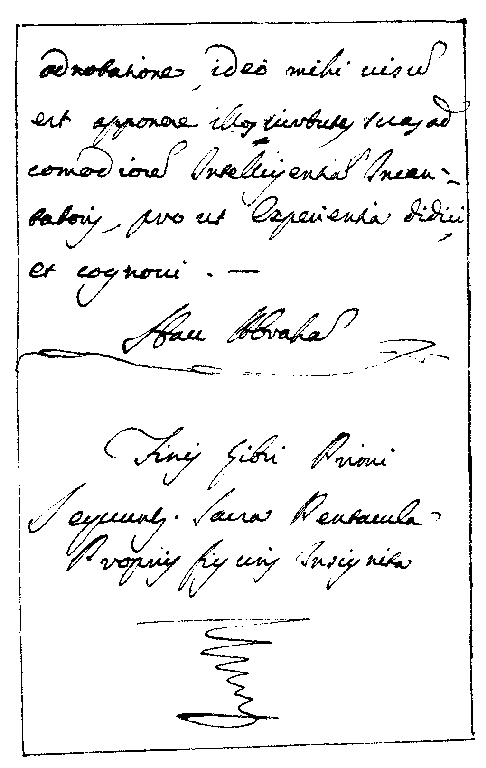
Add. MSS. 10,862 is written in contracted Latin, and is hard to read, but it contains chapters which are omitted in the others and also an important introduction. It is more concise in its wording. Its title is short, being simply 'The Key of Solomon, translated from the Hebrew language into the Latin.' An exact copy of the signature of the writer of this MS. is given in figure 93.3 The pentacles are very badly drawn. |
3. Manuscript title reads "SALOMONIS Clavicula, ex idiomate Hebræo in Latinum traducta". The signature appears to read 'Ibau Abraham.' It was written ca. 17th century. It is bound with an second copy in Italian titled "Zecorbenei, overo Clavicola dal Re Salomone." -JHP. |
| |
|
3981 Harleian MSS.; 288 King's MSS.; and 3091 Sloane MSS., are similar, and contain the same matter and nearly the same wording; but the latter MS. has many errors of transcription. They are all in French. The conjurations and wording of these are much fuller than in 10,862 Add. MSS. and 1202 Lansdowne MSS. The title is "The Key of Solomon King of the Hebrews, translated from the Hebrew Language into Italian by Abraham Colorno, by the order of his most Serene Highness of Mantua; and recently put into French." The pentacles are much better drawn, are in coloured inks, and in the case of 3091 Sloane MSS., gold and silver are employed.
1307 Sloane MSS. is in Italian; its title is 'La Clavicola di
Salomone Redotta et epilogata nella nostra materna lingua del
dottissimo Gio Peccatrix.' It is full of black magic, and is a
jumble of the Key of Solomon proper, and the two black magic books
before mentioned. The pentacles are badly drawn. It, however,
gives part of the introduction to 10,862 Add. MSS., and is the
only other MS. which does, save the beginning of another Italian
version which is bound up with the former MS., and bears the title
'Zecorbenei.'
| |
|
1202 Lansdowne MSS. is 'The True Keys of King Solomon, by Armadel.' It is beautifully written, with painted initial letters, and the pentacles are carefully drawn in coloured inks. It is more concise in style, but omits several chapters. At the end are some short extracts from the Grimorium Verum with the seals of evil spirits, which, as they do not belong to the Key of Solomon proper, I have not given. For the evident classification of the 'Key' is in two books and no more.4 |
4. This additional material is titled Livre Troisieme ("Book 3") and Livre Quatrieme ("Book 4"). -JHP |

| |
|
1203 Lansdowne MSS. is 'The Veritable Keys of Solomon translated from the Hebrew into the Latin language by the Rabbin Abognazar (?Aben Ezra).' It is in French, exquisitely written in printing letters, and the pentacles are carefully drawn in coloured inks. Though containing similar matter to the others, the arrangement is utterly different; being all in one book, and not even divided into chapters. |
Mathers probably had in mind the great Sephardic scholar 'Ibn Ezra (1092-1167) author of the Sefer Hashem. The attribution would of course have to be pseudepigraphic, since Abognazar is heavily dependant on late sources. -JHP |
|
The antiquity of the planetary sigils is shown by the fact that, among the Gnostic talismans in the British Museum, there is a ring of copper with the sigils of Venus, which are exactly the same as those given by the mediæval writers on magic. Where Psalms are referred to I have in all instances given the English and not the Hebrew numbering of them. In some places I have substituted the word AZOTH for 'Alpha and Omega,' e.g., on the blade of the knife with the black hilt, Figure 62. I may remark that the magical sword may, in many cases, be used instead of the Knife. In conclusion I will only mention, for the benefit of non-Hebraists, that Hebrew is written from right to left, and that from the consonantal nature of the Hebrew Alphabet, it will require fewer letters than in English to express the same word. I take this opportunity of expressing my obligations to Dr. Wynn Westcott for the valuable assistance he has given me in the reconstruction of the Hebrew pentacles.
S. LIDDELL MACGREGOR MATHERS. |
INTRODUCTION.1
From Add. MSS. 10862, 'The Key of Solomon, translated into
Latin from the Hebrew idiom.'
|
NOTES: 1. This introduction (or rather prolog) is also found in Coxe 25, VSG, Ghent, BUD 256, BnF Lat. 14075, BnF 15127, Sl. 1307, Sl. 3847, and the printed texts titled Le Véritible Magie Noire ("True Black Magic"), and La Clavicola del Re Salomone (Firenze, 1180) aka Grimorium Verum. Mathers inserts the Preliminary Discourse from L1203 before this. -JHP |
|
Treasure up, O my son Roboam! the wisdom of my words, seeing that I, Solomon, have received it from the Lord.
Then answered Roboam, and said: How have I deserved to follow
the example of my father Solomon in such things, who hath been
found worthy to receive the knowledge of all living things through
(the teaching of) an angel of God?
| |
|
And Solomon said: Hear, O my son, and receive my sayings, and
learn the wonders of God. For, on a certain night, when I laid
me down to sleep, I called upon that most holy name of God, IAH,
and prayed for the ineffable wisdom, and when I was beginning
to close mine eyes, the angel of the Lord, even Homadiel,2 appeared
unto me, spake many things courteously unto me, and said: Listen
O Solomon! thy prayer before the most high is not in vain, and
since thou hast asked neither for long life, nor for much riches,
nor for the souls of thine enemies, but hast asked for thyself
wisdom to perform justice. Thus saith the Lord: According to thy
word have I given unto thee a wise and understanding heart, so
that before thee was none like unto thee, nor ever shall arise.
|
2. Coxe 25: Gabriel; VSG: Yachiel vel Raphael; BUD256: Homachiel; Sl1307: Omadiel; Sl3847: Raziel. -JHP |
|
And when I comprehended the speech which was made unto me, I understood that in me was the knowledge of all creatures, both things which are in the heavens and things which are beneath the heavens; and I saw that all the writings and wisdom of this present age were vain and futile, and that no man was perfect. And I composed a certain work wherein I rehearsed the secret of secrets, in which I have preserved them hidden, and I have also therein concealed all secrets whatsoever of magical arts of any masters; any secret or experiments, namely, of these sciences which is in any way worth being accomplished. Also I have written them in this Key, so that like as a key openeth a treasure-house, so this (Key) alone may open the knowledge and understanding of magical arts and sciences. Therefore, O my son! thou mayest see every experiment of mine or of others, and let everything be properly prepared for them, as thou shalt see properly set down by me, both day and hour, and all things necessary; for without this there will be but falsehood and vanity in this my work; wherein are hidden all secrets and mysteries which can be performed; and that which is (set down) concerning a single divination or a single experiment, that same I think concerning all things which are in the Universe, and which have been, and which shall be in future time. Therefore, O my son Roboam, I command thee by the blessing which thou expectest from thy father, that thou shall make an ivory casket, and therein place, keep, and hide this my Key; and when I shall have passed away unto my fathers, I entreat thee to place the same in my sepulchre beside me, lest at another time it might fall into the hands of the wicked. And as Solomon commanded, so was it done.
And when, therefore (men) had waited for a long time, there came
unto the sepulchre certain Babylonian philosophers; and when they
had assembled they at once took counsel together that a certain
number of men should renew the sepulchre in his (Solomon's) honour;
and when the sepulchre was dug out and repaired the ivory casket
was discovered, and therein was the Key of Secrets, which they
took with joyful mind, and when they had opened it none among
them could understand it on account of the obscurity of the words
and their occult arrangement, and the hidden character of the
sense and knowledge, for they were not worthy to possess this
treasure. | |
|
Then, therefore, arose one among them, more worthy (than the others),
both in the sight of the gods, and by reason of his age, who was
called Iohé Grevis [*Toz the Greek]3, and said unto the others: Unless
we shall come and ask the interpretation from the Lord, with tears
and entreaties, we shall never arrive at the knowledge of it. |
3. I think this is correct, but the name is very indistinctly written in the MS., which is difficult to decipher. In another copy of the Clavicle it is written Iroe Grecis, but I think this is an error. -SLM. VSG p. 26: Toz grecus, I.e. Toz Graecus, or Toz the Greek, often cited as early as the 12th century. (See Thorndike Magic and Experimental Science II p. 226.) Ad. 10862 actually seems to read "Ioè Graecus" (Ioe the Greek). -JHP |
|
Therefore, when each of them had retired to his bed,4 Iohé
indeed falling upon his face on the earth, began to weep, and
striking his breast, and said: |
4. Lat. cubiculus (bedroom). -JHP |
|
What have I deserved (above others), seeing that so many men can neither understand nor interpret this knowledge, even though there were no secret thing in nature which the Lord hath hidden from me! Wherefore are these words so obscure? Wherefore am I so ignorant? And then on his bended knees, stretching his hands to heaven, he said: O God, the creator of all, thou who knowest all things, who gavest so great wisdom unto Solomon the son of David the king; grant unto me, I beseech thee, O holy omnipotent and ineffable Father, to receive the virtue of that wisdom, so that I may become worthy by thine aid to attain unto the understanding of this key of secrets. |
|
|
And immediately there appeared unto me,5 the angel of the Lord, saying: |
5. 'Mihi' in MS., but probably a slip for 'unto him,' 'ei.' -SLM |
|
Do thou remember if the secrets of Solomon appear hidden and obscure unto thee, that the Lord hath wished it, so that such wisdom may not fall into the hands of wicked men; wherefore do thou promise unto me, that thou art not willing that so great wisdom should ever come to any living creature, and that which thou revealest unto any let them know that they must keep it unto themselves, otherwise the secrets are profaned and no effect can follow? And Iohé answered: I promise unto thee that to none will I reveal (them), save to the honour of the Lord, and with much discipline, unto penitent, secret, and faithful (persons). Then answered the angel: Go and read the Key, and its words which were obscure throughout shall be manifest unto thee. And after this the angel ascended into Heaven in a flame of fire.
Then Iohé was glad, and labouring with a clear mind, understood
that which the angel of the Lord had said, and he saw that the
Key of Solomon was changed, so that it appeared quite clear unto
him plainly in all parts. And Iohé understood that this
work might fall into the hands of the ignorant, and he said: I
conjure him into whose hands this secret may come, by the power
of the creator, and his wisdom, that in all things he may, desire,
intend and perform, that this treasure may come unto no unworthy
(person), nor may he manifest it unto any who is unwise, nor unto
one who feareth not God. Because if he act otherwise, I pray God
that he may never be worthy to attain unto the desired effect.
| |
|
And so he deposited the Key, which Solomon preserved, in the ivory
casket. But the words of the Key are as follows, divided into
two books, and shown in order.6
|
6. Mathers inserts the Introduction from L1203 at this point. The first of these tables is found in the Zecorbeni manuscript bound with Ad. 10862, in M276, Sl1307, and the Lans. MSS. The second table — names of the hours — is found in L1203 (p. 17), and is apparently based on Heptameron. Compare with the lists of angels and demons in the Magic Treatise of Solomon (Harleian MS. 5596) -JHP |
Sunset to Sunset | Midnight to Midnight | |||||||
|---|---|---|---|---|---|---|---|---|
| Merc. | Jup. | Ven. | Sat. | 8 | 1 | Sun. | Moon. | Mars. |
| Moon. | Mars. | Mer. | Jup. | 9 | 2 | Ven. | Sat. | Sun. |
| Sat. | Sun. | Moon. | Mars. | 10 | 3 | Mer. | Jup. | Ven. |
| Jup. | Ven. | Sat. | Sun. | 11 | 4 | Moon. | Mars. | Mer. |
| Mars. | Mer. | Jup. | Ven. | 12 | 5 | Sat. | Sun. | Moon. |
| Sun. | Moon. | Mars. | Mer. | 1 | 6 | Jup. | Ven. | Sat. |
| Ven. | Sat. | Sun. | Moon. | 2 | 7 | Mars. | Mer. | Jup. |
| Merc. | Jup. | Ven. | Sat. | 3 | 8 | Sun. | Moon. | Mars. |
| Moon. | Mars. | Mer. | Jup. | 4 | 9 | Ven. | Sat. | Sun. |
| Sat. | Sun. | Moon. | Mars. | 5 | 10 | Mer. | Jup. | Ven. |
| Jup. | Ven. | Sat. | Sun. | 6 | 11 | Moon. | Mars. | Mer. |
| Mars. | Mer. | Jup. | Ven. | 7 | 12 | Sat. | Sun. | Moon. |
| Sun. | Moon. | Mars. | Mer. | 8 | 1 | Jup. | Ven. | Sat. |
| Ven. | Sat. | Sun. | Moon. | 9 | 2 | Mars. | Mer. | Jup. |
| Merc. | Jup. | Ven. | Sat. | 10 | 3 | Sun. | Moon. | Mars. |
| Moon. | Mars. | Mer. | Jup. | 11 | 4 | Ven. | Sat. | Sun. |
| Sat. | Sun. | Moon. | Mars. | 12 | 5 | Mer. | Jup. | Ven. |
| Jup. | Ven. | Sat. | Sun. | 1 | 6 | Moon. | Mars. | Mer. |
| Mars. | Mer. | Jup. | Ven. | 2 | 7 | Sat. | Sun. | Moon. |
| Sun. | Moon. | Mars. | Mer. | 3 | 8 | Jup. | Ven. | Sat. |
| Ven. | Sat. | Sun. | Moon. | 4 | 9 | Mars. | Mer. | Jup. |
| Merc. | Jup. | Ven. | Sat. | 5 | 10 | Sun. | Moon. | Mars. |
| Moon. | Mars. | Mer. | Jup. | 6 | 11 | Ven. | Sat. | Sun. |
| Sat. | Sun. | Moon. | Mars. | 7 | 12 | Mer. | Jup. | Ven. |
| 1. Yayn . . | Raphael | Sachiel | Anael | Cassael | Michael | Gabriel | Zamael |
| 2. Yanor . . | Gabriel | Zamael | Raphael | Sachiel | Anael | Cassiel | Michael |
| 3. Nasnia . . | Cassiel | Michael | Gabriel | Zamael | Raphael | Sachiel | Anael |
| 4. Salla . . | Sachiel | Anael | Cassiel | Michael | Gabriel | Zamael | Raphael |
| 5. Sadedali . . | Zamael | Raphael | Sachiel | Anael | Cassiel | Michael | Gabriel |
| 6. Thamur . . | Michael | Gabriel | Zamael | Raphael | Sachiel | Anael | Cassiel |
| 7. Ourer . . | Anael | Cassiel | Michael | Gabriel | Zamael | Raphael | Sachiel |
| 8. Thainé . . | Raphael | Sachiel | Anael | Cassael | Michael | Gabriel | Zamael |
| 9. Neron . . | Gabriel | Zamael | Raphael | Sachiel | Anael | Cassiel | Michael |
| 10. Yayon . . | Cassiel | Michael | Gabriel | Zamael | Raphael | Sachiel | Anael |
| 11. Abai . . | Sachiel | Anael | Cassiel | Michael | Gabriel | Zamael | Raphael |
| 12. Nathalon . . | Zamael | Raphael | Sachiel | Anael | Cassiel | Michael | Gabriel |
| 1. Beron . . | Michael | Gabriel | Zamael | Raphael | Sachiel | Anael | Cassiel |
| 2. Barol . . | Anael | Cassiel | Michael | Gabriel | Zamael | Raphael | Sachiel |
| 3. Thanu . . | Raphael | Sachiel | Anael | Cassael | Michael | Gabriel | Zamael |
| 4. Athor . . | Gabriel | Zamael | Raphael | Sachiel | Anael | Cassiel | Michael |
| 5. Mathon . . | Cassiel | Michael | Gabriel | Zamael | Raphael | Sachiel | Anael |
| 6. Rana . . | Sachiel | Anael | Cassiel | Michael | Gabriel | Zamael | Raphael |
| 7. Netos . . | Zamael | Raphael | Sachiel | Anael | Cassiel | Michael | Gabriel |
| 8. Tafrac . . | Michael | Gabriel | Zamael | Raphael | Sachiel | Anael | Cassiel |
| 9. Sassur . . | Anael | Cassiel | Michael | Gabriel | Zamael | Raphael | Sachiel |
| 10. Agla . . | Raphael | Sachiel | Anael | Cassael | Michael | Gabriel | Zamael |
| 11. Cäerra . . | Gabriel | Zamael | Raphael | Sachiel | Anael | Cassiel | Michael |
| 12. Salam . . | Cassiel | Michael | Gabriel | Zamael | Raphael | Sachiel | Anael |
Table of the Archangels, Angels, Metals, Days of the Week, and Colours attributed to each Planet.
| Days. | Saturday. | Thursday. | Tuesday. | Sunday. | Friday. | Wednesday. | Monday. |
| Archangel | Tzaphqiel | Tzadiqel | Khaniael | Raphael | Haniel | Michael | Gabriel |
| Angel | Cassiel | Sachiel | Zamael | Michael | Anael | Raphael | Gabriel |
| Planet | Saturn | Jupiter | Mars | Sun | Venus | Mercury | Moon |
| Metal | Lead | Tin | Iron | Gold | Copper | Mercury | Silver |
| Colour | Black | Blue | Red | Yellow | Green | Purple or Mixed Colours | White |
NOTE BY EDITOR
|
7. Removed from this edition. -JHP |
THE KEY OF SOLOMONBOOK ICHAPTER I | |
CONCERNING THE DIVINE LOVE WHICH OUGHT TO PRECEDE THE ACQUISITION OF THIS KNOWLEDGE |
NOTES: |
|
Solomon, the son of David, King of Israel, hath said that the
beginning of our Key is to fear God, to adore him, to honour him
with contrition of heart, to invoke him1 in all matters which
we wish to undertake, and to operate with very great devotion,
for thus God will lead us in the right way. When, therefore, thou
shalt wish to acquire the knowledge of magical arts and sciences,
it is necessary to have prepared the order of hours and of days,
and of the position of the Moon, without the operation of which
thou canst effect nothing; but if thou observest them with diligence
thou mayest easily and thoroughly arrive at the effect and end
which thou desirest to attain. |
1. 1202 Lansdowne MSS. omits the concluding part of this sentence. -SLM |
CHAPTER IIOF THE DAYS, AND HOURS, AND OF THE VIRTUES OF THE PLANETS. | |
|
When1 thou wishest to make any experiment or operation, thou
must first prepare, beforehand, all the requisites which thou
wilt find described in the following chapters: observing the days,
the hours, and the other effects of the constellations which may
be found in this chapter. |
1. This first paragraph is omitted in 1307 Sloane MSS., and in 10862 Add. MSS. -SLM Coxe 25 p. 76; VSG p. 28; Ghent 3r; BnF ital 1524 f. 178v = Gal p. 362; Aub 24 2r; A 7v: BnF 15127 p. 5; BUD 256 p. 6. -JHP |
|
It is, therefore, advisable to know that the hours of the day
and of the night together, are twenty-four in number, and that
each hour is governed by one of the seven planets in regular order,
commencing at the highest and descending to the lowest. The order
of the planets is as follows:
ShBThAI, Shabbathai, Saturn; beneath
Saturn is TzDQ, Tzedeq, Jupiter; beneath Jupiter is MADIM, Madim,
Mars; beneath Mars is ShMSh, Shemesh, the Sun; beneath the Sun
is NVGH, Nogah, Venus; beneath Venus is KVKB, Kokav, Mercury;
and beneath Mercury is LBNH, Levanah, the Moon, which is the lowest
of all the planets.
| |
|
It must, therefore, be understood that the planets have their
dominion over the day which approacheth nearest unto the name
which is given and attributed unto them -- viz., over Saturday,
Saturn; Thursday, Jupiter; Tuesday, Mars;2 Sunday, the Sun; Friday,
Venus; Wednesday, Mercury; and Monday, the Moon. |
2. The concluding part of this sentence is from L1202. K288, H3981, and Sl3091 end the sentence with "et ainsi des autres" (and similarly for the others). -JHP |
|
The rule of the planets over each hour begins from the dawn at
the rising of the Sun on the day which take its name from such
planet, and the planet which follows it in order, succeeds to
the rule over the next hour. Thus (on Saturday) Saturn rules the
first hour, Jupiter the second, Mars the third, the Sun the fourth,
Venus the fifth, Mercury the sixth, the Moon the seventh, and
Saturn returns in the rule over the eighth, and the others in
their turn,3 the planets always keeping the same relative order.
| 3. The rest of this sentence is in L1202 only. -JHP |
|
Note that each experiment or magical operation should be performed under the planet, and usually in the hour, which refers to the same. For example: -- In the days and hours of Saturn thou canst perform experiments to summon the souls from Hades, but only of those who have died a natural death. Similarly on these days and hours thou canst operate to bring either good or bad fortune to buildings; to have familiar spirits attend thee in sleep; to cause good or ill success in business, possessions, goods, seeds, fruits, and similar things, in order to acquire learning; to bring destruction and to give death, and to sow hatred and discord. The days and hours of Jupiter are proper for obtaining honours, acquiring riches; contracting friendships, preserving health; and arriving at all that thou canst desire. In the days and hours of Mars thou canst make experiments regarding war; to arrive at military honour; to acquire courage; to overthrow enemies; and further to cause ruin, slaughter, cruelty, discord; to wound and to give death. The days and hours of the Sun are very good for perfecting experiments regarding temporal wealth, hope, gain, fortune, divination, the favour of princes, to dissolve hostile feeling, and to make friends. The days and hours of Venus are good for forming friendships; for kindness and love; for joyous and pleasant undertakings, and for traveling. The days and hours of Mercury are good to operate for eloquence and intelligence; promptitude in business; science and divination; wonders; apparitions; and answers regarding the future. Thou canst also operate under this Planet for thefts; writings; deceit; and merchandise. | |
|
The days and hours of the Moon are good for embassies; voyages; envoys; messages; navigation; reconciliation; love; and the acquisition of merchandise by water.4 |
4. Much of these foregoing instructions is omitted in the 10862 Add. MSS., but given in a different way in the ensuing paragraphs. -SLM |
|
Thou shouldest take care punctually to observe all the instructions contained in this chapter, if thou desirest to succeed, seeing that the truth of Magical Science dependeth thereon. The hours of Saturn, of Mars, and of the Moon are alike good for communicating and speaking with spirits; as those of Mercury are for recovering thefts by the means of spirits. | |
|
[Furthermore, the hours of Saturn are appropriate for calling forth souls from the underworld, but only those which died a natural death.]* The hours of Mars serve for summoning souls from Hades,5 especially of those slain in battle.
The hours of the Sun, of Jupiter, and of Venus, are adapted for
preparing any operations whatsoever of love, of kindness, and
of invisibility, as is hereafter more fully shown, to which must
be added other things of a similar nature which are contained
in our work.
|
* So Aub 24, Ad. 10862. -JHP
5. In the French 'des Enfers,' in the Latin 'Inferis.' -SLM. |
|
The hours of Saturn and Mars and also the days on which the Moon
is conjunct6 with them, or when she receives their opposition
or quartile aspect, are excellent for making experiments of hatred,
enmity, quarrel,7 and discord and other operations of the same
kind which are given later on in this work. |
6. Conjunction means being in the same degree of the Zodiac; opposition is being 180 degrees, and quartile 90 degrees apart from each other. -SLM 7. Lat. Lis/Litis also means legal action or litigation. -JHP |
|
The hours of Mercury are good for undertaking experiments relating to games, raillery, jests, sports, and the like.8
The hours of the Sun, of Jupiter, and of Venus, particularly on
the days which they rule, are good for all extraordinary, uncommon,
and unknown operations.
|
8. K. 288 adds: "et de choses qui paraissent admirables, observant premierement tout ce que nous dirons d'une telle matiere dans les chapitres ici bas" (and things which appear admirable, first observing all that we will say on the matter in the chapters below). -JHP |
|
The hours of the Moon are proper for making trial of experiments
relating to recovery of stolen property, for obtaining nocturnal
visions, for summoning spirits in sleep, and for preparing anything
relating to water.
| |
|
The hours of Venus are furthermore useful for lots, poisons, all
things of the nature of Venus, for preparing powders provocative
of madness; and the like things.9
|
9. L1202 inserts the tables of the hours of the day and night at this point. MS. pp. 7-8. -JHP |
|
But in order to thoroughly effect the operations of this art,
thou shouldest perform them not only on the hours but on the days
of the planets as well, because then the experiment will always
succeed better,10 provided thou observest the rules laid down later
on, for if thou omittest one single condition thou wilt never
arrive at the accomplishment of the art.
|
10. H 3981 omits the rest of this sentence. -JHP |
|
For those matters then which appertain unto the Moon, such as
the invocation of spirits, the works of necromancy, and the recovery
of stolen property, it is necessary that the Moon should be in
a terrestrial sign, viz.: -- Taurus, Virgo, or Capricorn.
| |
|
For love, grace, and invisibility, the Moon should be in a fiery
sign, viz.: -- Aries, Leo, or Sagittarius.
| |
|
For hatred,11 discord, and destruction, the Moon should be in a
watery sign, viz.: -- Cancer, Scorpio, or Pisces.
|
11. L1202 has this paragraph and the preceding one jumbled. - JHP |
|
For experiments of a peculiar nature, which cannot be classed under any certain head, the Moon should be in an airy sign, viz.: -- Gemini, Libra, or Aquarius. | |
|
But if these things seem unto thee difficult to accomplish, it
will suffice thee merely to notice the Moon after her combustion,
or conjunction with the Sun, especially just when she12 quits
his beams and appeareth visible. For then it is good to make all
experiments for the construction and operation of any matter.
That is why the time from the New unto the Full Moon is proper
for performing any of the experiments of which we have spoken
above. But in her decrease or wane it is good for war, disturbance,
and discord. Likewise the period when she is almost deprived of
light, is proper for experiments of invisibility, and of death. |
12. i.e. New Moon. -SLM |
|
But observe inviolably that thou commence nothing while the Moon
is in conjunction with the Sun, seeing that this is extremely
unfortunate, and that thou wilt then be able to effect nothing;
but the Moon quitting his beams and increasing in Light, thou
canst perform all that thou desirest, observing nevertheless the
directions in this chapter. | |
|
Furthermore, if thou wishest to converse with spirits it should
be especially on the day of Mercury and in his hour, and let the
Moon be in an airy sign,13 as well as the Sun. |
13. In Add. MSS. 10862; 'or in an earthy sign, as hath been before said.' -SLM Aub. 24 reads likewise. -JHP |
|
Retire14 thou then unto a secret place, where no one may be
able to see thee or to hinder thee, before the completion of the
experiment, whether thou shouldest wish to work by day or by night.
But if thou shouldest wish to work by night, perfect thy work
on the succeeding night; if by day, seeing that the day beginneth
with the rising of the Sun (perfect thy work on) the succeeding
day. But the hour of inception is the hour of Mercury. |
14. The following paragraphs to the end of this chapter are only found in the Latin version, Add. MSS. 10862. -SLM It is more accurate to say that these paragraphs in Ad. 10862 correspond to the opening paragraphs of the next chapter. Ad. 10862 continues with "the construction of the circle." It isn't found in Aub. 24, but most of this material is covered in book 2. -JHP |
|
Verily, since no experiments for converse with spirits can be
done without a circle being prepared, whatsoever experiments therefore
thou wishest to undertake for conversing with spirits, therein
thou must learn to construct a certain particular circle; that
being done surround that circle with the circle of art for better
caution and efficacy. |
CHAPTER IIICONCERNING THE ARTS. | ||
|
If thou wishest to succeed, it is necessary to make the following
experiments and arts in the appropriate days and hours, with the
requisite solemnities and ceremonies contained and laid down in
the following chapters.
| ||
|
Experiments, then, are of two kinds; the first is to make trial
of what, as I have said, can be easily performed without a circle,
and in this case it is not necessary to observe anything but what
thou wilt find in the proper chapters. The second can in no way
be brought to perfection without the circle; and in order to accomplish
this perfectly it is necessary to take note of all the preparations
which the master of the art and his disciples must undertake before
constructing1 the circle. |
1. Sloane MSS. 3091 says, 'Before they come to the circle.' -SLM Mathers is following L1202, which reads "avant de faire le cercle" (before making the circle). Sl3091, K288, and H3981 all read "vienne au Cercle" (come to the circle). - JHP |
|
|
Before commencing operations both the master and his disciple; must abstain with great and thorough continence during the space of nine days from sensual pleasures and from vain and foolish conversation; as plainly appeareth in the Second Book, Chapter 4. Six of these nine days having expired, he must recite frequently the prayer and confession as will be told him; and on the seventh day, the master being alone, let him enter into a secret place, let him take off his clothes, and bathe himself from head to foot in consecrated and exorcised water, saying devoutly and humbly the prayer, 'O Lord Adonai,' etc., as it is written in the Second Book, Chapter 2.
The prayer being finished, let the master quit the water, and
put upon his flesh raiment of white linen clean and unsoiled;
and then let him go with his disciples unto a secret place and
command them to strip themselves naked; and they having taken
off their clothes, let him take exorcised water and pour it upon
their heads so that it flows down to their feet and bathes them
completely; and while pouring this water upon them let the master
say:— 'Be ye regenerate, renewed, washed, and pure,' etc., as
in Book II., Chapter 3. | ||
|
Which2 being done, the disciples must clothe themselves, putting
upon their flesh, like their master, raiment of white linen clean
and unsoiled; and the three last days the master and his disciples
should fast, observing the solemnities and prayers marked in
Book II., Chapter 2. |
2. This paragraph is omitted in Lansdowne MSS. 1202. -SLM |
|
|
Note that the three last days should be calm weather, without
wind, and without clouds rushing hither and thither over the face
of the sky. On the last day let the master go with his disciples
unto a secret fountain of running water, or unto a flowing stream,
and there let each of them. taking off his clothes, wash himself
with due solemnity, as is rehearsed in Book II. And when they
are clean and pure, let each put upon him garments of white linen,
pure, and clean, using the prayers and ceremonies described in
Book II. After which let the master alone say the confession.
The which being finished, the master in sign of penitence will
kiss3 the disciples on the forehead, and each of them will
kiss the other. Afterwards let the master extend his hands over
the disciples, and in sign of absolution absolve and bless them;
which being done he will distribute to each of his disciple
the instruments necessary for magical art, which he is to carry
into the circle.
|
3. Note the 'holy kiss' in the New Testament. 'Greet ye one another with a holy kiss.' -SLM |
|
|
The first disciple will bear the censer, the perfumes and the
spices; the second disciple will bear the book, papers, pens,
ink, and any stinking or impure materials; the third will carry
the knife and the craft knife4 of magical art, the lantern, and the
candles; the fourth, the Psalms, and the rest of the instruments;
the fifth, the crucible or chafing-dish, and the charcoal or fuel;
but it is necessary for the master himself to carry in his hand
the staff, and the wand or rod. The things necessary being thus
disposed, the master will go with his disciples unto the assigned
place, where they have proposed to construct the circle for the
magical arts and experiments; repeating on the way the prayers
and orations which thou wilt find in Book II.
|
4. I.e. artavus, the craft (or quill) knife. Mathers reads "and sickle" (following the French MSS), but see Book 2 chapter 7, notes 1 and 2. Note Book 2 also says that the master carries the staff OR the wand. It also says (chapter 9) that the disciple who carries the pen, ink, and paper should stand toward the East. -JHP |
|
|
When the master shall have arrived at the place appointed, together
with his disciples, he having lighted the flame of the fire, and
having exorcised it afresh as is laid down in the Second Book,
shall light the candle and place it in the lantern, which one
of the disciples is to hold ever in his hand to light the master
at his work. Now the master of the art, every time that he shall
have occasion for some particular purpose to speak with the spirits,
must endeavor to form certain circles which shall differ somewhat,
and shall have some particular reference to the particular experiment
under consideration. Now, in order to succeed in forming such
a circle concerning magical art, for the greater assurance and
efficacy thou shalt construct it in the following manner: --
THE CONSTRUCTION OF THE CIRCLE. | ||
|
Take thou the knife or craft knife,5 consecrated
after the manner and order which we shall deliver unto thee in
the Second Book. With this knife or quill knife6 thou
shalt describe, beyond the inner circle which thou shalt have
already formed, a second circle, encompassing the other at the
distance of one foot therefrom and having the same centre.7
Within this space of a foot in breadth between the first and the
second circumferential8 line, thou shalt trace towards the
four quarters of the Earth,9 the sacred and venerable symbols
of the holy letter Tau.10 And between the first and the second
circle,11 which thou shalt thyself have drawn with the instrument
of magical art, thou shalt make four hexagonal pentacles,12
and between these thou shalt write four terrible and tremendous
names of God, viz.:—
|
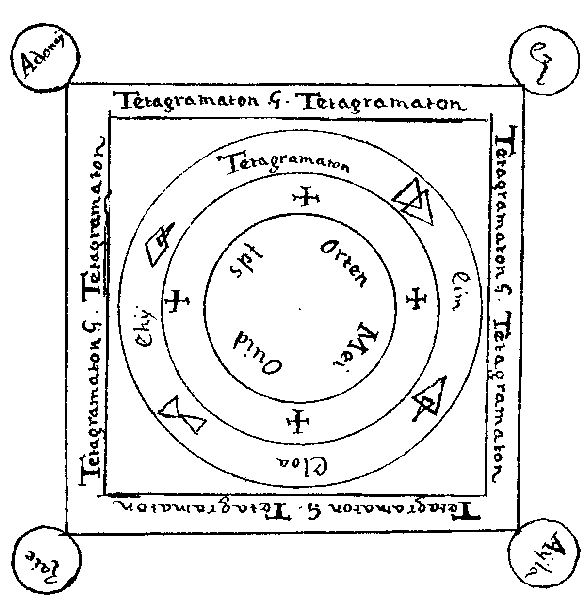
5. Latin artavus i.e. a craft or quill knife. Mathers reads "knife, the sickle, or the sword of magical art." Ad. 10862: "Gladium, uel Arclauum [sic]." Gladius is generally synonymous with ensis (sword), but Book 2 chapters 7 and 8 equate it with cultellus (knife). Arclavus is a mistake for artavus; later the manuscript reads arctauus, while other manuscripts read artavus (French 'artave', Italian 'artavo'). It is well attested, but an uncommon term; Mathers follows the French manuscripts in mistranslating this as "sickle." See also Book 2, Chapter 8. This section does not occur in Aub. 24. -JHP 6. Mathers: knife or with the sickle of art. -JHP 7. i.e. two circles enclosed between three circumferential lines. -SLM 8. i.e. within the first circle. -SLM 9. i.e. the four cardinal points of the compass. -SLM 10. The letter Tau represents the cross, and in 10862 Add. MSS. in the drawing of the circle, the Hebrew letter is replaced by the cross; In 1307 Sloane MSS. by the T or Tau-Cross. -SLM 11. i.e. in the outer circle, bounded by the second and third circumferential lines. -SLM 12. 10862 Add. MSS. is the only copy which uses the word hexagonal, but the others show four hexagrams in the drawing; in the drawing, however, 10862 gives the hexagrams formed by various differing interlacements of two triangles, as shown in Figure 2. -SLM
Note the interlacements mentioned by Mathers. Mathers gives the names
in Hebrew characters; these are also given in Ad. 10862 but in considerably
corrupted form (see below). |
|
|
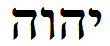
Between the East and the South the supreme name IHVH, Tetragrammaton;--
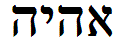
Between the South and the West the essential Tetragrammatic name
AHIH, Eheieh;--
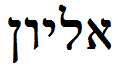
Between the West and the North the name of power ALIVN, Elion;--
And between the North and the East the great name ALH, Eloah;--
Which names are of supreme importance in the list of the Sephiroth,13
and their sovereign equivalents. |
13. The Sephiroth are the ten Qabalistical emanations of the Deity. The
sovereign equivalents are the divine names referred
thereto. See my Kabbalah Unveiled. -SLM
|
|
[The Hebrew lettering per Ad. 10862, fol 13r.]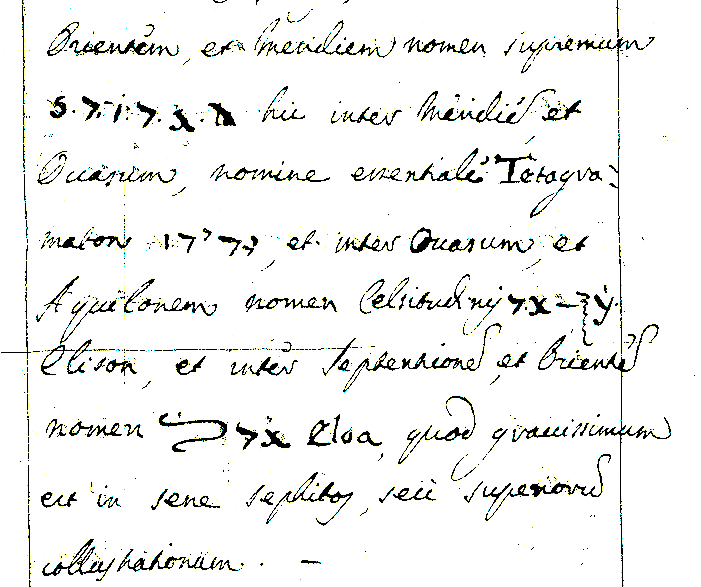
| ||
|
Furthermore, thou shalt circumscribe about these circles two squares,
the angles of which shall be turned towards the four quarters
of the Earth; and the space between the lines of the outer and
inner square shall be half-a-foot. The extreme angles of the outer
square shall be made the centres of four circles, the measure
or diameter of which shall be one foot. All these are to be drawn
with the knife or consecrated instrument14 of art. And within these
four circles thou must write these four names of God the most
holy one, in this order:—
|
14. Ad. 10862: arclavo; K288, L1202: instrument. -JHP |
|
|
At15 the East, AL, El; At the West, IH, Yah; At the South, AGLA, Agla;
And at the North ADNI, Adonaï.
|
15. The MSS. vary as to the point whereat each name
is to be placed, but I think the above will be found to answer. -SLM
|
|
|
Between the two squares the name Tetragrammaton is to be written
in the same way as is shown in the plate. (See Figure 2.)
| ||
|
While constructing the circle, the master should recite the following Psalms:—16
|
16. Mathers: "Psalm ii.; Psalm liv.; Psalm cxiii.; Psalm lxvii.; Psalm xlvii.; Psalm lxviii."
Mich. 276 lists 2, 47, and 68 only. -JHP |
|
|
Or he may as well recite them before tracing the circle. The which being finished, and the fumigations being performed, as is described in the chapter on fumigations in the Second Book, the master should reassemble his disciples, encourage them, reassure them, fortify them, and conduct them into the parts of the circle of art, where he must place them in the four quarters of the Earth, encourage them, and exhort them to fear nothing, and to keep in the places assigned to them. Also, the disciple who is placed towards the East should have a pen, ink, paper, silk, and white cotton, all clean and suitable for the work. Furthermore, each of the companions should have a new sword drawn in his hand (besides the consecrated magical sword of art), and he should keep his hand resting upon the hilt thereof, and he should on no pretext quit the place assigned to him, nor move therefrom. After this the master should quit the circle, light the fuel in the earthen pots, and place upon them the censers, in the four quarters of the Earth; and he should have in his hand the consecrated taper of wax, and he should light it and place it in a hidden and secret place prepared for it. Let him after this re-enter and close the circle. The master should afresh exhort his disciples, and explain to them all that they have to do and to observe; the which commands they should promise and vow to execute.
Let the master then repeat this prayer: -- PRAYER.When we enter herein with all humility, let God the Almighty One enter into this circle, by the entrance of an eternal happiness, of a divine prosperity, of a perfect joy, of an abundant charity, and of an eternal salutation. Let all the demons fly from this place, especially those who are opposed unto this work, and let the angels of peace assist and protect this circle, from which let discord and strife fly and depart. Magnify and extend upon us, O Lord, thy most holy name, and bless our conversation and our assembly. Sanctify, O Lord our God, our humble entry herein, thou the blessed and holy one of the eternal ages! Amen.
After this, let the master say upon his knees, as follows: PRAYER | ||
O Lord God, all powerful and all merciful, thou who desirest not the death of a sinner, but rather that he may turn from his wickedness and live; give and grant unto us thy grace, by blessing and consecrating this earth and this circle, which is here marked out with the most powerful and holy names of God.18 And thee, I conjure, O Earth, by the most holy name of ASHER EHEIEH entering within this circle, composed and made with mine hand. And may God, even ADONAI, bless this place with all the virtues of Heaven, so that no obscene or unclean spirit may have the power to enter into this circle, or to annoy any person who is therein; though the Lord God ADONAI, who liveth eternally unto the ages of the ages. Amen. |
18. Sl. 3091 adds, "et par le nom de Dieu EMANUEL Je te benis ó terre; Je te consacre ô terre" (And by the name of God EMANUEL I bless you, O Earth; I consecrate you, O Earth) -JHP |
|
I beseech thee, O Lord God, the all powerful and the all merciful, that thou wilt deign to bless this circle, and all this place, and all those who are therein, and that thou wilt grant unto us, who serve thee, and rehearse nothing but the wonders of thy law, a good angel for our guardian; remove from us every adverse power; preserve us from evil and from trouble; grant, O Lord, that we may rest in this place in all safety, through thee, O Lord, who livest and reignest unto the ages of the ages. Amen. | ||
|
Let the master now arise and place upon his head a crown made
of virgin paper,19 on the which there
must be written (with the colours and other necessary things which
we shall describe hereafter), these four names AGLA, AGLAI, AGLATA,
AGLATAI. The which names are to be placed in the front, behind,
and on either side of the head.
|
19. Mathers reads "of paper (or any other appropriate substance)" following Kings 288, but Ad. 10862 reads "ex Carta Virginea" (from virgin paper), L1202 reads "de papier vierge". Ad. 10862 gives the names as "Agala [corrupt Hebrew], Agala [corrupt Hebrew], Agalata [corrupt Hebrew] Agalata [corrupt Hebrew]. L1202 reads: "Ces quatre Noms sont Agla au devant, Aglata au derrire, Aglon, Aglatay, des deux cotés de la Tête." -JHP |
|
|
Furthermore, the master ought to have with him in the circle,
those pentacles or medals20 which are necessary to his purpose,
which are described hereinafter, and which should be constructed
according to the rules given in the chapter on pentacles. They
should be described on virgin paper with a pen; and ink, blood,
or colours, prepared according to the manner which we shall hereafter
show in the chapters on these subjects. It will be sufficient
to take only those pentacles which are actually required, they
should be sewed to the front of the linen robe, on the chest,
with the consecrated needle of the art, and with a thread which
has been woven by a young girl.
|
20. Ad. 10862: Pentacula, siue Candores [=candarii, kandariri!]; M276: "pentacoli o canderie"; H3981: "Pentacules, Canderies ou Medailles"; K288 and Sl3091: "Pentacules ou Medailles". -JHP | |
|
After this, let the master turn himself towards the eastern quarter
(unless directed to the contrary, or unless he should be wishing
to call spirits which belong to another quarter of the Universe),
and pronounce with a loud voice the conjuration contained in this
chapter. And if the spirits be disobedient and do not then make
their appearance, he must arise and take the exorcised knife of
art21 wherewith he hath constructed the circle, and raise it towards
the sky as if he wished to beat or strike the air, and conjure
the spirits. Let him then lay his right hand and the knife upon
the pentacles or medals, constructed of, and described upon virgin
paper, which are fastened to or sewn upon his breast, and let
him repeat the following conjuration upon his knees:—22
|
21. Ad. 10862: gladium exorcizatum. -JHP |
|
CONJURATION.O Lord, hear my prayer, and let my cry come unto thee. O Lord God Almighty, who has reigned before the beginning of the Ages, and who by thine infinite wisdom, hast created the heavens, the earth, and the sea, and all that in them is, all that is visible, and all that is invisible by a single word; I praise thee, I bless thee, I adore thee, I glorify thee, and I pray thee now at the present time to be merciful unto me, a miserable sinner, for I am the work of thine hands. Save me, and direct me by thy holy name, thou to whom nothing is difficult, nothing is impossible; and deliver me from the night of mine ignorance, and enable me to go forth therefrom. Enlighten me with a spark of thine infinite wisdom. Take away from my senses the desire of covetousness, and the iniquity of mine idle words. Give unto me, thy servant, a wise understanding, penetrating and subtle heart, to acquire and comprehend all sciences and arts; give unto me capacity to hear, and strength of memory to retain them, so that I may be able to accomplish my desires, and understand and learn all difficult and desirable sciences; and also that I may be able to comprehend the hidden secrets of the holy writings. Give me the virtue to conceive them, so that I may be able to bring forth and pronounce my words with patience and humility, for the instruction of others, as thou hast ordered me. | ||
O God, the Father, all powerful and all merciful, who hast created all things, who knowest and conceivest them universally, and to whom nothing is hidden, nothing is impossible; I entreat thy grace for me and for thy servants, because thou seest and knowest well that we perform not this work to tempt thy strength and thy power as if in doubt thereof, but rather that we may know and understand the truth of all hidden things. I beseech thee to have the kindness to be favorable unto us; by thy splendour, thy magnificence, and thy holiness, and by thy holy, terrible, and ineffable name IAH, at which the whole world doth tremble, and by the fear with which all creatures obey thee. Grant, O Lord, that we may become responsive unto thy grace, so that through it we may have a full confidence in and knowledge of thee, and that the spirits may discover themselves here in our presence, and that those which are gentle and peaceable may come unto us, so that they may be obedient unto thy commands, through thee, O most holy ADONAI, whose kingdom is an everlasting kingdom, and whose empire endureth unto the ages of the ages. Amen. |
||
|
After having said all these words devoutly, let the master arise,
and place his hands upon the pentacles, and let one of the companions
hold the book open before the master, who, raising his eyes to
Heaven, and turning unto the four quarters of the Universe, shall
say:—
| ||
O Lord, be thou unto me a tower of strength against the appearance and assault of the evil spirits.23 |
23. Compare Psalm 60.4: "quia factus es spes mea turris fortitudinis a facie inimici" (=KJV61.3: For thou hast been a shelter for me, and a strong tower from the enemy). -JHP |
|
|
After this, turning towards the four quarters of the Universe, he shall say the following words:— These be the symbols and the names of the creator, which can bring terror and fear unto you. Obey me then, by the power of these holy names, and by these mysterious symbols of the secret of secrets. | ||
|
The which being said and done, thou shalt see them draw near and approach from all parts. But if they be hindered, detained, or occupied in some way, and so that they cannot come, or if they are unwilling to come, then, the suffumigations and censings being performed anew, and (the disciples) having anew, by especial order, touched their swords, and the master having encouraged his disciples, he shall reform the circle with the knife of art, and, raising the said knife towards the sky, he shall as it were strike the air therewith. After this he shall lay his hand upon the pentacles, and having bent his knees before the most High, he shall repeat with humility the following confession; the which his disciples shall also do, and they shall recite it in a low and humble voice, so that they can scarcely be heard.24 |
24. So as not to interfere with the direction of the will-currents of the master. -SLM |
CHAPTER IVTHE CONFESSION TO BE MADE BY THE EXORCIST | |
CONFESSION.O LORD of Heaven and of Earth, before thee do I confess my sins, and lament them, cast down and humbled in thy presence. For I have sinned before thee by pride, avarice, and boundless desire of honours and riches; by idleness, gluttony, greed, debauchery, and drunkenness; because I have offended thee by all kinds of sins of the flesh, adulteries, and pollutions, which I have committed myself, and consented that others should commit; by sacrilege, thefts, rapine, violation, and homicide; by the evil use I have made of my possessions, by my prodigality, by the sins which I have committed against Hope and Charity, by my evil advice, flatteries, bribes, and the ill distribution which I have made of the goods of which I have been possessed; by repulsing and maltreating the poor, in the distribution which I have made of the goods committed to my charge, by afflicting those over whom I have been set in authority, by not visiting the prisoners, by depriving the dead of burial, by not receiving the poor, by neither feeding the hungry nor giving drink to the thirsty, by never keeping the Sabbath and the other feasts, by not living chastely and piously on those days, by the easy consent which I have given to those who incited me to evil deeds, by injuring instead of aiding those who demanded help from me, by refusing to give ear unto the cry of the poor, by not respecting the aged, by not keeping my word, by disobedience to my parents, by ingratitude towards those from whom I have received kindness, by indulgence in sensual pleasures, by irreverent behaviour in the Temple of God, by unseemly gestures thereat, by entering therein without reverence, by vain and unprofitable discourse when there, by despising the sacred vessels of the temple, by turning the holy Ceremonies into ridicule, by touching and eating the sacred bread with impure lips and with profane hands, and by the neglect of my prayers and adorations. I detest also the crimes which I have committed by evil thoughts, vain and impure meditations, false suspicions, and rash judgments; by the evil consent which I have readily given unto the advice of the wicked, by lust of impure and sensual pleasures; by my idle words, my lies, and my deceit; by my false vows in various ways; and by my continual slander and calumny. I detest also the crimes which I have committed within; the treachery and discord which I have incited; my curiosity, greed, false speaking, violence, malediction, murmurs, blasphemies, vain words, insults, dissimulations; my sins against God by the transgression of the ten commandments, by neglect of my duties and obligations, and by want of love towards God and towards my neighbour. Furthermore I hate the sins which I have committed in all my senses, by sight, by hearing, by taste, by smell, and by touch, in every way that human weakness can offend the creator; by my carnal thoughts, deeds, and meditations. In which I humbly confess that I have sinned, and recognise myself as being in the sight of God the most criminal of all men. I accuse myself before thee, O God, and I adore thee with all humility. O ye, holy angels, and ye, children of God, in your presence I publish my sins, so that mine enemy may have no advantage over me, and may not be able to reproach me at the last day; that he may not be able to say that I have concealed my sins, and that I be not then accused in the presence of the Lord; but, on the contrary, that on my account there may be joy in Heaven, as over the just who have confessed their sins in thy presence. O most mighty and all powerful Father, grant through thine unbounded mercy that I may both see and know all the spirits which I invoke, so that by their means I may see my will and desire accomplished, by the sovereign grandeur, and by thine ineffable and eternal glory, thou who art and who wilt be for ever the pure and ineffable father of all. The confession having been finished with great humility, and with the inward feeling of the heart, the master will recite the following prayer:— PRAYER.O Lord all powerful, eternal God and father of all creatures, shed upon me the divine influence of thy mercy, for I am thy creature. I beseech thee to defend me from mine enemies, and to confirm in me true and steadfast faith. O Lord, I commit my body and my soul unto thee, seeing I put my trust in none beside thee; it is on thee alone that I rely; O Lord my God aid me; O Lord hear me in the day and hour wherein I shall invoke thee. I pray thee by thy mercy not to put me in oblivion, nor to remove me from thee. O Lord be thou my succor, thou who art the God of my salvation. O Lord make me a new heart according unto thy loving kindness. These, O Lord, are the gifts which I await from thee, O my God and my master, thou who livest and reignest unto the Ages of the Ages. Amen. O Lord God the all powerful one, who hast formed unto thyself great and ineffable wisdom, and co-eternal with thyself before the countless ages; thou who in the birth of time hast created the Heavens, and the Earth, the sea, and things that they contain; thou who hast vivified all things by the breath of thy mouth, I praise thee, I bless thee, I adore thee, and I glorify thee. Be thou propitious unto me who am but a miserable sinner, and despise me not; save me and succor me, even me the work of thine hands. I conjure and entreat thee by thy Holy name to banish from my spirit the darkness of Ignorance, and to enlighten me with the Fire of thy Wisdom; take away from me all evil desires, and let not my speech be as that of the foolish. O thou, God the Living One, whose Glory, Honour, and Kingdom shall extend unto the Ages of the Ages. Amen. CHAPTER VPRAYERS AND CONJURATIONSPRAYER.O LORD God, Holy Father, Almighty and Merciful One, who hast created all things, who knowest all things and can do all things, from whom nothing is hidden, to whom nothing is impossible; thou who knowest that we perform not these ceremonies to tempt thy power, but that we may penetrate into the knowledge of hidden things; we pray thee by thy Sacred Mercy to cause and to permit, that we may arrive at this understanding of secret things, of whatever nature they may be, by thine aid, O Most Holy ADONAI, whose Kingdom and Power shall have no end unto the Ages of the Ages. Amen. The Prayer being finished, let the Exorcist lay his hand upon the pentacles, while one of the Disciples shall hold open before him the Book wherein are written the prayers and conjurations proper for conquering, subduing, and reproving the spirits. Then the Master, turning towards each Quarter of the Earth, and raising his eyes to Heaven, shall say: | |
O Lord, be thou unto me a strong tower of refuge, from the sight and assaults of the Evil spirits.1 |
1. Compare with Psalm 60.4 (KJV Ps61.3): "For thou hast been a shelter for me, and a strong tower from the enemy." -JHP |
|
After which let him turn again towards the four quarters of the Earth, and towards each let him utter the following words: Behold the symbols and names of the creator, which give unto ye forever terror and fear. Obey then, by the virtue of these holy names, and by these Mysteries of Mysteries.
After this he shall see the spirits come from every side. But
in case they are occupied in some other place, or that they cannot
come, or that they are unwilling to come: then let him commence
afresh to invoke them after the following manner, and let the
exorcist be assured that even were they bound with chains of iron,
and with fire, they could not refrain from coming to accomplish
his will. |
|
THE CONJURATION.2 |
2. There is an Invocation bearing the title of 'The Qabalistical Invocation of Solomon,' given by Eliphas Lévi, which differs in many points from the one given above, though resembling it in some particulars. Lévi's is more evidently constructed on the plan indicated in the 'Siphra Dtzenioutha,' c. III.; Annotation § 5, sub. § 8, 9; while the one above more follows that laid down, ibid. § 5, sub. § 3. I see no reason to suppose that Lévi's is unauthentic. It will be noted by the Qabalistical reader, that the above conjuration rehearses the divine names attached to the ten Sephiroth. -SLM |
O ye spirits, ye I conjure by the power, wisdom, and virtue of the spirit of God, by the uncreate divine knowledge, by the vast mercy of God, by the strength of God, by the greatness of God, by the unity of God; and by the holy name of God EHEIEH, which is the root, trunk, source, and origin of all the other divine names, whence they all draw their life and their virtue, which Adam having invoked, he acquired the knowledge of all created things. | |
I conjure ye by the indivisible name IOD, which marketh and expresseth the simplicity and the unity of the nature divine, which Abel having invoked, he deserved3 to escape from the hands of Cain his brother. |
3. In the French, 'merita d`échapper.' -SLM.
|
I conjure ye by the name TETRAGRAMMATON ELOHIM,4 which expresseth and signifieth the grandeur of so lofty a majesty, that Noah having pronounced it, saved himself, and protected himself with his whole household from the waters of the deluge. |
4. Aub24 reads "Jeoua Elohim"; M276: "Jeouà Eloym"; Sl3091: "Jehova Eloym"; K288 and L1202: "Jehovah Elohym"; Ad. 10862: "Je, Houa, Eloia." -JHP |
I conjure ye by the name of God EL strong and wonderful, which denoteth the mercy and goodness of his majesty divine, which Abraham having invoked, he was found worthy to come forth from the Ur of the Chaldeans. | |
I conjure ye by the most powerful name of ELOHIM GIBOR, which showeth forth the strength of God, of a God all powerful, who punisheth the crimes of the wicked, who seeketh out and chastiseth the iniquities of the fathers upon the children unto the third and fourth generation; which Isaac having invoked, he was found worthy to escape from the sword5 of Abraham his father. |
5. Lat. gladius. |
I conjure ye and I exorcise ye by the most holy name of ELOAH VA-DAATH,6 which Jacob invoked when in great trouble, and was found worthy to bear the name of Israel, which signifieth vanquisher of God; and he was delivered from the fury of Esau his brother. |
6. Aub24 reads "Eloha Vangaadat"; M276: "Eloha uangadet"; K288, Sl3091, and L1202 read "Eloha Vangadat"; Ad. 10862: "Eloa Vagadat". -JHP |
I conjure ye by the most potent name of EL7 ADONAI TZABAOTH, which is the God of armies, ruling in the Heavens, which Joseph invoked and was found worthy to escape from the hands of his brethren. |
7. More usually the name TETRAGRAMMATON TZABAOTH is attributed to the seventh Sephiroth. -SLM
|
I conjure ye by the most potent name of ELOHIM TZABAOTH,8 which expresseth piety, mercy, splendour, and knowledge of God, which Moses invoked, and he was found worthy to deliver the People Israel from Egypt, and from the servitude of Pharaoh. |
8. Aub24: "Elohym Zeuad"; Sl3091: "Eloym Zevaoth"; K288: "Elohym Zevaod"; L1202: "Elhoim Zenard"; Ad. 10862: "Eloim Zeuord." -JHP |
I conjure ye by the most potent name of SHADDAI,9 which signifieth doing good unto all; which Moses invoked, and having struck the Sea, it divided into two parts in the midst, on the right hand and on the left. I conjure ye by the most holy name of EL10 CHAI, which is that of the Living God, through the virtue of which alliance with us, and redemption for us have been made; which Moses invoked and all the waters returned to their prior state and enveloped the Egyptians, so that not one of them escaped to carry the news into the Land of Mizraim. |
9. K288, Sl3091, L1202, Aub24 read "Saday"; Ad. 10862: "Siday." -JHP |
Lastly, I conjure ye all, ye rebellious spirits, by the most holy name of God ADONAI MELEKH, which Joshua invoked, and stayed the course of the Sun in his presence, through the virtue of Methratton,11 its principal Image; and by the troops of angels who cease not to cry day and night, QADOSCH, QADOSCH, QADOSCH, ADONAI ELOHIM TZABAOTH (that is, Holy, Holy, Holy, Lord God of Hosts, Heaven and Earth are full of thy Glory); and by the ten angels who preside over the ten Sephiroth, by whom God communicateth and extendeth his influence over lower things, which are KETHER, CHOKMAH, BINAH, GEDULAH, GEBURAH, TIPHERETH, NETZACH, HOD, YESOD, AND MALKUTH.12 |
11. The Archangel, who is called also the Prince of Countenances. -SLM |
I conjure ye anew, O spirits, by all the names of God, and by all his marvellous work; by the heavens; by the earth; by the sea; by the depth of the Abyss, and by that firmament which the very spirit of God hath moved; by the sun and by the stars; by the waters and by the seas, and all which they contain; by the winds, the whirlwinds, and the tempests; by the virtue of all herbs, plants, and stones; by all which is in the heavens, upon the earth, and in all the abysses of the shades. I conjure ye anew, and I powerfully urge ye, O Demons, in whatsoever part of the world ye may be, so that ye shall be unable to remain in air, fire, water, earth, or in any part of the universe, or in any pleasant place which may attract ye; but that ye come promptly to accomplish our desire, and all things that we demand from your obedience. I conjure ye anew by the two Tables of the Law, by the five books of Moses, by the Seven Burning Lamps on the Candlestick of Gold before the face of the Throne of the Majesty of God, and by the Holy of Holies wherein the KOHEN HA-GADUL was alone permitted to enter, that is to say, the High-Priest. I conjure ye by him who hath made the heavens and the earth, and who hath measured those heavens in the hollow of his hand, and enclosed the earth with three of his fingers, who is seated upon the Kerubim and upon the Seraphim; and by the Kerubim, which is called the Kerub, which God constituted and placed to guard the Tree of Life, armed with a flaming sword, after that Man had been driven out of Paradise. | |
I conjure ye anew, Apostates from God, by him who alone hath performed great wonders; by the Heavenly Jerusalem; and by the Most Holy name of God in Four Letters, and by him who enlighteneth all things and shineth upon all things by his Venerable and Ineffable name, EHEIEH ASHER EHEIEH;13 that ye come immediately to execute our desire, whatever it may be. |
13. M276: "Eheye esser Eheye"; Sl3091 and K288: "Eheyetsser Eheye"; L1202: "Cheye, Assereye." -JHP |
I conjure ye, and I command ye absolutely, O Demons, in whatsoever part of the Universe ye may be, by the virtue of all these Holy names:— ADONAI, YAH, HOA, EL, ELOHA, ELOHINU, ELOHIM, EHEIEH, MARON, KAPHU, ESCH, INNON, AVEN, AGLA, HAZOR, EMETH, YAII, ARARITHA, YOVA, HA-KABIR, MESSIACH, IONAH, MAL-KA, EREL, KUZU, MATZPATZ, EL SHADDAI;14 and by all the Holy names of God which have been written with blood in the sign of an eternal alliance. |
14. I have made these names as correct as possible;
as in all the original MSS. the Hebrew is much mutilated. These
names are some of them ordinary titles of God; others Magical
and Qabalistical names compounded from the initials of sentences,
etc.; and others permutations of other names. -SLM |
I conjure ye anew by these other names of God, most holy and unknown, by the virtue of which names ye tremble every day:— BAZUC, BACURABON, PATACEL, ALCHEGHEL, AQUACHAI, HOMORIONS, EY, ABBATON, CHEVON, CEBON, OY, ZOYMAS, CAYE, EHEIEH, ABBAMACHI, ORTAGU, NALE, HELECH, YEZE;15 that ye come quickly and without any delay into our presence from every quarter and every climate of the world wherein ye may be, to execute all that we shall command ye in the great name of God. |
15. I give these names as they stand, they do not
all appear to be Hebrew; some of them suggest the style of the
barbarous names in the Graeco-Egyptian Magical Papyri. -SLM |
CHAPTER VISTRONGER AND MORE POTENT CONJURATION | |
|
If they then immediately appear, it is well; if not, let the master uncover the consecrated pentacles which he should have made to constrain and command the spirits, and which he should wear fastened round his neck, holding the medals (or pentacles) in his left hand, and the consecrated knife in his right; and encouraging his companions, he shall say with a loud voice:—1 |
1. Ad10862 and Sl.3091: "a somewhat elevated voice." -JHP |
ADDRESS.Here be the symbols of secret things, the standards, the ensigns, and the banners, of God the conqueror; and the arms of the almighty One, to compel the aerial potencies. I command ye absolutely by their power and virtue that ye come near unto us, into our presence, from whatsoever part of the world ye may be in, and that ye delay not to obey us in all things wherein we shall command ye by the virtue of God the mighty One. Come ye promptly, and delay not to appear, and answer us with humility.
If they appear at this time, show them the pentacles, and receive
them with kindness, gentleness, and courtesy; reason and speak
with them, question them, and ask from them all things which thou
hast proposed to demand.
| |
|
But if, on the contrary, they do not yet make their appearance,
holding the consecrated knife2 in the right hand, and the pentacles3
being uncovered by the removal of their consecrated covering,
strike and beat the air with the knife as if wishing to commence
a combat, comfort and exhort thy companions, and then in a loud
and stern voice repeat the following conjuration:—
|
2. Lat. "gladius"; Ital. "il coltello"; Fr. "le coutau". -JHP |
CONJURATION.4 |
4. This conjuration is almost identical with one given in the Lemegeton, or Lesser Key, a different work, also attributed to Solomon. -SLM |
Here again I conjure ye and most urgently command ye; I force, constrain, and exhort ye to the utmost, by the most mighty and powerful name of God EL, strong and wonderful, and by God the just and upright, I exorcise ye and command ye that ye in no way delay, but that ye come immediately and upon the instant hither before us, without noise, deformity, or hideousness, but with all manner of gentleness and mildness.5 |
5. Mathers is following K288 and H which read, "avec toutes sorte de douceurs et de Civilité"; Lat. "omni affabilitate" (all affability/courtesy). The wording in L1202 and Sl3091 again agree: "toute sorte de civilité et courtoisie". -JHP |
I exorcise ye anew, and powerfully conjure ye, commanding ye with strength and violence by him who spake and it was done;6 and by all these names: EL SHADDAI, ELOHIM, ELOHI, TZABAOTH, ELIM, ASHER EHEIEH, YAH, TETRAGRAMMATON, SHADDAI,7 which signify God the high and almighty, the God of Israel, through whom undertaking all our operations we shall prosper in all the works of our hands, seeing that the Lord is now, always, and for ever with us, in our heart and in our lips; and by his holy names, and by the virtue of the sovereign God, we shall accomplish all our work. |
6. Aub. 24: "Vos iterum exorcizo atque potenter contestor, ac
valde impero per eum qui dixit, et factum est ..."
(I again exorcize you, and potently conjure you, and greatly command you through him
who spoke, and it was done..." -JHP |
Come ye at once without any hideousness or deformity before us, come ye without monstrous appearance, in a gracious form or figure. Come ye, for we exorcise ye with the utmost vehemence by the name of IAH and ON, which Adam spake and heard; by the name EL, which Noah heard, and saved himself with all his family from the Deluge; by the name IOD, which Noah [*Abraham]7b heard, and knew God the Almighty One; by the name AGLA which Jacob heard, and saw the Ladder which touched Heaven, and the angels who ascended and descended upon it, whence he called that place the House of God and the Gate of Heaven; and by the name ELOHIM, and in the name ELOHIM, which Moses named, invoked, and heard in Horeb the Mount of God, and he was found worthy to hear him speak from the Burning Bush; and by the name AIN SOPH, which Aaron heard, and was at once made eloquent, wise, and learned; and by the name TZABAOTH, which Moses named and invoked, and all the ponds and rivers were covered with blood throughout the land of Egypt;8 and by the name IOD, which Moses named and invoked, and striking upon the dust of the earth it became gnats infesting men, cattle, and beasts of burden of Egypt;9 and by the name, and in the name PRIMATON,10 which Moses named and invoked, and there fell a great and severe hail throughout all the land of Egypt, destroying the vines, the trees, and the woods which were in that country; and by the name IAPHAR, which Moses heard and invoked, and immediately a great pestilence began to appear through all the land of Egypt, striking and slaying the asses, the oxen, and the sheep of the Egyptians, so that they all died; and by the name ABADDON which Moses invoked and sprinkled the dust towards heaven, and immediately there fell so great rain upon the men, cattle, and flocks, that they all died throughout the land of Egypt; and by the name ELION which Moses invoked, and there fell so great hail as had never been seen from the beginning of the world unto that time, so that all men, and herds, and everything that was in the fields perished and died throughout all the land of Egypt. And by the name ADONAI, which Moses having invoked, there came so great a quantity of locusts which appeared in the land of Egypt, that they devoured and swallowed up all that the hail had spared; and by the name of PATHEON,11 which having invoked, there arose so thick, so awful, and so terrible darkness throughout the land of Egypt, during the space of three days and three nights, that almost all who were left alive died; and by the name YESOD, and in the name YESOD, which Moses invoked, and at midnight all the first-born, both of men and of animals, died; and by the name of YESHIMON, which Moses named and invoked, and the Red Sea divided itself and separated in two; and by the name HESION, which Moses invoked, and all the army of Pharaoh was drowned in the waters; and by the name ANABONA, which Moses having heard upon Mount Sinai, he was found worthy to receive and obtain the tables of stone written with the finger of God the creator; and by the name ERYGION, which Joshua having invoked when he fought against the Moabites, he defeated them and gained the victory; and by the name HOA, and in the name HOA, which David invoked, and he was delivered from the hand of Goliath; and by the name YOD, which Solomon having named and invoked, he was found worthy to ask for and obtain in sleep the ineffable wisdom of God; and by the name YIAI, which Solomon having named and invoked, he was found worthy to have power over all the demons, potencies, powers, and virtues of the air. | 7b. So Aub. 24, Ad 10862, M276, and other mss. -JHP 8. Some MSS. add, 'et furent purifiés.' -SLM Aub. 24 adds "et computraerunt" (and rotted); Ad. 10862 misreads "composuerunt" (they have composed ) -JHP 9. So Aub24. which reads "et percutiens pulverem terræ factæ sunt cinifices in homines, et boves, et iumenta Aegyptiorum". This reading is also supported by M276 and Ad. 36674. This is based on Exodus 8:17: "et extendit Aaron manu virgam tenens percussitque pulverem terrae et facti sunt scinifes in hominibus et in iumentis omnis pulvis terrae versus est in scinifes per totam terram Aegypti" (and Aaron stretched out his hand with his rod, and smote the dust of the earth, and it became gnats in man, and in beast; all the dust of the land became gnats throughout all the land of Egypt.) The French manuscripts misread Latin "cinis" (ashes, Fr. "cendre"), instead of Latin "cinifes" (gnats). Mathers reads "and striking upon the dust of the earth both men and beasts were struck with disease." -JHP Some MSS. substitute, 'les hommes furent reduits en cendre, comme aussi les boeufs, betail, et troupeaux des Egyptiens.' -SLM 10. So M276, Aub24, Sl3091, H3981, and K288. Ad. 36674 reads "Phaicon". This sentence is missing in Ad. 10862. Mathers follows L1202 in reading "PRIMEUMATON". -JHP 11. This is often written PATHTUMON in similar conjurations, but the MSS. before me agree in giving this form. -SLM Aub. 24 and Ad. 10862 both read Phateon; M276: "Pantheon". -JHP |
By these, then, and by all the other names of God almighty, holy, living, and true, we powerfully command ye, ye who by your own sin have been cast down from the Empyreal Heaven, and from before his throne; by him who hath cast ye down unto the most profound of the abysses of Hell, we command ye boldly and resolutely; and by that terrible day of the sovereign judgment of God, on which all the dry bones in the earth will arise to hear and listen unto the word of God with their body, and will present themselves before the face of God almighty; and by that Last Fire which shall consume all things; by the (Crystal) Sea which is known unto us, which is before the face of God; by the indicible and ineffable virtue, force, and power of the creator himself, by his almighty power, and by the light and flame which emanate from his countenance, and which are before his face; by the angelical powers which are in the Heavens, and by the most great wisdom of almighty God; by the Seal of David, by the Ring12 and Seal of Solomon, which was revealed unto him by the Most High and Sovereign creator; and by the Nine Medals or pentacles,13 which we have among our symbols, which proceed and come from Heaven, and are among the Mysteries of Mysteries or Secrets of Secrets, which you can also behold in my hand, consecrated and exorcised with the due and requisite Ceremonies. By these, then, and by all the secrets which the Almighty encloseth in the Treasures of the sovereign and Highest Wisdom, by his Hand, and by his marvellous power; I conjure, force, and exorcise ye that ye come without delay to perform in our presence that which we shall command ye. |
12. Note this mention of the ring of Solomon, though there is no ring described among the ritual implements. -JHP 13. Aub. 24: novem Cœlestes Kanderias. This probably corresponds to the nine Kandariri (talismans) found in Gollancz' Hebrew manuscript (fol. 49a). This sentence is not found in Ad. 10862. -JHP |
I conjure ye anew by that most holy name which the whole Universe fears, respects, and reveres, which is written by these letters and characters, IOD, HE, VAU, HE; and by the last and terrible judgment; by the seat of BALDACHIA;14 and by this holy name, YIAI, which Moses invoked, and there followed that great Judgment of God, when Dathan and Abiram15 were swallowed up in the centre of the earth. Otherwise, if ye contravene and resist us by your disobedience unto the virtue and power of this name YIAI, we curse ye even unto the depth of the Great Abyss, into the which we shall cast, hurl, and bind ye, if ye show yourselves rebellious against the secret of secrets, and against the mystery of mysteries. AMEN, AMEN. FIAT, FIAT. |
14. Sometimes, but as I think erroneously, written Bas-dathea. I imagine the word to mean 'Lord of Life.' -SLM 15. Deut. 11.6. Ad. 10862 misreads "Fatam and Aliram." -JHP |
|
This conjuration thou shalt say and perform, turning thyself unto
the East, and if they appear not, thou shalt repeat it unto the
spirits, turning unto the South, the West, and the North, in succession,
when thou wilt have repeated it four times. And if they appear
not even then, thou shalt make the sign of TAU16 upon the foreheads
of thy companions, and thou shalt say:— |
16. Or the Cross. -SLM |
CONJURATION.Behold anew the symbol and the name of a sovereign and conquering God, through which all the Universe fears, trembles, and shudders, and through the most mysterious words of the secret mysteries and by their virtue, strength, and power. | |
I conjure ye anew, I constrain and command ye with the utmost vehemence and power, by that most potent and powerful name of God, EL, strong and wonderful, by him who spake and it was done; and by the name IAH, which Moses heard, and spoke with God; and by the name AGLA, which Joseph invoked, and was delivered out of the hands of his brethren; and by the name VAU, which Abraham heard, and knew God the Almighty One; and by the name of Four Letters, TETRAGRAMMATON, which Joshua named and invoked, and he was rendered worthy and found deserving to lead the Army of Israel into the Promised Land; and by the name ANABONA, by which God formed Man and the whole Universe; and by the name ARPHETON,17 and in the name ARPHETON, by which the angels who are destined to that end will summon the Universe, in visible body and form, and will assemble (all people) together by the sound of the Trumpet at that terrible and awful Day of Judgment, when the memory of the wicked and ungodly shall perish; and by the name ADONAI, by which God will judge all human flesh, at whose voice all men, both good and evil, will rise again,18 and all men and angels will assemble in the air before the Lord, who will judge and condemn the wicked; and by the name ONEIPHETON,19 by which God will summon the dead, and raise them up again unto life; and by the name ELOHIM, and in the name ELOHIM, by which God will disturb and excite tempests throughout all the seas, so that they will cast out the fish therefrom, and in one day the third part of men about the sea and the rivers shall die; and by the name ELOHI,20 and in the name ELOHI, by which God will dry up the sea and the rivers, so that men can go on foot through their channels; and by the name ON, and in the name ON, by which God shall restore and replace the sea, the rivers, the streams, and the brooks, in their previous state; and by the name MESSIACH,21 and in the name MESSIACH, by which God will make all animals combat together, so that they shall die in a single day; and by the name ARIEL,22 by which God shall destroy in a single day all buildings, so that there shall not be left one stone upon another; and by the name IAHT,23 by which God will cast one stone upon another, so that all people and nations will fly from the sea-shore, and will say unto them cover us and hide us; and by the name EMANUEL, by which God will perform wonders, and the winged creatures and birds of the air shall contend with one another; and by the name ANAEL,24 and in the name ANAEL, by which God will cast down the mountains and fill up the valleys, so that the surface of the earth shall be level in all parts; and by the name ZEDEREZA,25 and in the name ZEDEREZA, by which God will cause the Sun and Moon to be darkened, and the stars of heaven to fall; and by the name SEPHERIEL,26 by which God will come to Universal Judgment, like a Prince newly crowned entering in triumph into his capital city, girded with a zone of gold, and preceded by angels, and at his aspect all climes and parts of the Universe shall be troubled and astonished, and a fire shall go forth before him, and flames and storm shall surround him; and by the name TAU,27 by which God brought the Deluge, and the waters prevailed above the mountains, and fifteen cubits above their summits; and by the name RUACHIAH,28 by which God having purged the Ages, he will make his Holy Spirit to descend upon the Universe, and will cast ye, ye rebellious spirits, and unclean beings, into the depths of the lake of the abyss, in misery, filth, and mire, and will place ye in impure and foul dungeons bound with eternal chains of fire. |
17. Also written Hipeton; and I believe sometimes replaced by Anapheneton, or Anaphaxeton. -SLM 18. Aub24 adds: "Et per nomen Igeon, et in nomine Igeon per quod Justi resurgent" (And through the name Igeon, and in the name Igeon, through which the Just will rise again) -JHP 19. This word is given variously in the MSS., as Oneypheon, Onayepheton, and Donecepheron, etc. -SLM Aub24: Onaxepheon; Sl3091: Oneipheon; K288: Oneypheon; L1202: Donecepheron. -JHP 20. Or Elia. -SLM Aub24 gives the previous name as Eloy, and this one as Elya; K288 gives them as Elohym and Eleya; Sl3091, L1202 read Elohim and Elya. -JHP 21. What is said here refers symbolically to the rooting out of the evil spirits, and shells, from the Universe by King Messiach, which is spoken of in the Qabalah. The Qabalah sometimes expresses the evil spirits by the words animals, or beasts, and creeping things. -SLM 22. Aub24: Aniel. -JHP 23. The oldest MSS. gives the above form, in the others it is changed into Iaphat, Taphat, and even Japhet. It is probably a corruption of Achad Unity. -SLM Ad10862: Iaht; Aub24: Jahat; Sl3091: Iaphat; M276, L1202: Japhat; K288: Taphat. -JHP
24. This is also the name of the angel of Venus. -SLM 25. So written in the oldest MS., the others give it as Zedeesia, Zedeezia, and Zedezias. -SLM Coxe 25: Panthetrarimon; BnF ital. 1524 198v: Panthetrarimon; SSM: Pancelenon; CLM 10085: Pancrararion; M276: Zedesia; Aub24, Sl3091, and H3981: Zedeezia; Ad10862: Zedereza; K288: Zedeesia; L1202: Zedezias. -JHP 26. Meaning 'emanating from God.' It is corrupted into Sephosiel, etc., in the MSS. -SLM M276: Jephosiel; Aub24: Saphasiel; Sl3091, K288, H3981: Sephosiel; L1202: Sophoziel; Ad10862: Saphatiel. -JHP 27. Iaha, in 10862 Add. MSS. -SLM Aub. 24: Thau; Sl3091, M276, K288, H3981, and L1202: Tau. -JHP 28. Meaning spirit of Iah. -SLM Aub. 24: Ruchia; K288: M276: Rechya; Reéhia; Sl30911, L1202: Rechia. -JHP |
By these names then, and by all the other holy names of God before whom no man can stand and live, and which names the armies of the demons fear, tremble at, and shudder; we conjure ye, we potently exorcise and command ye, conjuring ye in addition by the terrible and tremendous PATHS29 of GOD and by his holy habitation wherein he reigneth and commandeth unto the eternal ages. Amen. |
29. That is, the hidden and occult grades and links of emanation in the Sephiroth. The later MSS. have put, by mistake, voix for voies, the oldest Latin MS. gives Semitis. -SLM Aub24, Ad10862, and M276 read "per terribiles et absconditas semitas Dei" (by the frightening and hidden paths of God). -JHP |
By the virtue of all those aforesaid, we command ye that ye remain not in any place wherein ye are, but to come hither promptly without delay to do that which we shall enjoin ye. But if ye be still contumacious, we, by the authority of a sovereign and potent God, deprive ye of all quality, condition, degree, and place which ye now enjoy, and precipitate ye into and relegate ye unto the Kingdom of Fire and of sulphur, to be there eternally tormented. Come ye then from all parts of the earth, wheresoever ye may be, and behold the symbols and names of that triumphant sovereign whom all creatures obey, otherwise we shall bind ye and conduct ye in spite of yourselves, into our presence bound with chains of fire, because those effects which proceed and issue from our science and operation, are ardent with a fire which shall consume and burn ye eternally, for by these the whole Universe trembleth, the earth is moved, the stones thereof rush together, all creatures obey, and the rebellious spirits are tormented by the power of the sovereign creator. | |
|
Then it is certain that they will come, even if they be bound
with chains of fire, unless prevented by affairs of the very greatest
importance, but in this latter case they will send ambassadors
and messengers by whom thou shalt easily and surely learn what
occupies the spirits and what they are about. But if they appear
not yet in answer to the above conjuration, and are still disobedient,
then let the master of the art or exorciser arise and exhort his
companions to be of good cheer and not to despair of the ultimate
success of the operation; let him strike the air with the consecrated
knife30 towards the four quarters of the Universe; and then let
him kneel in the midst of the circle, and the companions also
in their several places, and let them say consecutively with him
in a low voice, turning in the direction of the East, the following:
|
30. Aub. 24: cum gladio exorcizato. |
ADDRESS TO THE ANGELS.I conjure and pray ye, O ye angels of God, and ye celestial spirits, to come unto mine aid; come and behold the signs of Heaven, and be my witness before the sovereign Lord, of the disobedience of these evil and fallen spirits who were at one time your companions. This being done, let the master arise, and constrain and force them by a stronger conjuration, in manner following. |
CHAPTER VII | ||
AN EXTREMELY POWERFUL CONJURATIONBehold us again prepared to conjure ye by the names and symbols of God, wherewith we are fortified, and by the virtue of the highest one. We command ye and potently ordain ye by the most strong and powerful name of God EL,1 who is worthy of all praise, admiration, honor, glory, generation, and fear, that ye delay not longer, but that ye appear before us without any tumult or disturbance, but, on the contrary, with great respect and courtesy, in a beautiful and human form. |
1. So M276, Au24, Ad10862: "et in uirtute altissimi uos coniuramus atque uobis imperamus per potentissimum atque fortissimum nomen dei El" L1202 and Sl3091 misread "Et" (and) instead of "El"; Mathers follows K288 which is further removed: "by the most strong and powerful names of God." -JHP |
|
|
If they then appear, let them see the pentacles, and say: Obey ye, obey ye, behold the symbols and names of the creator; be ye gentle and peaceable, and obey in all things that we shall command ye. They will then immediately talk with thee, as a friend speaketh unto a friend. Ask of them all that thou desirest, with constancy, firmness, and assurance, and they will obey thee. But if they appear not yet, let not the master on that account lose his courage, for there is nothing in the world stronger and of greater force to overawe the spirits than constancy. Let him, however, re-examine and reform the circle, and let him take up a little dust of the earth, which he shall cast towards the four quarters of the Universe; and having placed his knife upon the ground, let him say on his knees, turning towards the direction of the North: In the name of ADONAI ELOHIM TZABAOTH SHADDAI, Lord God of armies almighty, may we successfully perform the works of our hands. and may the Lord be present with us in our heart and in our lips.
These words having been said kneeling upon the earth, let the
master shortly after arise and open his arms wide as if wishing
to embrace the air, and say: CONJURATION.By the holy names of God written in this book, and by the other holy and ineffable names which are written in the Book of Life, we conjure ye to come unto us promptly and without any delay, wherefore tarry not, but appear in a beautiful and agreeable form and figure, by these Holy names: ADONAI, TZABAOTH, EL, ELOHI, ELOHIM, SHADDAI; and by EHEIEH, YOD HE VAU HE, which is the great name of God TETRAGRAMMATON written with four letters, ANAPHODITION, and ineffable; by the God of those virtues and potencies, who dwelt in the Heavens, who rideth upon the Kerubim, who moveth upon the wings of the wind, he whose power is in Heaven and in Earth, who spake and it was done, who commanded and the whole Universe was created; and by the holy names and in the holy names, IAH, IAH, IAH, ADONAI TZABAOTH; and by all the names of God, the living, and the true, I reiterate the conjuration, and I conjure ye afresh ye Evil and rebellious spirits, abiding in the abysses of darkness. I conjure, I address, and I exorcise ye, that ye may approach unto and come before the Throne of God, the living and the true, and before the tribunal of the judgment of his majesty, and before the holy angels of God to hear the sentence of your condemnation. Come ye then by the name and in the name of SHADDAI, which is that of God Almighty, strong, powerful, admirable, exalted, pure, clean, glorified, virtuous, great, just, terrible, and holy; and by the name and in the name of EL, IAH, IAH, IAH, who hath formed and created the world by the breath of his mouth, who supporteth it by his power, who ruleth and governeth it by his wisdom, and who hath cast ye for your pride into the land of darkness and into the shadow of death. Therefore, by the name of the living God, who hath formed the heavens above, and hath laid the foundations of the earth beneath, we command ye that, immediately and without any delay, ye come unto us from all places, valleys, mountains, hills, field, seas, rivers, fountains, ponds, brooks, caverns, grottos, cities, towns, villages, markets, fairs, habitations, baths, courtyards, gardens, vineyards, plantations, reservoirs, cisterns, and from every corner of the terrestrial earth where ye may happen to be in your assemblies, so that ye may execute and accomplish our demands with all mildness and courtesy; by that ineffable name which Moses heard and invoked, which he received from God from the midst of the Burning Bush, we conjure ye to obey our commands, and to come unto us promptly with all gentleness of manner. | ||
Again we command ye with vehemence, and we exorcise ye with constancy, that ye and all your comrades come unto us in an agreeable and gracious manner like the breeze, to accomplish successively our various commands and desires. Come ye, then, by the virtue of these names by the which we exorcise ye; ANAY, GETHA, TERAMIA, ARNETH, NEGIA, JONA, PROLHUCH, TITACH, JENAU, BEJA, THEIT; all which names are written in Heaven in the characters of Malachim,2 that is to say, the tongue of the angels. |
2. The mystic alphabet known as the 'Writing of Malachim' is formed from the positions of the stars in the heavens, by drawing imaginary lines from one star to another so as to obtain the shapes of the characters of this alphabet. -SLM This section is missing from Aub24. M276: "Anay, Getha, Teramya, Arneth, Hegie, Jona, Prodruch [=pro**uch], Tirach, Jenau, Baya, Theyth"; H981: "Anay, Getath, Texamin, Arnet, Negia, Jona, Prolhuch, Titach, Jenau, Beja, Theit"; Sl3091: "Anay, Getah, Texamin, Arnet, Negia, Jona, Protuch, Titah, genau, Beja, Theit"; K288: "Aay, Getah, Texamin, Arnet, Negia, Jona, Prothuch, Tetah, Jenau, Beja, Theit"; Ad10862: "Anau, Aechel [or Hechel], Transia, Amet, Negie, Iona, Profae, Titache, Penaui, Biia, Teib"; L1202: "Anar, Golat, Negior, Taxam, Inaël, Jona, Portah, Litah, Jenan, Buia, Lheu"; Mathers: "ANAI, ÆCHHAD, TRANSIN, EMETH, CHAIA, IONA, PROFA, TITACHE, BEN ANI, BRIAH, THEIT" The Magical Treatise of Solomon devotes an entire chapter to a series of four "alphabets of the planets", resembling the "celestial alphabet", and used for writing on talismans. -JHP |
|
We then, by the just judgment of God, by the ineffable and admirable virtue of God, just, living, and true, we call ye with power, we force and exorcise ye by and in the admirable name which was written on the tables of stone which God gave upon Mount Sinai; and by and in the wonderful name which Aaron the High Priest bare written upon his breast, by which also God created the world, the which name is AXINETON;3 and by the living God who is one throughout the ages, whose dwelling is in the Ineffable Light, whose name is Wisdom, and whose spirit is life, before whom goeth forth fire and flame, who hath from that fire formed the firmament, the stars and the Sun; and who with that fire will burn ye all for ever, as also all who shall contravene the words of his will. |
3. So H and Sl3091; Ad10862: "Arcuron"; M276: "A Rimeton"; L1202: "Azineton". -JHP |
|
Come ye, then, without delay, without noise, and without rage, before us, without any deformity or hideousness, to execute all our will; come ye from all places wherein ye are, from all mountains, valleys, streams, rivers, brooks, ponds, places, baths, synagogues; for God, strong and powerful, will chase ye and constrain ye, being glorious over all things; He will compel ye, both ye and the Prince of Darkness. Come ye, come ye, angels of Darkness; come hither before this circle without fear, terror, or deformity, to execute our commands, and be ye ready both to achieve and to complete all that we shall command ye. | ||
Come ye, then, by the crown of the chief of your emperors, and by the sceptres of your power, and of SID, the great demon, your master; by the names and in the names of the holy angels who have been created to be above you, long before the constitution of the world; and by the names of the two princes of the Universe, whose names are, IONIEL and SEFONIEL;4 by the rod of Moses, by the staff of Jacob; by the ring and seal of David, wherein are written the names of sovereign God;5 and by the names of the angels by which Solomon has linked and bound ye; and by the sacred bonds by which ANAEL hath environed and hath conquered the spirit; and by the name of the angel who ruleth potently over the rest, and by the praise of all creatures who cry incessantly unto God, who spake, and immediately all things, even the Ages, were made and formed; and by the name HA-QADOSCH BERAKHA, which signifies the Holy and Blessed One; and by the Ten Choirs of the holy angels, CHAIOTH HA-QADESH, AUPHANIM, ARALIM, CHASHMALIM, SERAPHIM, MALACHIM, ELOHIM, BENI ELOHIM, KERUBIM, and ISHIM; and by, and in the sacred name of twelve letters of which each letter is the name of an angel, and the letters of the name are ALEPH, BETH, BETH, NUN, VAU, RESH, VAU, CHETH, HE, QOPH, DALETH, SHIN.6 |
4. M276: Songel et Aonyel; H3981, Sl3091: Soniel et Aoeniel; K288: Soniel et Aaniel; L1202: Jomel & Armiel; Ad. 10862: Ionyel et Ifoniel. This section is not found in Aub24 (up to "And we conjure, oblige, and terribly exorcise ye"). -JHP 5. The rest of this paragraph is not found in Ad. 10862. Compare with a Jewish mortuary charm published in J.A. Montgomery Aramaic Incantation Texts from Nippur, (Philadelphia, 1913): "With the Wand of Moses and the Plate of Aaron and the Seal of Solomon and the Shield of David and the Mitre of the Chief Priest I perform the spell." Cited by Raya Shani in "A Judeo-Persian Talismanic Textile" in Irano-Judaica IV (Jerusalem: 1999, p. 254). -JHP 6. Which letters I have, with much care, corrected, for in the MSS. the letters are jumbled together in hopeless confusion, Seym is written for Shin, Res for Beth, etc. The name is Ab, Ben, Ve-Ruach, Ha-Qadesch, Father, Son, and Holy spirit. There are two other names of twelve letters frequently employed, HQDVSh BRVK HVA, holy and blessed be he; and ADNI HMLK NAMN, the Lord, the faithful king; besides other forms. -SLM Again, M276 seems to have the most reliable reading: "he sin daled caph he ched uau bed, nun nayn beld aleph"; H3981: "Ha, Hé, Seym, Daled, Coph, He, Thath, vau, Res, nem Jod, Zuin, Res, Aleph"; K288: "Ha, Hé, Saym, Daleth, Coph, He, Thet, vau, Res, Nun, Jod, Zayn, Res, Aleph". -JHP |
|
By these names therefore, and by all the other holy names, we conjure ye and we exorcise ye; by the angel ZECHIEL; by the angel DUCHIEL; by the angel DONACHIEL; and by the great angel METATRON, who is the prince of the angels, and introduceth the souls before the face of God; and by the angel SANGARIEL, by whom the portals of Heaven are guarded; and by the angel KERUB, who was made the guardian of the terrestrial paradise, with a sword of flame, after the expulsion of Adam our forefather; and by the angel MICHAEL by whom ye were hurled down from the height of the THRONE into the depth of the lake and of the abyss, the same name meaning, 'who is like God upon Earth;' and by the angel ANIEL; and by the angel OPHIEL; and by the angel BEDALIEL; wherefore, by these and by all the other holy names of the angels, we powerfully conjure and exorcise ye, that ye come from all parts of the world immediately, and without any delay, to perform our will and demands, obeying us quickly and courteously, and that ye come by the name and in the name of ALEPH, DALETH, NUN, IOD, for we exorcise ye anew by the application of these letters, by whose power burning fire is quenched, and the whole Universe trembleth. We constrain ye yet again by the seal of the Sun which is the word of God; and by the seal of the Moon and of the stars we bind ye; and by the other animals and creatures which are in Heaven, by whose wings Heaven cleanseth itself, we force and attract ye imperiously to execute our will without failure. | ||
And we conjure, oblige, and terribly exorcise ye, that ye draw near unto us without delay and without fear, as far as is possible unto ye, here before this circle, as supplicants gently and with discretion, to accomplish our will in all and through all. If ye come promptly and voluntarily, ye shall inhale our perfumes, and our suffumigations of pleasant odour, which will be both agreeable and delightful unto ye. Furthermore ye will see the symbol of your creator, and the names of his holy angels, and we shall afterwards dismiss ye, and send ye hence with thanks. But if, on the contrary, ye come not quickly, and ye show yourselves self-opinionated, rebellious, and contumacious, we shall conjure ye again, and exorcise ye ceaselessly, and will repeat all the aforesaid words and holy names of God and of the holy angels; by the which names we shall harass you, and if that be not sufficient we will add thereunto yet greater and more powerful ones, and we will thereunto again add other names which ye have not yet heard from us, which are those of an almighty God, and which will make ye tremble and quake with fear, both ye and your princes; by the which names we conjure both you and them also, and we shall not desist from our work until the accomplishment of our will. But if perchance ye yet shall harden yourselves, and show yourselves self-opinionated, disobedient, rebellious, refractory, and contumacious, and if ye yet resist our powerful conjurations, we shall pronounce against you this warrant of arrest in the name of God almighty, and this definite sentence that ye shall fall into dangerous disease and leprosy, and that in sign of the divine vengeance ye shall all perish by a terrifying and horrible death, and that a fire shall consume and devour you on every side, and utterly crush you; and that by the power of God, a flame shall go forth from his mouth which shall burn ye up and reduce ye unto nothing in Hell. Wherefore delay ye not to come, for we shall not cease from these powerful conjurations until ye shall be obliged to appear against your will. |
Aub24 resumes at this point. -JHP |
|
Thus then, therefore, we anew conjure and exorcise ye by and in the holy name of IAH, IAH, IAH,7 which is interpreted and called God; by the name and in the name of EHEIEH ASHER EHEIEH,8 which is the true name of God, 'I am He who is'; by and in the ineffable name of four letters YOD HE VAU HE, the knowledge and understanding of which is hidden even from the angels; by the name and in the name of EL,9 which signifieth and denoteth the powerful and consuming fire which issueth from his countenance, and which shall be your ruin and destruction; and by the light of the angels which is kindled and taken ineffably from that flame of divine ardour. |
7. Mathers reads "ON", but Aub. 24 and Ad. 10862 both read "Iah, Iah, Iah." M276, Sl3091, K288, and L1202 all omit the name. -JHP 8. So M276 and Aub24; Ad. 10862: "Ehere"; Mathers follows Sl3091, K288, and L1202 in reading "EHEIEH". -JHP 9. So M276, Sl3091, K288, and L1202. Aub24 and Ad. 10862 both read "Es." -JHP |
|
By these then, and by other most holy names which we pronounce against you from the bottom of our hearts, do we force and constrain ye, if ye be yet rebellious and disobedient. We conjure ye powerfully and strongly exorcise ye, that ye come unto us with joy and quickness, without fraud or deceit, in truth and not in error. Come ye then, come ye, behold the signs and the names of your creator, behold the holy pentacles by the virtue of which the Earth is moved, the trees thereof and the abysses tremble. Come ye; come ye; come ye. These things being thus done and performed, ye shall see the spirits come from all sides in great haste with their princes and superiors; the spirits of the First Order, like soldiers, armed with spears, shields, and corslets; those of the second Order like barons, princes, dukes, captains, and generals of armies. For the Third and last Order their king will appear, before whom go many players on instruments of music, accompanied by beautiful and melodious voices which sing in chorus. Then the exorcist, or master of the art, at the arrival of the king, whom he shall see crowned with a diadem, should uncover the holy pentacles and medals which he weareth upon his breast covered with a cloth of silk or of fine twined linen, and show them unto him, saying:— Behold the signs and holy names by and before whose power every knee should bow, of all that is in Heaven, upon Earth, or in Hell. Humble ye yourselves, therefore, under the mighty hand of God. Then will the king bow the knee before thee, and will say, 'What dost thou wish, and wherefore hast thou caused us to come hither from the infernal abodes?' Then shall the exorcist, or master of magical art, with an assured air and a grave and imperious voice, order and command him to be tranquil, to keep the rest of his attendants peaceable, and to impose silence upon them. Let him, also, renew his fumigations, and offer large quantities of incense, which he should at once place upon the fire, in order to appease the spirits as he hath promised them. He should then cover the pentacles, and he will see wonderful things, which it is impossible to relate, touching worldly matters and all sciences.
This being finished, let the master uncover the pentacles, and
demand all that he shall wish from the king of the spirits, and
if there are one or two spirits only, it will be the same; and
having obtained all his desire, he shall thus license them to
depart:— THE LICENSE TO DEPARTIn the name of ADONAI, the eternal and everlasting one, let each of you return unto his place; be there peace between us and you, and be ye ready to come when ye are called. After this he should recite the first chapter of Genesis, 'Berashith Bara Elohim, In the beginning, etc.'
This being done, let them all in order quit the circle, one after
the other, the master first. Furthermore let them bathe their
faces with the exorcised water, as will be hereafter told, and
then let them take their ordinary raiment and go about their business.
| ||
|
Take notice10 and observe carefully that this last conjuration is
of so great importance and efficacy, that even if the spirits
were bound with chains of iron and fire, or shut up in some strong
place, or retained by an oath, they could not even then delay
to come. But supposing that they were being conjured in some other
place or part of the Universe by some other exorcist or master
of the art, by the same conjuration; the master should add to
his conjuration that they should at least send him some messengers,
or some individual to declare unto him where they are, how employed,
and the reason why they cannot come and obey him.
|
10. This paragraph is not found in Ad. 10862. -JHP |
|
|
But if (which is almost impossible) they be even yet self-opinionated
and disobedient, and unwilling to obey; in this case their names
should be written on virgin paper, which he should soil and fill
with mud, dust, or clay. Then he shall kindle a fire with dry
rue, upon which he shall put powdered assafoetida, and other things
of evil odour; after which let him put the aforesaid names, written
on parchment or virgin paper, upon the fire, saying:— THE CONJURATION OF THE FIRE.I conjure thee, O creature of fire, by him who removeth the Earth, and maketh it tremble, that thou burn and torment these spirits, so that they may feel it intensely, and that they may be burned eternally by thee.
This being said, thou shalt cast the aforesaid paper into the
fire, saying:— THE CURSE. | ||
Be ye accursed, damned, and eternally reproved; and be ye tormented with perpetual pain, so that ye may find no repose by night nor by day, nor for a single moment or time, if ye obey not immediately the command of him who maketh the Universe to tremble; by these names, and in virtue of these names, the which being named and invoked all creatures obey and tremble with fear and terror, these names which can turn aside lightning and thunder; and which will utterly make you to perish, destroy, and banish you. These names then are Aleph, Beth, Gimel, Daleth, He, Vau, Zayin, Cheth, Teth, Yod, Kaph, Lamed, Mem, Nun, Samekh, Ayin, Pe, Tzaddi, Qoph, Resh, Shin, Tau.11 |
11. Which are the names of the letters of the Hebrew alphabet, to each of which a special mystic meaning and power is attached, besides its ordinary application. -SLM |
|
By these secret names, therefore, and by these signs which are full of mysteries, we curse ye, and in virtue of the power of the three principles, Aleph, Mem, Shin,12 we deprive ye of all office and dignity which ye may have enjoyed up till now; and by their virtue and power we relegate you unto a lake of sulphur and of flame, and unto the deepest depths of the abyss, that ye may burn therein eternally for ever. |
12. The literal symbols of air, water, and fire; which are called by the Sepher Yetzirah the three mother letters. -SLM |
|
|
Then will they assuredly come without any delay, and in great
haste, crying: 'O our lord and prince, deliver us out of this
suffering.'
| ||
|
All this time thou shouldest have near thee ready an exorcised
pen, paper, and ink, as will be described hereinafter. Write their
names afresh, and kindle fresh fire, whereon thou shalt put gum
benjamin, olybdanum, and storax13 to make therewith a fumigation;
with these odours thou shalt afresh, perfume the aforesaid paper
with the names; but thou shouldest have these names ready prepared
beforehand. Then show them the holy pentacles, and ask of them
what thou wilt, and thou shalt obtain it; and having gained thy
purpose, send away the spirits, saying:—
|
13. Mathers is following Sl3091, K288, and L1202 here, however Aub24 and Ad10862 both read "Sandalum citrinum et rubrum et storacem"; M276: "sandelo citrino sandolo rosso e storace"; Perhaps "sandalum album citrinum et rubrum" is intended (along with storax). -JHP |
|
THE LICENSE TO DEPART.By the virtue of these pentacles, and because ye have been obedient, and have obeyed the commandments of the creator, feel and inhale this grateful odour, and afterwards depart ye unto your abodes and retreats; be there peace between us and you; be ye ever ready to come when ye shall be cited and called; and may the blessing of God, as far as ye are capable of receiving it, be upon you, provided ye be obedient and prompt,14 to come unto us without solemn rites and observances on our part. |
14. The phrase "and may the blessing of God ... obedient and prompt" doesn't appear in Aub. 24 or Ad. 10862, but is found in Mich. 276. -JHP |
|
|
Thou shouldest further make a book of virgin paper, and therein
write the foregoing conjurations, and constrain the demons to
swear upon the same book that they will come whenever they be
called, and present themselves before thee, whenever thou shalt
wish to consult them. Afterwards thou canst cover this book with
sacred sigils on a plate of silver, and therein write or engrave
the holy pentacles. Thou mayest open this book either on Sundays
or on Thursdays, rather at night than by day, and the spirits
will come.
| ||
|
Regarding the expression 'night,' understand the night following,
and not the night preceding the aforesaid days,15
for indeed they are creatures of darkness who hate the light.
|
15. So. Aub. 24. Mathers: "And remember that by day (the demons) are ashamed, for they are animals of darkness." Ad. 10862 omits the rest of this paragraph. -JHP |
|
CHAPTER VIIICONCERNING PENTACLES, AND THE MANNER OF CONSTRUCTING THEM
As we have already made mention of the pentacles, it is necessary
that thou shouldest understand that the whole science and understanding
of our Key dependeth upon the operation, knowledge, and use of
pentacles.
| ||
|
He then who shall wish to perform any operation by the means of
the medals,1 or pentacles, and therein to render himself expert,
must observe what hath been hereinbefore ordained. Let him then,
O my son Roboam, know and understand that in the aforesaid pentacles
he shall find those ineffable and most holy names which were written
by the finger of God in the tablets of Moses; and which I, Solomon,
have received through the ministry of an angel by divine revelation.
These then have I collected together, arranged, consecrated, and
kept, for the benefit of the human race, and the preservation
of body and of soul.
|
1. Candarii, canderias (Ad10862), canderie (M276). BnF ital 1524 f. 206r / Gal p. 388; Coxe 25 p. 89; VG p. 63; Aub. 24 35v; BUD 256 p. 71; BNE 12707 p. 30; BnF 15127 p. 40; -JHP
|
|
|
The pentacles should then be made in the days and hours of Mercury, when the Moon is in an aerial2 or terrestrial sign; she should also be in her increase, and in equal number of days with the Sun. |
2. i.e. in Gemini, Libra, Aquarius, Taurus, Virgo, or Capricorn. -SLM |
|
|
It is necessary to have a chamber or cabinet specially set apart and newly cleaned, wherein thou canst remain without interruption, the which having entered with thy companions, thou shalt incense and perfume it with the odours and perfumes of the art. The sky should be clear and serene. It is necessary that thou shouldest have one or more pieces of virgin paper prepared and arranged ready, as we shall tell you more fully later on, in its place.
Thou shalt commence the writing or construction of the pentacles
in the hour aforesaid. Among other things, thou shalt chiefly
use these colours: Gold, cinnabar or vermilion red, and celestial
or brilliant azure blue. Furthermore, thou shalt make these medals
or pentacles with exorcised pen and colours, as we shall hereafter
show thee. Whensoever thou constructest them, if thou canst complete
them in the hour wherein thou didst begin them, it is better.
However, if it be absolutely necessary to interrupt the work,
thou shouldest await the proper day and hour before re-commencing
it. | ||
|
The pentacles being finished and completed, take a cloth of very fine silk, as we shall hereafter ordain thee, in the which thou shalt wrap the pentacles. After which thou shalt take a large vessel of earth filled with charcoal, upon the which there must be put frankincense, mastic, and aloes, all having been previously conjured and exorcised as shall hereafter be told thee. Thou must also be thyself pure, clean, and washed, as thou shalt find given in the proper place. Furthermore, thou shouldest have the craft knife or knife of the art,3 with the which thou shalt make a circle, and trace within it an inner circle, and in the space between the two thou shalt write the names of God,4 which thou shalt think fit and proper. It is necessary after this that thou shouldest have within the circle a vessel of earth with burning coals and odoriferous perfumes thereon; with the which thou shalt fumigate the aforesaid pentacles; and, having turned thy face towards the East, thou shalt hold the said pentacles over the smoke of the incense, and shalt repeat devoutly the following Psalms of David my father:5
|
3. Following Aub. 24: "Artauum, vel gladium artis". Ad. 10862 reads "arctauum, aut gladium." M276 reads "con l' artavo dell' arte hò coltello"; Mathers follows Sl3091, L1202, and K288 in reading, "sickle or knife of magical art." Ad. 10862 adds, "(tempered) with the blood of a goose and the juice of a pimpernel" as in Book 2 chapter 8. Ad. 36674 reads "A knyfe ready in goses blode, which was made on the day of Mercury." -JHP 4. Preferably those having some reference to the work in hand. -SLM 5. I have given the number of the Psalms according to the English, not the Hebrew numbers. -SLM Mathers lists the Psalms by numbers only: "Psalms viii., xxi., xxvii., xxix., xxxii., li., lxxii., cxxxiv," whereas all the manuscripts give the opening words. Since the Psalms are numbered differently in different versions of the Bible, Mathers' method is more ambiguous. Coxe 25 p. 90: [Ps7] Domine deus meus in te speravi [Ps18] Caeli enarrant [gloriam Dei]. <Deus deus meus> [Ps26] Dominus illuminatio mea. [Ps21] Deus Deus meus respice in me. [Ps31] Beati quorum [remissae sunt iniquitates]. [Ps50] Miserere mei Deus [secundum magnam]. [Ps28] Afferte Domine. [Ps71] Deus iudicium [tuum Regi da]. [Ps53] Deus in nomine tuo [salvum me fac]. [Ps133] Ecce nunc Benedicite Dominum. VSG 334: Domine Deus meus in te spe[raui], 7. Domine Dominus noster, quam, 8. Coeli enarrant gloriam Dei, 18. Deus Deus meus respice, 21. Dominus illuminatio mea, 26. Afferte domino filij Dei, 28. Beati quorum remisse sunt, 31. Miserere mei Deus secundum, 50. Deus in nomine tuo, 53. Deus iudicium tuum, 71. Ecce nunc benedicite dominum, 133. -JHP 6. Not in Mathers' list. 7. Mathers' list includes Psalm 21 instead. 8. Not in Mathers' list. |
|
|
(For a convenient form of circle which may be used for preparing
instruments and other things of the same kind, as well as for
consecrating the pentacles, see Figure 3.)
|
9. Mathers gives this figure in Hebrew characters, with אגיאל (AGIAL) facing East, צבאות (TzBAOTh) facing South, יהוה (IHVH) facing West, and אדני (ADNI) facing North. Ad. 10862 and other manuscripts show the sacred names in Roman characters: Agÿel in the East (labelled "Oriente" in the manuscript), Sabaot in the south ("Mezzo giorno"), Jeova in the West ("Occidentale"), and Adonay in the North ("Settentrionale"). Aub24 has two versions of this circle. The one on fol. 36v is like that in Ad. 10862. The one on fol. 74r is similar, but adds inside the inner circle the words "Quis in fortibus ut tu Deus Tetragrammaton". It also adds a third circle around the others, with the names and symbols of the four Kings between the two outer circles: Asmodel in the East, Amaymon in the South, Paymon in the West, and Aegym in the North. The name Agiel seems to be out of place here, as all the others are names of God. Dresd. 91 p. 127 reads Agios instead. BnF Ital. 1524 (dated 1446) suggests another possibility. It reads ELION in that place (along with IOT HE VAV + LAIAIA + ADONAY). Besides being one of the oldest ms, it has the fact that the name is Hebrew (like the other 3) in its favor. -JHP |
|
After this thou shalt repeat the following Oration:—
THE ORATION. | ||
O ADONAI most powerful, EL most strong, AGLA most holy, ON most righteous, the ALPHA and the OMEGA10, the Beginning and the End; thou who hast established all things in thy Wisdom; thou who has chosen Abraham thy faithful servant, and hast promised that in his seed shall all nations of the earth be blessed, which seed thou hast multiplied as the stars of Heaven; thou who hast appeared unto thy servant Moses in flame in the midst of the Burning Bush, and hast made him walk with dry feet through the Red Sea; thou who gavest the Law to him upon Mount Sinai; thou who hast granted unto Solomon thy Servant these pentacles by thy great Mercy, for the preservation of Soul and of Body; we most humbly implore and supplicate thy Holy Majesty, that these pentacles may be consecrated by thy power, and prepared in such manner that they may obtain virtue and strength against all spirits, through thee, O Most Holy ADONAI, whose Kingdom, Empire, and principality, remaineth and endureth without end. |
10. Mathers reads the ALEPH and the TAU, but the manuscripts all read "Alpha et Omega." -JHP The Qabalistic word AZOTH may be substituted for 'the Aleph and the Tau.' -SLM |
|
|
These words being said, thou shalt perfume the pentacles with
the same sweet scents and perfumes, and afterwards having wrapped
them in a piece of prepared silk cloth, thou shalt put them in
a place fit and clean, which thou mayest open whenever it shall
please thee, and close it again, at thy pleasure and according
unto thy will. We will hereafter show thee the method and manner
of preparing the aforesaid place, of perfuming it with scents
and sweet odours, and of sprinkling it with the water and water-sprinkler
of magical art; for all these things contain many good properties,
and innumerable virtues, as experience will easily teach thee.
| ||
|
We have already said sufficient regarding the solemn conjuration of spirits.11
|
11. Ad. 10862: boni Angeli (of good angels). -JHP |
|
|
We have also spoken enough in our present Key, regarding the manner
in which it is necessary to attract the spirits so as to make
them speak. Now, by divine aid, I will teach thee how to perform
certain experiments with success.12
|
12. Mathers inserts here an excerpt from L1203, "Know, O my son Roboam, that all the divine sigils ... which is why I command thee to be attentive to all that is contained in this my Testament." |
CHAPTER IX | |
OF THE EXPERIMENT CONCERNING THINGS STOLEN, AND HOW IT SHOULD BE PERFORMEDMy beloved son, if thou findest any theft, thou shalt do as is hereinafter ordained, and with the help of God thou shalt find that which hath been taken away.
If the hours and days be not otherwise ordained in this operation,
thou must refer to what hath already been said. But before commencing
any operation whatsoever for the recovery of things stolen, after
having made all necessary preparations, thou shalt say the following
oration:— THE ORATION. | |
Ateh1 Adonai Elohim Asher Ha-Shamain Ve-Ha-Aretz, etc. |
1. This is simply the Hebrew of the prayer which follows; but in the MS. Codices it is so mutilated as to be worthless. -SLM M276 may again be the least corrupt: "Atta melech Eloy asser malach bassamaym uerensar amalachim bonel uengose neagnimanù chesid lemangan asemod baruch adonay Eloym eloe [emagro] auraam arcadiel daccon lamliel malun eya Eloym aya arniscrater unenia machia deuradum Zachiel deol emad egem gemas." -JHP |
Thou, O Lord, who hast made both Heaven and Earth, and hast measured them in the hollow of thy hand; thou who art seated upon the Kerubim and the Seraphim, in the high places, whereunto human understanding cannot penetrate; thou who hast created all things by thine agency, in whose presence are the living creatures, of which four are marvellously volatile, which have six wings, and who incessantly cry aloud: 'QADOSCH, QADOSCH, QADOSCH, ADONAI ELOHIM TZABAOTH, Heaven and Earth are full of thy glory'; O Lord God, thou who hast expelled Adam from the terrestrial paradise, and who hast placed the Kerubim to guard the Tree of Life, thou art the Lord who alone doest wonders; show forth I pray thee thy great mercy, by the holy city of Jerusalem, by thy wonderful name of four letters which are YOD, HE, VAU, HE, and by thy holy and admirable name,2 give unto me the power and virtue to enable me to accomplish this experiment, and to come unto the desired end of this operation; through thee who art life, and unto whom life belongeth unto the eternal ages. Amen. |
2. Sl. 1307 adds "ADONAY". -JHP |
|
After this perfume and cense the place with good scents and sweet odours. This aforesaid place should be pure, clean, safe from interruption or disturbance, and proper to the work, as we shall hereafter show. Then sprinkle the aforesaid place with consecrated water, as is laid down in the chapter concerning circles. The operation being in such wise prepared, thou shalt rehearse the conjuration necessary for this experiment, at the end of which thou shalt say as follows:— O almighty Father and Lord, who regardest the Heavens, the Earth, and the Abyss, mercifully grant unto me by thy holy name written with four letters, YOD, HE, VAU, HE, that by this exorcism I may obtain virtue, thou who art IAH, IAH, IAH, grant that by thy power these spirits may discover that which we require and which we hope to find, and may they show and declare unto us the persons who have committed the theft, and where they are to be found. | |
I conjure ye anew, ye spirits above named, by all the aforesaid names, through which all things created tremble, that ye show openly unto me (or unto this child here present with us3) those things which we seek. |
3. A child employed as a clairvoyant in the operation; as is still the custom in some places in the East. -SLM |
|
These things being accomplished they will make thee to see plainly
that which thou seekest. Take note that the exorcist, or master
of the art, should be such as is ordained in the chapter concerning
the exorcist and his companions; and if in this experiment it
should be necessary to write down characters or names, thou shalt
do that which it is necessary to observe regarding the pen, ink,
and paper, as is duly prescribed in the chapters concerning them.
| |
|
For if thou dost not regard these things, thou wilt neither accomplish
that which thou desirest, nor arrive at thy desired end.4
|
4. Sl. 1307 adds a second chapter on "things stolen," which invokes the "venerable intelligence ASSA" while facing East. Mathers inserts L1203, chap. 26 at this point. -JHP |
CHAPTER XOF THE EXPERIMENT OF INVISIBILITY, AND HOW IT SHOULD BE PERFORMED
If thou wishest to perform the experiment of invisibility, thou
shalt follow the instructions for the same. If it be necessary
to observe the day and the hour, thou shalt do as is said in their
chapters. But if thou needest not observe the day and the hour
as marked in the chapter thereon, thou shalt do as taught in the
chapter which precedeth it. If in the course of the experiment
it be necessary to write anything, it should be done as is described
in the chapters pertaining thereto, with the proper pen, paper,
and ink, or blood. But if the matter is to be accomplished by
invocation, before thy conjurations, thou shalt say devoutly in
thine heart:—
| |
SABOLES, HABARON, ELOHI, ELIMIGIT, GABELOY SEMITION, METINOLACH, LABALITENA, NEROMOBEL, CALEMERE, DALUTI, TIMAGUEL, VILLAGUEL, TEVEMIS, SERIE, JERETE, BARUCHABA, ATHONAVEL, BARACABA, ERATICUM;1 through him by whom ye have empire and power over men, ye must accomplish this work so that I may go and remain invisible. And if it be necessary in this operation to trace a circle, thou shalt do as is ordained in the chapter concerning circles; and if it be necessary to write characters, etc., thou shalt follow the instructions given in the respective chapters.2
This operation being thus prepared, if there be an especial conjuration
to perform, thou shalt repeat it in the proper manner; if not,
thou shalt say the general conjuration, at the end of which thou
shalt add the following words:—
|
1. M276: "Jaboles habaron Eloy elit nigit garbeloy semition metimoluch labalitena neromobel calemere daluti timaguel uirsaguel teuemis serye Jerete baruchaba athonoual baracabá eraiscum"; Aub24: "Scaboles, Habaron, Eloy, Elimigit, Gabolti, Semitrion, Methionobal, Nabanitem, Nezemobal, Calè, Methè, Baluti, Timagul, Villaguel Teuem[is], Sereiè, Jenetè, Barucaba, Atanoual, Boracab, Earatin"; H: "Saboles, Habaron, Eloy, Elimigit, Gabeloy, Gabeloy [sic], Semiticon, Metinolach, Cabanitena, Neromobel, Calemite, Dalut, Timaguel, Villaquel, Tevenis, Serie, Jerete, Baruchaba, Athonavel, Barachabat, Eraticum" Ad10862: "Seaboles, Arbaron, Eloy, Elimigit, Heremobulcule, Methe, Baluti, Timagal, Villaguel Teueni, Leure, Ferete, Bacuhaba, Guratim"; Mathers: "SCEABOLES, ARBARON, ELOHI, ELIMIGITH, HERENOBULCULE, METHE, BALUTH, TIMAYAL, VILLAQUIEL, TEVENI, YEVIE, FERETE, BACUHABA, GUVARIN". Sl. 1307 adds the sinister element of invoking the "ministers of invisibility" through "Lucifer your prince". -JHP 2. Aub24 omits this paragraph. -JHP |
O thou ALNIRAS,3 master of invisibility, with thy ministers CHEROS, MAYTON, METAGIR, EBIROS, DIONEDIS, UGEMENOS, ABADEM, PERIBERIM, TRANGIALEM, TRANSIDEM, SUCCANTOS, ABELOY, BORED, BELAMIA, CASTORMY, DETEL;4 I conjure ye by him who maketh Earth and Heaven to tremble, who is seated upon the throne of his majesty, that this operation may be perfectly accomplished according to my will, so that at whatsoever time it may please me, I may be able to be invisible. I conjure thee anew, O ALNIRAS, Chief5 of Invisibility, both thee and thy ministers, by him through whom all things have their being, and by SATURIEL, ARCHIEL, DANIEL, BELLIE, ASIMONE,6 that thou immediately comest thither with all thy ministers, and achievest this operation, as thou knowest it ought to be accomplished, and that by the same operation thou render me invisible, so that none may be able to see me.
In order then to accomplish this aforesaid operation, thou must
prepare all things necessary with requisite care and diligence,
and put them in practice with all the general and particular ceremonies
laid down for these experiments; and with all the conditions contained
in our first and second books. Thou shalt also in the same operations
duly repeat the appropriate conjurations, with all the solemnities
marked in the respective chapters. Thus shalt thou accomplish
the experiment surely and without hindrance, and thus shalt thou
find it true.7
|
3. So Aub24, M276, and Sl. 1307. Mathers follows Sl3091, K288, and H3981 in reading "Almiras". Ad10862: "almuas"; Ad36674: "Penerason". -JHP 4. M276: "cherus mayton metagir elyros dionedis ugemnos abadem periberem tangialem trentidim suceantos abeloy bored bilbamina castormy detel"; Aub24: "Cheros, Mayton, Metagire, Biros, Dionedis, Vgemenos, Abadin, Periburin, Tangedim, Trensidim, Sauantos, Abeloy, Bored, Belamit, Castrimi, Desoe[l?]."; Sl. 1307: "Cheros, Maiton, Metague, Bires, Dionedis, Vgeminos, Abadon, Peributin, Tangedem, Tresidim, Succantes, Ebelloy, Bored, Bellamid, Castirnu, Detesel"; Sl3091: "Mayton, Metagyx, Ebyros, Dionidis, Uguemenos, Abadem, Periberim, Tanguialem, Trensidem, Succantos, Abeloy, Bored, Bellamia Castormi, detel"; H3981: "herus, Mayton, Metagix, Ebyros, Dronidis, Uguemenos, Abadem, Periberim, Tangialem, Trenlidem, Succantos, Abeloy, Bored, Bellamia, Castormi, detel"; K288: "Cherus, Mayton, Matagix, Ebyros, Diomidis, Uguemenos, Abadem, Periberim, Tangialem, Trensidem, Saccantos, Abeloy, Bored, Bellamia, Castormy, Detel"; Ad. 10862: "Cheros, Maitor, Tangedem, Transidim, Suuantos, Abelaus, Bored, Belamit, Castumi, Dabuel"; Mathers: "CHEROS, MAITOR, TANGEDEM, TRANSIDIM, SUVANTOS, ABELAIS, BORED, BELAMITH, CASTUMI, DABUEL". -JHP 5. Ad. 10862, M276, and Sl. 1307: "ducem" (leader, also duke). This paragraph is not found in Sl3091. -JHP 6. M276: "saturnelum archielem danielem belie asiemohe"; Aub24: "Saturielem, Narchielem, Damielem, Bellia, Asimonei"; Sl. 1307: "Saturielem, Harchialem, Damiele, Bellia, Assimonai"; H3981: "Saturiel, Archiel, Daniel Benie, Assem"; K288: "Saturiel, Archiel, Daniel Beniel, Asseme"; Ad10862: "Saturelem, Narchielem, Damielem, Bellia, Asimoner"; Mathers: "SATURIEL, HARCHIEL, DANIEL, BENIEL, ASSIMONEM". -JHP 7. Aub24 omits this paragraph. -JHP |
|
But, on the contrary, if thou lettest any of these things escape
thee, or if thou despiseth them, never shalt thou be able to arrive
at thy proposed end; as, for example, we enter not easily into
a fenced city over its walls but through its gates.8
|
8. Sl. 1307 adds another short chapter on invisibilty here, which involves making a wax image with the words "Argat, Saetam" on the front. Mathers inserts L1203, chapters 24, 25, 27, 28, and 29 at this point. The first one he appended to this chapter; the rest he numbered 11-14. -JHP |
CHAPTER XIEXPERIMENT OF LOVE, AND HOW IT IS TO BE PERFORMED1If you wish to undertake any experiments of favor, influence, or love, for possessing the love of any person, whether man or woman, it is necessary that the operator has prepared in such a manner, as is said in the chapter concerning the exorcist (Book II, chapter 2). Then you may begin to perform the said experiment, which you may complete at any time that has been noted, but if the time and day are not mentioned, use those discussed in the chapter on the hours. And if the experiment requires an image of wax, or any other material, you must prepare it specially as described in the chapter on the same (Book II, chapter 18). Afterwards you should say the following words over the matter prepared: Noga, Jes, Asropolim, Asmo, Couau, Zedæ, Vesabaday, Serim, Emis, Liuaria, Eurim, Babus, Jasator, Jehi, Pirus, Theut, Vereset, Lanistarod, Ladonay, Eritret, Viloparas, Tamis, Astropiel, Seriel, Accoponiel, Lucontaphoras, Latisten, Omoratos, Epicharmas, Sophtorim, Pironias, Sonotrabas, Bislorium, Inopason, Necopolites, Vsion, Omas, Cados, Moas, Sophina, Amos, Tratos, Soma, Inaso, Jesel, Aby, Galien, Inauis, Astartem, Astanimin, Darauicies, Affacum, Ara, Meli, Egeriel, Artabael, Biliach, Boncifal, Osau, Arari, Zeuper, Mador, Ariel, Zeuiet, Alnina, Latisten, Belfer, Emulzard, Aglato, Ton, Ely, Phatexion, Zelatente, Pumaton, Tucon, Nastrashit, Meri, Meauel, Genitu, Lerphoram, Caribom, Sugam, Acenide, Calrmi, Zacmeni, Bermona, Caaglaot, Temptator, Somniator, Accusator. Having completed these things, form the image as described in the experiment, and if it is necessary to write on the image, use the needle or quill pen and ink of the Art. If incensing or other observances are required, see the instructions in the relevant chapters. And if an invocation should be made, let it be as specified above, and at the end of your conjurations, make the fumigation, and hold the image over the smoke, saying: O Oriens, distinguished king who reigns and rules in the East, whose rule and kingdom had its beginning in the ages, and will last until the end of the ages. This done, conjure again using the conjuration specified in the experiment itself, and if the woman arrives that very hour it is well. If however she doesn’t appear, put the image under the head of your bed, and within three days you will see a great wonder, for the woman will come to you at once, or else will send a message to you. If the image is painted, or engraved in any metal, or cast in lead or tin, let it be done as said, and if the experiment requires characters or names to be written or painted, use the paper, needle, quill pen and colours (or else ink), as described in the appropriate places, observing the days and hours, and all the necessary solemnities required by the experiment. If however the experiment requires you to touch the loved-one, or put some brief (short summary or letter), or similar thing under the threshold or other place which the woman must pass, if the experiment requires some dust to be made and strewn about, or requires something to be drunk or eaten, make sure to solemnly observe the hours , times, materials, and tools, as described in the relevant chapters. Afterwards, say the following oration over the dust to be scattered, or things to be drunk or eaten: In whichever part of the world you may be, and by whatever names you may be called, I conjure and appeal to you, O daemons who have the power to be overturn the hearts of men and women, through the one who created you out of nothing, that this night you immediately convene without delay, face to face, [exerting your influence (?)] over this thing, that it become consecrated, so that thereby it may accept the virtue of binding [or gently drawing]2 all men and women that I desire, with love for me. Then perform those things described in the experiment, and with the experiment written with figures and characters in the name of whichever person, and such that she passes over it. Once the characters, figure, image of wax or other materials has been prepared or inscribed, say over those things the following conjuration: I conjure you Anael, Renquel [or Donquel],3 Teliel, princes of love, and whomever of your ministers that have the power to ignite passion for men and women, and kindle them with the fires of love. I conjure you, I say, through him who sits above the cherubim contemplating the abyss, and through him who makes the world tremble, and whom all creations obey, ........................4
Afterwards bury the experiment in the crossroad, then complete the experiment [and you will see the truth].5
|
1. Translation by Joseph Peterson. This chapter was omitted by Mathers, who considered it unworthy of the rest of the text. He substituted instead L1203, chapters 25: To hinder a sportsman from killing any game. Ad. 36674 contains an abbreviated version of this chapter. It includes a conjuration which begins "Venus, ester, Astropolyn, Asmo, Mercurius, Jupiter, Saturnus," which corresponds with "Noga Jes artphelem asmo corau sabcedes sabaday" in M276. i.e. the English manuscript recognizes Noga, Cocab, Zedeck, and Sabbathi as the Hebrew names of the planets Venus, Mercury, Jupiter, and Saturn. Also of interest, Aub24 includes the phrase "per virtutem et potentiam Sanctissimi ADONAY cuius MARCHUD sine fine" which corresponds to "per virtu et per potenta del sanctissimo nome ADONAY il MALCUD del quale sensa fine." Ad. 10862 seems to translate the Hebrew MALCHUD as it reads, "[per virtutem] et potentiam Sanctissimi ADONAY cuius Imperium sine fine" (throught the virtue and power of the most holy ADONAY who RULES without end). Note also the invocation of the four kings of the cardinal directions, given variously (generally Oriens, Paymon, Egyn, and Amaymon). Aub24 and Ad10862 start with "O Oriens Rex egregio qui in oriente regnas"; which might be translated as "O Oriens, illustrious King, who rules in the East." Ad36674 takes "egregio" (illustrious) as a proper name and translates the passage as "O thou orient king Eggye, which reineth and ruleth in the East" M276 reads "O omnis rex egregie qui in oriente regnas"; Sl. 1307 has "O Asmodee, illustrious king who rules in the East"; Sl. 3091 and K288 read "O Asmodée, Orient tres reluisant" (O Asmodee, the East very glittering.) In Sl. 1307 this is followed by another chapter (chap. 9) on love magic, this one using a statue of wax, invoking "Sichel, Richel, Moches, Aray, Saiatri, Amacon, Enacon." This is followed by (chap. 10), which includes "Esperimento d' Amore toccando", "Esp. d' Amore mangiando", and "Esp, d' Amore gettando" (experiments of love using touching, eating, and throwing). -JHP 2. Added in Ad. 10862. 3. Aub24 and Ad10862 read “Renquel,” while M276, Sl. 1307, K288, and Sl. 3091 all read “Donquel.” 4. I apologize to my faithful readers, but I am omitting part of this conjuration in response to all the people who illegally redistribute my work. Please curse them, not me. For a translation from the French, see Skinner and Rankine, Veritable Key of Solomon London, 2008, pp. 311-13. -JHP 5. The phrase in [] is found in Ad. 1082. K288: “you will accomplish your desire.” |
CHAPTER XIIEXPERIMENT OR OPERATION OF THE FRUIT1When you wish to perform the experiment of the fruit, prepare the same in the appropriate day and hour. But must be a beautiful fruit, and spotless (and when I say fruit, understand that I mean any kind of produce).2 You should therefore take it in your hand in a secret place, and before you pick it from the tree (if it still requires harvesting), sprinkle it with the water of the art. Then, in the secret place, pick it, using incense, and saying this oration over it. O God almighty who created the Earth, and you yourself marvellously laboured to make Eve from Adam’s side, who just as she had given him the fruit to eat, she caused him to sin; make it also that she who will eat or touch this fruit, will do my will always. And if you have to write anything on the fruit, follow the teachings of this art.3
You can also make other experiments of love, which involve gazing at the sight and eyes of the woman. In that case, such experiments are prepared with the suitable hours and times, as above.4
|
1. Translated by JHP. This chapter was omitted by Mathers, who substituted instead L1203, chapters 27: How to make the magic garters. 2. The text uses "pomum" in the chapter heading and first part of the sentence, which can mean any kind of fruit. The remark in parentheses uses the word "fructus" which can mean any kind of produce. The French manuscript K288 translates Lat. "pomum" as "pomme" (apple): "et tout ce que je dis de la pomme, je le dis pareillement de toutes sortes de fruits, comme Poire, Pêche" (and whenever I say 'apple,' I mean any kind of fruit, such as pear, peach). 3. Ad. 10862 adds: "write it with the needle, as said in the first chapter." 4. Aub24 continues with "De experimento Gratiae et Impetrationis" (the experiment of gratitude and favour), i.e. chapter xv. |
CHAPTER XIII1THE OPERATION OF LOVE BY HER DREAMS, AND HOW ONE MUST PRACTICE IT |
1. Translated by JHP. This chapter was omitted by Mathers, who substituted instead L1203, chapters 28: How to make the magic carpet proper for interrogating the intelligences.. PGM VII.407-10 gives a spell to appear to someone at night in dreams (Betz, p. 128). |
|
This is an ineffable experiment if you desire to enjoy2 a lover in a dream. Before beginning the conjuration on behalf of the one you wish to dream of, (operating in the hour mentioned in the second book), observe that the sky is clear. It may help to stand in your chamber looking into the sky, at the stars and the Moon, and humbly say in your heart: |
2. Lat: coire. |
AGLA, IOD, HE, VAU, HE, IAH, IAH, IAH, VA, VA, VA, IAH, IAH, HANISTAROD, ADONAY, ELOHENO, VEHANIGLOD LANU, ULBANENO, GAALGOLAM,3 O Lord, holy and all-powerful Father who created all, and knows the hearts of men and women, I beseech you through your most sacred names mentioned above to illuminate the heart and mind of N., so that she may love me as much as I love her, and that she may be ready to do my will. And furthermore, as this present image lies with me, may N. feel that she lies in sweet embrace with me in a dream. |
3. M276: "Agla Jod, hè, uau he Jah Jah Jah uah uah uah Jah Jah Jah anistarod l’Adonay eloenú ueanighlaod l’anu, ulbaneno gad olam." Michael Sidlofsky has identified this as a corruption of Deuteronomy 29:28: Hanistarot la-YHVH (Adonay) Eloheynu vehaniglot lanu ulevaneynu ad olam (Concealed matters concern the Lord our God, but revealed matters concern us and our children forever). "Rabbinic texts often cite this verse when arguing for caution in revealing mysteries (kabbalistic and otherwise) to the masses." (Personal communication). Apparently this passage is used for divination in dreams in practical Kabbalah texts (e.g. Sefer Gematriot, late 13th or early 14th century). See http://www.atomick.net/fayelevine/pk/letters02.shtml. -JHP |
|
Afterwards, when you want to perform the same experiment,
put the image under your pillow4
recite again the previous conjuration three times, and you will see the result.
And make sure you observe everything that is laid out in
the first chapter of the second book.
|
4. Latin (Ad. 10862): pluminare; French (K288): l'oreiller. -JHP |
CHAPTER XIVOF THE EXPERIMENT OF SEEKING FAVOUR AND INFLUENCE1 |
1. This chapter is taken from 10862 Add. MSS. -SLM In Mathers' edition this chapter is numbered 15. It also occurs in Aub24, Ad. 36674, and Sl. 1307. Mathers renders the title "De Experimento Gratiæ, et Impetrationis" as "the experiment of seeking favour and love." -JHP |
|
If thou wishest to perform the experiment of seeking favour and
influence, observe in what manner the Experiment is to be carried out,
and if it be dependent upon the day and the hour, perform it in
the day and the hour required, as thou wilt find it in the chapter
concerning the hours; and if the experiment be one that requireth
writing, thou shalt write as it is said in the chapter concerning
the same; and if it be with penal bonds, pacts, and fumigations,
then thou shalt cense with a fit perfume as is said in the chapter
concerning suffumigations; and if it be necessary to sprinkle
it with water and hyssop, then let it be as in the chapter concerning
the same; similarly if such experiment require characters, names,
or the like, let such names be written as the chapter concerning
the writing of characters, and place the same in a clean place
as hath been said. Then thou shalt repeat over it the following
oration:—
THE ORATION.O ADONAI, most holy, most righteous, and most almighty God, who hast made all things through thy mercy and righteousness wherewith thou art filled, grant unto us that we may be found worthy that this experiment may be found consecrated and perfect, so that the light may issue from thy most holy seat, O ADONAI, which may obtain for us favor and influence. Amen. This being said, thou shalt place it in clean silk, and bury it for a day and a night at the junction of four cross-roads; and whensoever thou wishest to obtain any grace or favor from any, take it, having first properly consecrated it according to the rule and place it in thy right hand, and seek thou what thou wilt it shall not be denied thee. But if thou doest not the Experiment carefully and rightly, assuredly thou shalt not succeed in any manner. For obtaining grace and influence write down the following words: | |
SATOR,2 AREPO, TENET, OPERA, ROTAS, IAH, IAH, IAH, ENAM, IAH, IAH, IAH, KETHER, CHOKMAH, BINAH, GEDULAH, GEBURAH, TIPHERETH, NETZACH, HOD, YESOD, MALKUTH, ABRAHAM, ISAAC, JACOB, SHADRACH, MESHACH, ABEDNEGO, be ye all present in my aid and for whatsoever I shall desire to obtain. |
2. This incantation is also given in 1307 Sloane MSS., page 76. -SLM |
|
Which words being properly written as above, thou shalt also find
thy desire brought to pass.
| |
CHAPTER XVREGARDING EXPERIMENTS TO BE MADE REGARDING HATRED AND DISCORD1 |
1. This chapter was omitted by Mathers, but is included in all the manuscripts: Aub 24 32r; Coxe 25 p. 107; VSG p. 73; BnF Ital. 1524 f. 214v; Gal p. 397; BnF Latin 14075 37/71; Ghent 1024B 28r; BnF Lat. 15127 p. 50; BUD 256 p. 42. Translation is from A.E. Waite, Book of Ceremonial Magic, pp. 298 ff. In place of it Mathers substituted L1203, chapters 29: How to render thyself master of a treasure possessed by the spirits. Sl. 1307 appends a second experiment which involves making two wax images, with the words "Apaga, Itulac, Di, Mas", and "Asgan, Artan, Alben, Apachiel, Satagel." -JHP |
|
Experiments upon enemies may be performed in several ways, but, whether with waxen images or some other instrument, the particulars of each must be diligently and faithfully observed. Should the day and hour fail thee, proceed as already laid down, and prepare the image or instrument proper to this effect in the order and manner thereof. Fumigate with the proper perfumes, and if writing be required on the image, let it be done with the needle or stylet of the art, as aforesaid. Next recite the following words once over the said image:- VSOR, DILAPIDATOR, TENTATORE, SOMNIATORE, DEVORATOR, CONCISOR, ET SEDUCTOR. O all ye ministers and companions, I direct, conjure, constrain and command you to fulfil this behest willingly, namely, straightway to consecrate this image, which is to be done in the name of N., that as the face of the one is contrary to the other, so the same may never more look upon another. Deposit the image in some place perfumed with evil odours, especially those of Mars, such as sulphur and assafoetida. Let it remain there for one night, having duly asperged it, observing the proper hour and time. Do likewise when the experiment is performed with characters and names, by touching the lovers with words, or by whatsoever other manner. But when the experiment is made by giving something to be eaten, the same must be performed on the day and hour proper to this work. All things being prepared, place them before you, and say: Where are ye, SOMNIATOR, VSOR, DILAPIDATOR, TENTATOR, DIVORATOR, CONCISOR, SEDUCTOR, ye who sow discord, where are you? Ye who infuse hatred and propagate enmities,
Give then whatsoever you please to the person designated, but let it be
in the hour of Saturn or that of Mars, observing all things needful for
such experiments.
| |
CHAPTER XVI | |
HOW OPERATIONS OF MOCKERY AND SCORN SHOULD BE PREPARED1 |
1. This chapter is given in 10862 Add. MSS. 3981 Harleian MSS., 288 King's MSS., 3091 Sloane MSS., and 1307 Sloane MSS., but is wanting in 1202 Lansdowne MSS., as are all the chapters of the first book after Chap. 8. -SLM Mathers titles this chapter "How operations of mockery, invisibility, and deceit should be prepared," but I have followed Aub24, Ad10862, Sl. 1307, and Ad. 36674. Sl. 1307 follows this chapter with "Esp. che un Gallo tiriuna Traue" which involves writing a charm with "Tartar, Tartarem, Retifera" on virgin parchment. This is followed by "Esp. che un Cane seguiti un Ceruo" which involves writing the name "Dalef" on virgin parchment. -JHP |
|
Experiments relating to mockery and scorn2 may be
performed in many ways. When thou shalt wish to practice these
experiments with regard to any person, thou shalt observe the
day and the hour as we have already said. Should it be necessary
to write characters or words, it should be done upon virgin paper,
as we shall show farther on. As for the ink, if it be not specially
ordained in this operation, it is advisable to use the blood of
a bat with the pen and the needle of art. But before describing
or writing the characters or names, all the necessary rules should
be observed as given in the proper chapters, and having carefully
followed out all these, thou shalt pronounce with a low voice3
the following words:—
|
2. Mathers: "tricks, mockeries, and deceits." 3. Mathers reads "loud voice", but Aub. 24 and Ad. 10863 both read "submissa uoce" (low or submissive voice). Sl. 1307 reads "voce sommella." K288 reads "voix bas" (low voice), and Ad. 36674 reads "lowly voice". -JHP |
ABBAC, ABDAC, ISTAC, AUDAC, CASTRAC, CUAC, CUSOR, TRISTATOR, DERISOR, DETESTATOR, INCANTATOR,4 come hither all ye who love the times and places wherein all kinds of mockeries and deceits are practiced.5 And ye who make things disappear and who render them invisible, come hither to deceive all those who regard these things, so that they may be deceived, and that they may seem to see that which they see not and hear that which they hear not, so that their senses may be deceived, and that they may behold that which is not true. Come ye then hither and remain, and consecrate this enchantment, seeing that God the Almighty Lord hath destined ye for such. |
4. M276: "Abbac Adbdac Istac Audac Constrac Coac Scisos Tristator derisor detristator Incantator"; Aub24: "Abbac, Abdat, Istat, Audac, Castrac, Coach, Lusor, Tristator, Derisor, Destator, Incantator"; Sl3091: "Abbac abdac, Istac, audac, Costrac, Coac, Suses, Tristator, Derisor, Detestator, Incantator"; H: "Abbac, Abdac, Istac, Audac, costrac, Coac, Susez, Tristator, Derison, detentutor, Incantator"; K288: "Abbac, Abdac, Istac, Audac, Castrac, Coac, Suses, Tristator, Derisor, Detestator, Incantator"; Ad. 10862: "Abac, Aldal, Iat, Audac, Lustrac, Lusor, Locuch, Tistator, Decisor, Destatur" (but first word is given as "Albac" below); Ad. 36674: "Abac, Abdac, Istac, Castac, Adach, Castas, Calsac (?), lusor, Triumphator, Derisor, Incantator." Sl. 1307: "Abac, Abdac, Istac, Audac, Castrac, Coac, Cusor, Tristator, Derisor, Destator, Incantator"; Mathers: "ABAC, ALDAL, IAT, HUDAC, GUTHAC, GUTHOR, GOMEH, TISTATOR, DERISOR, DESTATUR". -JHP 5. Aub24 and M276: "Triviatores et circulators"; Sl. 1307: "trecciatori et Circulatori". The first word probably means "tricksters." "Circulatores" (strollers) generally meant travelling fortune tellers or peddlars. -JHP |
|
When this experiment is completed in this manner in the hour and
time which we have shown and taught, also the foregoing words
ABBAC, ABDAC,6 etc., should be written with the pen as hereinafter
ordained; but if the experiment be performed in a different way,
yet shalt thou always say the aforesaid words, and they should
be repeated as before given.
|
6. Mathers: "ABAC, ALDAL." |
|
If thou practicest these things in this manner correctly, thou
shalt arrive at the effect of thine operations and experiments
by the which thou mayest easily deceive the senses.
CHAPTER XVIIHOW EXTRAORDINARY EXPERIMENTS AND OPERATIONS SHOULD BE PREPAREDWe have spoken in the preceding chapters of common experiments and operations, which it is more usual to practice and put in operation, and therein thou mayest easily see that we have told thee sufficient for their perfection. In this chapter we treat of extraordinary and unusual experiments, which can also be done in many ways.
None the less should those who wish to put in practice the like
experiments and operations observe the days and hours as is laid
down in the proper chapters, and should be provided with virgin
paper and other necessary things. Having prepared a similar experiment
thou shalt say:— PRAYER. | |
O God, who hast created all things, and hast given unto us discernment to understand the good and the evil; through thy holy name, [ADONAY, and through your sacred name which the seven choirs of angels assisting before your face, ever proclaim with incessant voices,]1 and through these holy names:— IOD, IAH, VAU, PALOS, TAFOR, SPAZOR, ZUCOR, AMATOR, CREATOR,2 do thou, O Lord, grant that this experiment may become true and veritable in my hands through thy holy seal, O ADONAI, whose reign and empire remaineth eternally and unto the ages of the ages. Amen. |
1. This passage is found in Aub24, Ad10862, and Sl. 1307. After "ADONAY" Sl. 1307 adds "and through your holy name CHIN," and at the end of the passage it adds "exclaiming, CADOS, CADOS, CADOS, CADOS, ELOYM, SABBAOTH" (i.e. Holy, holy, holy, the God of Hosts) -JHP 2. M276: "Jod uau Jah palos starfor spazor Zucor Amator creator"; Aub24: "Jod, He, Jah, Vau, Palis, Tafar Lapazor, Lacor (Z-?), Amator, Creator"; Ad10862: "Iod, Iah, Polis, Vau, Labant, Lacir, Amator, Creator"; Sl3091: "Jah, Vau, Dalos, Tafor, Sapazor, Zucor, Amator, Creator"; H: "Jod, Jah, Vau Dalos, Tafor, Sapazor, Zucor, Amator, Creator"; K288: "Jod, Jah, Vau Dalos, Taphor, Sapajor, Incor, Amator, Creator"; Sl. 1307: "Iod, Uau, Palos, Safur, Sapazor, Buuor, Amator, Creator"; Mathers: "IOD, IAH, VAU, DALETH, VAU, TZABAOTH, ZIO, AMATOR, CREATOR". -JHP |
|
This being done, thou shalt perform the experiment, observing its hour, [and then you may say the following song: ASNORIDA, DICTILORIDA, TRESAY, BESSAY, HISTAN, APASSAN, IRUSOLATOS, ENITORITOS, TERUFIEL, ACUSIEL, TANGADIAT, RIZONAT, FACULTASIM, ASTRABAIM, DARANI, ARBEI, ARFUSA, ASTARA,3 and all you spirits named, come from whichever part of the universe you be, to aid and assist us in this experiment so that through you it may be consecrated, and strengthened, and confirmed, though words be omitted. Through the most sacred name ADONAY, who lives and reigns without end, through the all the ages of the ages.]4and thou shalt perfume and incense as is laid down in the proper chapter; sprinkling with exorcised water, and performing all the ceremonies and solemnities as we shall instruct thee in the second book of our Key. [And if the time is not specified, let it be in the day and hour of Mercury.]5 |
3. So Aub24. Sl. 1307: "Asmorida, Dictiel, Onda, Fressai, Bessay, Nistam, Apassam, Irusolatos, Enetoritos, Temfiel, Auinel, Tanga, Drai, Bironat, Facultaim, Abrabnim, [50v] Parani, Arbei, Arfusa, Astara"; Ad10862: "Amicida, Distida, Maessay, Bessay [Benay?], Hista~, Apassa~, Irusulutos, Enitrietos, Itaufnal, Auisiel, Tangadiac, Rizonal, Sacultaim, Astrabaim, Danuri, Arbei, Astara". -JHP 4. This passage is only found in Aub24, Sl. 1307, and Ad10862. -JHP 5. This passage is also only found in Aub24 and Ad10862. In Sl. 1307 this chapter is followed by "Esperimenti di Ligare, et altro" which includes reciting the words "Fensa, Cua, Ellaq, Amonu," and a charm with "Asmodeus, Compossas, Amuter, Somniator, Tentator." This is followed by two "Esper di Gioco" — the first with a sigil, the second using a charm with "Aron, Terni, Abar." This is followed by "Esper. dfi statua di Cera" which includes a conjuration with the words "O Asgam, O Artan, O Alben, O Pachiel, O Satagel, O Vsor, Dilapidator, Tentator, Somniator, Deuorator, Concifor, et Seductor" and invoking the four kings Amodeo [sic] (king of the East), Paymon (king of the West), Egion (king of the North), and Maimon (domini nel Mezzogiorno). Compare with chapter 15 above. This is followed by additional chapters of experiments. -JHP |
CHAPTER XVIII | |||||||||||||||||||||||||||
CONCERNING THE HOLY PENTACLES OR MEDALSThe medals or pentacles, which we make for the purpose of striking terror into the spirits and reducing them to obedience, have besides this wonderful and excellent virtue. If thou invokest the spirits by virtue of these pentacles, they will obey thee without repugnance, and having considered them they will be struck with astonishment, and will fear them, and thou shalt see them so surprised by fear and terror, that none of them will be sufficiently bold to wish to oppose thy will. They are also of great virtue and efficacy against all perils of earth, of air, of water, and of fire, against poison which hath been drunk, against all kinds of infirmities and necessities, against binding, sortilege, and sorcery, against all terror and fear, and wheresoever thou shalt find thyself, if armed with them, thou shalt be in safety all the days of thy life. Through them do we acquire grace and good-will from man and woman, fire is extinguished, water is stayed, and all creatures fear at the sight of the names which are therein, and obey through that fear. These pentacles are usually made of the metal the most suitable to the nature of the planet; and then there is no occasion to observe the rule of particular colours. They should be engraved with the instrument of art in the days and hours proper to the planet. | |||||||||||||||||||||||||||
|
Saturn ruleth over lead; Jupiter over tin; Mars over iron; the Sun over gold; Venus over copper; Mercury over the mixture of metals; and the Moon over silver.1 |
1. This paragraph does not occur in Aub24, Ad. 10862, Sl. 1307, or L1202. -JHP |
||||||||||||||||||||||||||
|
They may also be made with exorcised virgin paper [with the quill pen and ink of the Art],2 writing thereon with the colours adopted for each planet, referring to the rules already laid down in the proper chapters, and according to the planet with which the pentacle is in sympathy. |
2. So Aub24 and Ad. 10862. Mathers omits. Aub24 continues with "or blood or cinnabar as portrayed in the example." -JHP |
||||||||||||||||||||||||||
|
Wherefore unto Saturn the colour of black is appropriated; Jupiter ruleth over celestial blue; Mars over red; the Sun over gold, or the colour of yellow or citron ; Venus over green: Mercury over mixed colours; the Moon over silver, or the colour of argentine earth.3 |
3. This paragraph does not occur in Aub24, Ad. 10862, Sl. 1307, or L1202. -JHP |
||||||||||||||||||||||||||
|
The matter of which the pentacle is constructed should be virgin,
never having been used for any other purpose; or if it be metal
it should be purified by fire.
| |||||||||||||||||||||||||||
|
As regards the size of the pentacles it is arbitrary, so long
as they are made according to the rules, and with the requisite
solemnities as hath been ordained.4
|
4. Mathers inserts a section of L1203 at this point: "The virtues of the holy pentacles ... never descend into oblivion." -JHP |
||||||||||||||||||||||||||
|
Adore5 and revere the most holy names of God which are found
in these pentacles and characters, for without this never shalt
thou be able to come to the end of any enterprise, nor to accomplish
the Mystery of Mysteries.
|
5. The rest of the chapter is from 1202 Lansdowne MSS. -SLM |
||||||||||||||||||||||||||
|
Above all things, remember that to perform any of these operations thou must be pure in body and mind, and without blemish, and omit not any of the preparations. This Key, full of mysteries, hath been revealed unto me by an angel. Accursed be he who undertaketh our art without having the qualities requisite to thoroughly understand our Key, accursed be he who invoketh the name of God in vain, for such an one prepareth for himself the punishments which await the unbelievers, for God shall abandon them and relegate them unto the depths of Hell amongst the impure spirits.
For God is great and immutable; he hath been for ever, and he
shall remain even unto the end of the ages.
END OF THE FIRST BOOKHERE FOLLOW THE HOLY PENTACLES, EXPRESSED IN THEIR PROPER FIGURES AND CHARACTERS, TOGETHER WITH THEIR ESPECIAL VIRTUES; FOR THE USE OF THE MASTER OF ART.THE ORDER OF THE PENTACLES(1) Seven pentacles consecrated to Saturn = Black. (2) Seven pentacles consecrated to Jupiter = Blue. (3) Seven pentacles consecrated to Mars = Red. (4) Seven pentacles consecrated to the Sun = Yellow. (5) Five pentacles consecrated to Venus = Green. (6) Five pentacles consecrated to Mercury = Mixed Colours.
(7) Six pentacles consecrated to the Moon = Silver.
| |||||||||||||||||||||||||||
[This is the general pentacle, called the Great (or Grand) Pentacle]1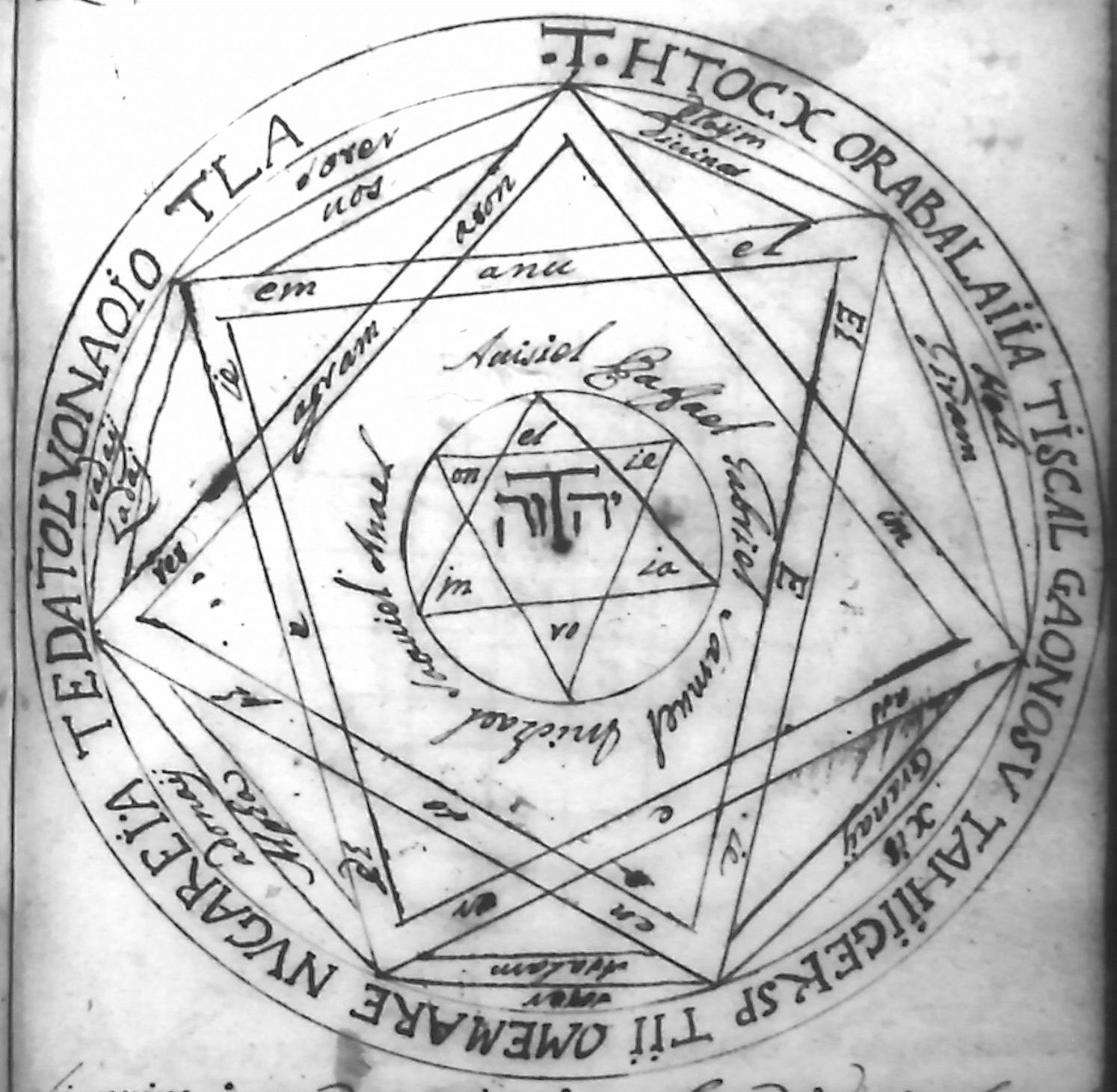
[It should be written on sheepskin paper or virgin parchment, the which
paper should be tinted green. The circle with the 72 divine letters should be red or the letters
may be gold. The letters within the pentacle should be the same red, or sky blue everywhere,
with the great name of God in gold. It serves to convene all spirits; when shown to
them they will bow and obey you.]
|
1. This pentacle and description are found only in M276 and Aub24. They are obviously versions of Sigillum Dei Aemeth. -JHP
At this point Mathers includes the "Grand Pentacle of Solomon" from L1202 and L1203
with the following explanation:-
(The author of the Magical Calendar was actually
Johann Baptista Großchedel. -JHP) |
||||||||||||||||||||||||||
SATURN. | |||||||||||||||||||||||||||
Figure 11.-- The first pentacle of Saturn.-- This pentacle is
of great value and utility for striking terror into the spirits.
Wherefore, upon its being shown to them they submit, and kneeling
upon the earth before it, they obey.
|
Editor's Note.-- The Hebrew letters within the square are the four great names of God which are written with four letters:— IHVH, Yod, He, Vau, He; ADNI, Adonai; IIAI, Yiai (this name has the same Numerical value in Hebrew as the name EL) ; and AHIH, Eheieh. The Hebrew versicle which surrounds it is from Psalm lxxii. 9; 'The Ethiopians shall kneel before him, his enemies shall lick the dust.' -SLM The manuscripts do not number the pentacles, and only the Lans. mss. assign most of them to planets. A version of this pentacle is given by Agrippa, in OP3.11, based on the early Kabbalistic text Book of Speculation by Rabbi Hamai Gaon (13th ce) via Reuchlin, where the names are given as IHVH, ADNI, YYAY, AHYH. This is also the first pentacle in Aub. 24, Ad. 10862, and M276. In W4670, it is number 17. The third name is garbled in the manuscripts, and none of them exhibit good Hebrew orthography. In most of them the third name looks like IRAH. In M276 it looks like IZAH or IVAH. Ad. 10862 looks more like IARL. The verse in Aub24, M276, Ad. 10862, K288 et al. is in Latin (Ps71:9) "Coram illo procident Aethiopes et inimici eius terram lingent." A version of this pentacle is also found in Gremoire du Pape Honorius (1800). -JHP |
||||||||||||||||||||||||||
Figure 12.-- The second pentacle of Saturn.-- This pentacle is
of great value against adversaries; and of especial use in repressing
the pride of the spirits.
|
Editor's note.-- This is the celebrated
the most perfect existing form of double acrostic, as far as the arrangement of the letters is concerned; it is repeatedly mentioned in the records of mediæval Magic; and, save to very few, its derivation from the present pentacle has been unknown. It will be seen at a glance that it is a square of five, giving twenty-five letters, which, added to the unity, gives twenty-six, the numerical value of IHVH. The Hebrew versicle surrounding it is taken from Psalm lxxii. 8, 'His dominion shall be also from the one sea to the other, and from the flood unto the world's end.' This passage consists also of exactly twenty-five letters, and its total numerical value (considering the final letters with increased numbers), added to that of the name Elohim, is exactly equal to the total numerical value of the twenty-five letters in the square. -SLM This is also the second pentacle in M276 and Aub24, but the third in Sl. 1307, and the thirtieth in Ad. 10862, and number 18 in W. The verse reads "et dominabitur a mari usque ad mare et a flumine usque ad terminos orbis terrarum" In Sl. 1307 the SATOR/AREPO etc. are all written in Roman letters. -JHP |
||||||||||||||||||||||||||
Figure 13.-- The third pentacle of Saturn.-- This should be made
within the magical circle, and it is good for use at night when
thou invokest the spirits of the nature of Saturn.
|
Editor's Note.-- The characters at the ends of the rays of the mystic wheel are magical characters of Saturn. Surrounding it are the names of the angels:— Omeliel, Anachiel, Arauchiah, and Anazachia, written in Hebrew. -SLM
This is the third pentacle in Ad. 10862 and M276, the sixth in Aub24, and number 19 in W.
The names in M276 read, "Omaliel, anachiel, Arauichia, anazachia"
In all cases the names are given in Roman letters. -JHP
|
||||||||||||||||||||||||||
Figure 14.-- The fourth pentacle of Saturn.-- This pentacle serveth
principally for executing all the experiments and operations of
ruin, destruction, and death. And when it is made in full perfection,
it serveth also for those spirits which bring news, when thou
invokest them from the side of the South.
|
Editor's Note.-- The Hebrew words around the sides of the triangle are from Deut. vi. 4:— 'Hear, O Israel, IHVH ALHINV is IHVH AChD.' The surrounding versicle is from Psalm cix. 18:— 'As he clothed himself with cursing like as with a garment, so let it come into his bowels like water, and like oil into his bones.' In the center of the pentacle is the mystic letter Yod. -SLM This is the second pentacle in Ad. 10862, the fifth in Aub 24, and number 20 in W. The verse reads, "induit maledictionem sicut vestimentum et intravit sicut aqua in interiora eius et sicut oleum in ossibus eius." The same verse is found on the tenth pentacle in Sl. 1307, but the drawing is quite different.
Aub 24 description reads:
Hoc cum sequenti sunt Pentacula Saturni,
et debent fieri in circulo cum tempore noctis invocantur spiritus naturae Saturni.
Valent principaliter contra ad exequenda omnia experimenta, quae fiunt ad ruinam, destructionem, et mortem.
Et perficiuntur per spiritus alatores,
qui dicuntur daemones meridionales et sunt protervi, sed ostensis pentaculis comparent.
("This with the following are pentacles of Saturn,
and must be made in the circle during the nighttime,
when the spirits of Saturnian nature are called upon.
They serve principally for carrying out all experiments
which cause ruin, destruction, and death.
And they are completed through the allatori (messenger) spirits,
who are called southern demons, and they are violent, but they appear when shown the pentacles.")
-JHP |
||||||||||||||||||||||||||
Figure 15.-- The fifth pentacle of Saturn.-- This pentacle defendeth
those who invoke the spirits of Saturn during the night; and chaseth
away the spirits which guard treasures.
|
Editor's Note.-- The Hebrew letters in the angles of the cross are those of the name IHVH. Those in the angles of the square form ALVH, Eloah. Round the four sides of the square are the names of the angels:— Arehanah, Rakhaniel, Roelhaiphar, and Noaphiel. The versicle is:— 'A great God, a mighty, and a terrible.' -- Deut. x. 17. -SLM This is the twenty-eighth pentacle in Ad. 10862, and number 13 in W. The verse reads, "Terribilis Fortis Potens Deus." -JHP |
||||||||||||||||||||||||||
Figure 16.-- The sixth pentacle of Saturn.-- Around this pentacle
is each name symbolized as it should be. The person against whom
thou shalt pronounce it shall be obsessed by demons.
|
Editor's Note.-- It is formed from mystical characters of Saturn. Around it is written in Hebrew: 'Set thou a wicked one to be ruler over him, and let Satan stand at his right hand.' -SLM This is the twenty-ninth pentacle in Ad. 10862, number 34 in Aub24, and number 14 in W. Aub. 24 labels it as "all black", while Ad. 10862 labels it as red (rosso). The verse is from Psalm 108.6 according to the Vulgate numbering: "constitue super eum peccatorem et diabulus stet a dextris eius." According to True Black Magic (La véritable magie noire) "The name for whom it is being made, must be clearly written around the center of the pentacle, where the dots are shown." Mathers misses this point. -JHP |
||||||||||||||||||||||||||
Figure 17.-- The seventh and last pentacle of Saturn.-- This pentacle
is fit for exciting earthquakes, seeing that the power of each
order of angels herein invoked is sufficient to make the whole
Universe tremble.
|
Editor's Note.-- Within the pentacle are the names of the nine orders of angels, those of six of them in ordinary Hebrew characters, and the remainder in the letters which are known as 'The Passing of the River.' These nine orders are:— 1. CHAIOTH HA-QADESCH, Holy Living Creatures; 2. AUPHANIM, Wheels; 3. ARALIM, Thrones; 4. CHASCHMALIM, Brilliant Ones; 5. SERAPHIM, Fiery Ones; 6. MELAKIM, Kings; 7. ELOHIM, Gods; 8. BENI ELOHIM, Sons of the Elohim; 9. KERUBIM, Kerubim. The versicle is from Psalm xviii. 7:— 'Then the earth shook and trembled, the foundations of the hills also moved and were shaken, because He was wroth.' -SLM This is the thirty-first pentacle in Ad. 10862. For the alphabet "Passing of the River" (Lat. Transitus Fluvii), Abraham ben Meir de Balmis. Mikneh Avram = Peculium Abrae: grammatica Hebraea una cum Latino nuper edita. Impressa Venetijs: In aedibus Danielis Bo[m]bergi, 1523, sig. B6v. Also see Agrippa, OP3.30 The verse reads, "commota est et contremuit terra et fundamenta montium conturbata sunt et commota sunt quoniam iratus est eis." -JHP |
||||||||||||||||||||||||||
JUPITER. | |||||||||||||||||||||||||||
Figure 18.-- The first pentacle of Jupiter.-- This serveth to
invoke the spirits of Jupiter, and especially those whose names
are written around the pentacle, among whom Parasiel is the lord
and master of treasures, and teacheth how to become possessor
of places wherein they are.
|
Editor's Note.-- This pentacle is composed of mystical characters of Jupiter. Around it are the names of the angels:— Netoniel, Devachiah, Tzedeqiah, and Parasiel, written in Hebrew. -SLM This is the fifth pentacle in Ad. 10862, the seventh in Aub24, and number 15 in W. -JHP |
||||||||||||||||||||||||||
Figure 19.-- The second pentacle of Jupiter.-- This is proper for
acquiring glory, honors, dignities, riches, and all kinds of good,
together with great tranquillity of mind; also to discover treasures
and chase away the spirits who preside over them. It should be
written upon virgin paper or parchment, with the pen of the swallow
and the blood of the screech-owl [*Little Owl].
|
Editor's Note.-- In the center of the hexagram are the letters of the name AHIH, Eheieh; in the upper and lower angles of the same, those of the name AB, the Father; in the remaining angles those of the name IHVH. I believe the letters outside the Hexagram in the re-entering angles to be intended for those of the first two words of the versicle, which is taken from Psalm cxii. 3:— 'Wealth and riches are in his house, and his righteousness endureth for ever.' -SLM This is the fourth pentacle in Ad. 10862, the eighth from Aub24, and number 16 in W. The verse is from Vulgate, Ps.111:3: "gloria et divitiae in domo eius et iustitia eius manet in saeculum saeculi." Aub24 uses the word noctua (Athene noctua a small owl species), and adds that it can also be engraved. Ad. 10862 (Ital.): sangue di noctola, i.e. nottola (a reddish brown bat species Nyctalus noctula) seems to be a mistake. -JHP | ||||||||||||||||||||||||||
Figure 20.-- The third pentacle of Jupiter. This defendeth and
protecteth those who invoke and cause the spirits to come. When
they appear show unto them this pentacle and immediately they
will obey.
|
Editor's Note.-- In the upper left hand corner is the magical seal of Jupiter with the letters of the name IHVH. In the others are the seal of the Intelligence of Jupiter, and the names Adonai and IHVH. -- Around it is the versicle from Psalm cxxv. 1:— 'A song of degrees. They that trust in IHVH shall be as Mount Zion, which cannot be removed, but abideth for ever.' -SLM The seals on the left appear to be taken from Agrippa, OP2.22. The verse reads, "qui confidunt in Domino sicut mons Sion non commovebitur in aeternum qui habitat in Hierusalem." In Aub. 24, Hebrew reads TzHQ and RVHIH (רוהיה). In Mich 276, ASV-SU-B111, and Bud 256, the word in the upper right appears to read TzDQ (צדק) ("Jupiter" or "Justice"). Although distorted, Harl. 3981 could also be read TzDQ. Mathers' problematic reading of "ADNI" seems to be based on Lans. 1202, which is particularly distorted. -JHP With these corrections, the pentacle would look like this:
|
||||||||||||||||||||||||||
Figure 21.-- The fourth pentacle of Jupiter.-- It serveth to acquire
riches and honor, and to possess much wealth. Its angel is Bariel.
It should be engraved upon silver in the day and hour of Jupiter
when he is in the sign Cancer.
|
Editor's Note.-- Above the magical sigil is the name IH, Iah. Below it are the names of the angels Adoniel and Bariel, the letters of the latter being arranged about a square of four compartments. Around is the versicle from Psalm cxii. 3:— 'Wealth and riches are in his house, and his righteousness endureth for ever.' -SLM This is the twenty-seventh pentacle in Ad. 10862, the 25th in Aub24, second in W, and the eighth in Sl. 1307. The verse reads, "gloria et divitiae in domo eius et iustitia eius manet in saeculum saeculi" -JHP |
||||||||||||||||||||||||||
Figure 22.-- The fifth pentacle of Jupiter.-- This hath great power.
It serveth for assured visions. Jacob being armed with this pentacle
beheld the ladder which reached unto heaven.
|
Editor's Note.-- The Hebrew letters within the pentacle are taken from the five last words of the versicle which surrounds it, each of which contains five letters. These are, then, recombined so as to form certain mystical names. The versicle is taken from Ezekiel i. 1:— 'As I was among the captives by the river of Chebar, the heavens were opened, and I saw visions of Elohim.' In my opinion the versicle should only consist of the five last words thereof, when the anachronism of Jacob using a pentacle with a sentence from Ezekiel will not longer exist. -SLM This is the sixth pentacle in Ad. 10862, but the 29th in Aub24, and the third in W. Verse reads "cum essem in medio captivorum iuxta fluvium Chobar aperti sunt caeli et vidi visiones Dei." Aub 24 specifies colors as follows (-JHP):
|
||||||||||||||||||||||||||
Figure 23.-- The sixth pentacle of Jupiter.-- It serveth for protection
against all earthly dangers, by regarding it each day devoutedly,
and repeating the versicle which surroundeth it. 'Thus shalt thou
never perish.'
|
Editor's Note.-- The four names in the arms of the cross are:— Seraph, Kerub, Ariel, and Tharsis; the four rulers of the elements. The versicle is from Psalm xxii. 16, 17:— 'They pierced my hands and my feet, I may tell all my bones.' -SLM This is the seventh pentacle in Ad. 10862, and the fourth in W. The verse reads, "foderunt manus meas et pedes meos dinumeraverunt omnia ossa mea." In Aub24 it is the 32nd pentacle, and the verse reads, "foderunt manus meas et pedes meos, scrutati sunt omnia ossa mea, et tradiderunt me hominibus." -JHP |
||||||||||||||||||||||||||
Figure 24.-- The seventh and last pentacle of Jupiter.-- It hath
great power against poverty, if thou considerest it with devotion,
repeating the versicle. It serveth furthermore to drive away those
spirits who guard treasures, and to discover the same.
|
Editor's Note.-- Mystical characters of Jupiter with the verse:— 'Lifting up the poor out of the mire, and raising the needy from the dunghill, that he may set him with princes, even with the princes of his people.' -- Psalm cxiii. 7. -SLM In Aub. 24 this is the 33rd pentacle. Verse reads, "suscitans a terra inopem et de stercore erigens pauperem ut conlocet eum cum principibus." This is the twenty-fifth pentacle in Ad. 10862, in which the verse is missing. In W it is the fifth pentacle. -JHP |
||||||||||||||||||||||||||
MARS. | |||||||||||||||||||||||||||
Figure 25.-- The first pentacle of Mars.-- It is proper for invoking
spirits of the nature of Mars, especially those which are written
in the pentacle.
|
Editor's Note.-- Mystical characters of Mars, and the names of the four angels:— Madimiel, Bartzachiah, Eschiel, and Ithuriel written in Hebrew around the pentacle. -SLM This is the twenty-fourth pentacle in Ad. 10862, the ninth in Aub24, and number 6 in W. -JHP |
||||||||||||||||||||||||||
Figure 26.-- The second pentacle of Mars.-- This pentacle serveth
with great success against all kinds of diseases, if it be applied
unto the afflicted part.
|
Editor's Note.-- The letter Hé, in the angles of the hexagram. Within the same the names IHVH, IHShVH Yeheshuah (the mystic Hebrew name for Joshua or Jesus, formed of the ordinary IHVH with the letter Sh placed therein as emblematical of the spirit), and Elohim. Around it is the sentence, John i. 4:— 'In him was life, and the life was the light of man.' This may be adduced as an argument of the greater antiquity of the first few mystical verses of the Gospel of St. John. -SLM
This pentacle is in Harl. 3981, but is not found in M276, Ad. 10862,
Sl. 3091, L1202, K288, Aub24, or W. The verse reads
"In ipso vita erat et vita erat lux hominum." -JHP | ||||||||||||||||||||||||||
Figure 27:— The third pentacle of Mars.-- It is of great value
for exciting war, wrath, discord, and hostility; also for resisting
enemies, and striking terror into rebellious spirits; the names
of God the all powerful are therein expressly marked.
|
Editor's Note.-- The letters of the names Eloah and Shaddaï. In the centre is the great letter Vau, the signature of the Qabalistic Microprosopus. Around is the versicle from Psalm lxxvii. 13:— 'Who is so great a God as our Elohim?' -SLM This is the tenth pentacle in Ad. 10862 as well as in Aub. 24. Verse is actually from 1 Sam 2:2: "non est fortis sicut Deus noster" -JHP |
||||||||||||||||||||||||||
Figure 28.-- The fourth pentacle of Mars.-- It is of great virtue
and power in war, wherefore without doubt it will give thee victory.
|
Editor's Note.-- In the center is the great name Agla; right and left, the letters of the name IHVH; above and below, El. Round it is the versicle from Psalm cx. 5:— 'The Lord at thy right hand shall wound even kings in the day of his wrath.' -SLM This is the eleventh pentacle in Ad. 10862, the 24th in Aub. 24, and the fifth in Sl. 1307. In Sl. 1307 the AGLA in the center is written in Roman letters. The verse reads "Dominus a dextris tuis confregit in die irae suae reges mundi" -JHP |
||||||||||||||||||||||||||
Figure 29.-- The fifth pentacle of Mars.-- Write thou this pentacle
upon virgin parchment or paper, because it is terrible unto the
demons, and at its sight and aspect they will obey thee, for they
cannot resist its presence.
|
Editor's Note.-- Around the figure of the scorpion is the word HVL. The versicle is from Psalm xci. 13.-- 'Thou shalt go upon the lion and adder, the young lion and the dragon shalt thou tread under thy feet.' -SLM This is the eighth pentacle in Ad. 10862, the 31st in Aub24, and number 32 in W. The verse reads, "Super aspidem et basiliscum ambulabis et; conculcabis leonem et draconem." Mathers' and most of the manuscripts show a scorpion in the middle. Compare L1202, pg. 141b. -JHP |
||||||||||||||||||||||||||
Figure 30.-- The sixth pentacle of Mars.-- It hath so great virtue
that being armed therewith, if thou art attacked by any one, thou
shalt neither be injured nor wounded when thou fightest with him,
and his own weapons shall turn against him.
|
Editor's Note.-- Around the eight points of the radii of the pentacle are the words 'Elohim qeber, Elohim hath covered (or protected),' written in the secret alphabet of Malachim, or the writing of the angels. The versicle is from Psalm xxxvii. 15:— 'Their sword shall enter into their own heart, and their bow shall be broken.'-SLM This is the ninth pentacle in Ad. 10862, and numbers 7 and 33 in W. The verse in Latin reads "gladius eorum intret in corda ipsorum et arcus ipsorum confringatur." -JHP |
||||||||||||||||||||||||||
Figure 31.-- The seventh and last pentacle of Mars.-- Write thou
this upon virgin parchment or paper with the blood of a bat, in
the day and hour of Mars; and uncover it within the circle, invoking
the demons whose names are therein written; and thou shalt immediately
see hail and tempest.
|
Editor's Note.-- In the center of the pentacle are the divine names, El and Yiai, which have the same numerical value when written in Hebrew. The letters in Hebrew, and in the secret alphabet called the Celestial, compose the names of spirits. Round the pentacle is:— 'He gave them hail for rain, and flaming fire in their land. He smote their vines also, and their fig-trees.' -- Psalm cv. 32, 33. -SLM This is the 34th pentacle in W. This also corresponds with the twenty-third pentacle in Ad. 10862, but the drawing is much simpler. The verse reads, "Posuit pluvias eorum grandinem ignem conburentem in terra ipsorum destruxit vineas eorum." -JHP |
||||||||||||||||||||||||||
THE SUN. | |||||||||||||||||||||||||||
Figure 32.-- The first pentacle of the Sun.-- The countenance
of Shaddaï the almighty, at whose aspect all creatures obey,
and the angelic spirits do reverence on bended knees.
|
Editor's Note.-- This singular pentacle contains the head of the great angel Methraton or Metatron, the vice-gerent and representative of Shaddaï, who is called the Prince of Countenances, and the right-hand masculine cherub of the Ark, as Sandalphon is the left and feminine. On either side is the name 'El Shaddaï.' Around is written in Latin:— 'Behold his face and form by whom all things were made, and whom all creatures obey.' -SLM This is the twenty-second pentacle in Ad. 10862, the 26th in Aub24, number 22 in W, and the eleventh in Sl. 1307. The verse reads, "Ecce faciem eius facta sunt et cui omnes obedieunt creaturae." In L1202 this pentacle is attributed to Mars. -JHP |
||||||||||||||||||||||||||
Figure 33.-- The second pentacle of the Sun.-- This pentacle,
and the preceding and following, belong to the nature of the Sun.
They serve to repress the pride and arrogance of the solar spirits,
which are altogether proud and arrogant by their nature.
|
Editor's Note.-- Mystical characters of the Sun and the names of the angels:— Shemeshiel, Paimoniah, Rekhodiah, and Malkhiel. -SLM This is the twentieth pentacle in Ad. 10862, the eleventh in Aub24, and number 28 in W. -JHP |
||||||||||||||||||||||||||
Figure 34.-- The third pentacle of the Sun.-- This serveth in
addition (to the effects of the two preceding) to acquire kingdom
and empire, to inflict loss, and to acquire renown and glory,
especially through the name of God, Tetragrammaton, which therein
is twelve times contained.
|
Editor's Note.-- The name IHVH, twelve times repeated; and a versicle somewhat similar to Daniel iv. 34:— 'My kingdom is an everlasting kingdom, and my dominion endureth from age to age.' -SLM This is the twenty-first pentacle in Ad. 10862, the twelfth in Aub24, and numbers 29 and 40 in W. The verse reads "Regnum meum regnum omnium saeculorum & generatio mea in generatione & generationum" (compare with Ps144.13: "regnum tuum regnum omnium saeculorum et dominatio tua in omni generatione). -JHP |
||||||||||||||||||||||||||
Figure 35.-- The fourth pentacle of the Sun.-- This serveth to
enable thee to see the spirits when they appear invisible unto
those who invoke them; because, when thou hast uncovered it, they
will immediately appear visible.
|
Editor's Note.-- The names IHVH, Adonai, are written in the center in Hebrew; and round the radii in the mystical characters of the 'Passing of the River.' The versicle is from Psalm xiii. 3, 4:—'Lighten mine eyes that I sleep not in death, lest mine enemy say, I have prevailed against him.' -SLM This is the fifteenth pentacle in Ad. 10862, the twelfth in Sl. 1307, and number 30 in W. Psalm 12:4-5: illumina (*inlumina) oculos meos ne umquam obdormiam in mortem (5) nequando dicat inimicus meus praevalui adversus eum. According to Ad. 10862, it should be colored sky blue (celeste). -JHP | ||||||||||||||||||||||||||
Figure 36.-- The fifth pentacle of the Sun.-- It serveth to invoke
those spirits who can transport thee from one place unto another,
over a long distance and in short time.
|
Editor's Note.-- Characters in the 'Passing of the River' Alphabet, forming spirit's names. The versicle is from Psalm xci. 11, 12:— 'He shall give his angels charge over thee, to keep thee in all thy ways. They shall bear thee up in their hands.' -SLM This is the twelfth pentacle in Ad. 10862, but the 36th in Aub. 24. The verse reads "angelis suis mandabit de te ut custodiant te in omnibus viis tuis in manibus portabunt te." Figures 36 and 37 in Mathers, which he calls The Fifth and Sixth pentacles of the Sun, are not found in L1202, but do occur in Ad. 10862, Kings 288, and Sl. 3091.
Aub24 seems to read: DAThA (top); GIBR (left); LOOLM (bottom); ADNI (right). |
||||||||||||||||||||||||||
Figure 37.-- The sixth pentacle of the Sun.-- It serveth excellently
for the operation of invisibility, when correctly made.
|
Editor's Note.-- In the center is the mystical letter Yod, in the Celestial Alphabet. The three letters in the 'Passing of the River' writing, in the angles of the triangle, form the great name Shaddaï. The words in the same characters round its three sides are, in my opinion, from Genesis i. 1:— 'In the beginning the Elohim created,' etc.; but the characters are sadly mangled in the MSS. The versicle is from Psalms lxix. 23, and cxxxv. 16:— 'Let their eyes be darkened that they see not; and make their loins continually to shake. They have eyes and see not.' -SLM This is the sixteenth pentacle in Ad. 10862, and number 5 in Aub. 24. Verse reads: "obscurentur oculi eorum ne videant et dorsum eorum semper incurva" (Ps68:24) ... "oculos habent et non videbunt" (Ps134:16) -JHP |
||||||||||||||||||||||||||
Figure 38.-- The seventh and last pentacle of the Sun.-- If any
be by chance imprisoned or detained in fetters of iron, at the
presence of this pentacle, which should be engraved in Gold on
the day and hour of the Sun, he will be immediately delivered
and set at liberty.
|
Editor's Note.-- On the arms of the cross are written the names of Chasan, angel of Air; Arel, angel of Fire; Phorlakh, angel of Earth; and Taliahad, angel of Water. Between the four arms of the cross are written the names of the four rulers of the elements: Ariel, Seraph, Tharshis, and Cherub. The versicle is from Psalm cxvi. 16, 17:— 'Thou hast broken my bonds in sunder. I will offer unto thee the sacrifice of thanksgiving, and will call upon the name of IHVH.' -SLM Agrippa OP3.24 gives Ariel, Seraph, Tharsis, and Cherub as assigned to the elements. He apparently took this from Reuchlin's De arte cabalistica Agrippa also includes them in his "scale of 4", OP2.7. This is the eighteenth pentacle in Ad. 10862, and number 31 in W. It also appears in Aub. 24, fol. 59v. Verse reads “Disrupisti vincula mea; tibi sacrificabo hostiam laudis et in nomen Domini invocabo.” (Ps. 115:7-8.) -JHP |
||||||||||||||||||||||||||
VENUS. | |||||||||||||||||||||||||||
Figure 39.-- The first pentacle of Venus.-- This and those following
serve to control the spirits of Venus, and especially those herein
written.
|
Editor's Note.-- Mystical characters of Venus, and the names of the angels Nogahiel, Acheliah, Socodiah (or Socohiah) and Nangariel. -SLM This is the fourteenth pentacle in Ad. 10862, the thirteenth in Aub24, and number 8 in W. -JHP |
||||||||||||||||||||||||||
Figure 40.-- The second pentacle of Venus.-- These pentacles are
also proper for obtaining grace and honor, and for all things
which belong unto Venus, and for accomplishing all thy desires
herein.
|
Editor's Note.-- The letters round and within the pentagram form the names of spirits of Venus. The versicle is from Canticles viii. 6:— 'Place me as a signet upon thine heart, as a signet upon thine arm, for love is strong as death.' -SLM This is the seventeenth pentacle in Ad. 10862, where it is drawn without any verse. In Aub24 it is the fourteenth, and the verse is intact. In Sl. 1307 it is the first pentacle, and it has Roman letters in the middle rather than Hebrew. The verse reads, "Pone me ut signaculum super cor tuum ut signaculum super brachium tuum quia fortis est ut mors dilectio." According to Ad. 10862 it should be red (rosso). In W it is pentacle number 9. -JHP |
||||||||||||||||||||||||||
Figure 41.-- The third pentacle of Venus.-- This, if it be only
shown unto any person, serveth to attract love. Its angel Monachiel
should be invoked in the day and hour of Venus,1 at one o'clock
or at eight.
|
Editor's Note.-- The following names are written within the figure:— IHVH, Adonai, Ruach, Achides, Ægalmiel, Monachiel, and Degaliel. The versicle is from Genesis i. 28:— 'And the Elohim blessed them, and the Elohim said unto them, Be ye fruitful, and multiply, and replenish the earth, and subdue it.' -SLM 1. This is the ninteenth pentacle in Ad. 10862, but the 30th in Aub. 24. Aub. 24, Bud 256, and Sl. 1307 all read "Jovis" ("Jupiter") (as does VMN), while Ad. 10862, Mich 276, and W4668 all read "venere" ("Venus"). In place of Monachiel, VMN and Bud 256 specify the angel as Sabeyol. The verse reads "dixit eloim crescite et multiplicamini et replete terram et subicite eam" which is adapted from Gen 1:28: "benedixitque illis Deus et ait crescite et multiplicamini et replete terram et subicite eam." In Sl. 1307 it is the seventh pentacle, and number 11 in W. The verse reads, "dixit Deus crescite et multiplicamini replete terram et subycite eam." -JHP |
||||||||||||||||||||||||||
Figure 42.-- The fourth pentacle of Venus.-- It is of great power,
since it compels the spirits of Venus to obey, and to force on
the instant any person thou wishest to come unto thee.
|
Editor's Note.-- At the four angles of the figure are the four letters of the name IHVH. The other letters form the names of spirits of Venus, e.g.:— Schii, Eli, Ayib, etc. The versicle is from Genesis ii. 23, 24:— 'This is bone of my bones, and flesh of my flesh. And they two were one flesh.' -SLM This corresponds with the thirteenth pentacle in Ad. 10862, but the drawing looks considerably different than the Colorno manuscripts. This is the 28th pentacle in Aub24, which resembles the Colorno mss, more closely than Ad. 10862. In W it is pentacle number 10. The verse reads "Hoc est enim os de ossibus et caro de carne mea." -JHP |
||||||||||||||||||||||||||
Figure 43.-- The fifth and last pentacle of Venus.-- When it is
only showed unto any person soever, it inciteth and exciteth wonderfully
unto love.
|
Editor's Note.-- Around the central square are the names Elohim, El Gebil, and two other names which I cannot decipher, and have, therefore, given them as they stand. The characters are those of the 'Passing of the River.' The surrounding versicle is from Psalm xxii. 14:— 'My heart is like wax, it is melted in the midst of my bowels.' -SLM The name at the bottom should read 'AL GBR', not 'AL GBL' as Colorno and Mathers. This is the 35th pentacle in Aub24, and the 12th in W. The verse reads, "inflammatum est cor meum et renes mei commutati sunt et ego ad nihilum redactus sum." (Ps72.21) None of the rest of the pentacles occur in Ad. 10862. -JHP |
||||||||||||||||||||||||||
MERCURY. | |||||||||||||||||||||||||||
Figure 44.-- The first pentacle of Mercury.-- It serveth to invoke
the spirits who are under the Firmament.
|
Editor's Note.-- Letters forming the names of the spirits Yekahel and Agiel. -SLM This is the third pentacle in Aub24, and numbers 25 and 36 in W. -JHP |
||||||||||||||||||||||||||
Figure 45.-- The second pentacle of Mercury.-- The spirits herein
written serve to bring to effect and to grant things which are
contrary unto the order of Nature; and which are not contained
under any other head. They easily give answer, but they can with
difficulty be seen.
|
Editor's Note.-- The letters form the names of Böel and other spirits. -SLM This is the fourth pentacle in Aub24, and numbers 26 and 37 in W. -JHP |
||||||||||||||||||||||||||
Figure 46.-- The third pentacle of Mercury.-- This and the following
serve to invoke the spirits subject unto Mercury; and especially
those who are written in this pentacle.
|
Editor's Note.-- Mystical characters of Mercury, and the names of the angels: Kokaviel, Ghedoriah, Savaniah, and Chokmahiel. -SLM In Aub24 this is the fifteenth pentacle, and number 27 in W, and possibly number 38. -JHP |
||||||||||||||||||||||||||
Figure 47.-- The fourth pentacle of Mercury.-- This is further
proper to acquire the understanding and knowledge of all things
created, and to seek out and penetrate into hidden things; and
to command those spirits which are called Allatori to perform
embassies. They obey very readily.
|
Editor's Note.-- In the center is the name of God, El. The Hebrew letters inscribed about the dodecagram make the sentence, 'IHVH, fix thou the Volatile, and let there be unto the void restriction.' The versicle is:— 'Wisdom and virtue are in his house, and the Knowledge of all things remaineth with him for ever.' -SLM "Allatori" (Latin allator pl. allatores is Late Latin spelling of ad+lator) meaning "messenger" or "those who bring back news or intelligence." Compare with those spirits which bring back treasure or stolen goods. Le Véritable Magie Noire ("True Black Magic") calls them "shadow spirits" (esprits ombreux). In W, this is pentacle number 21, where the verse reads "Sapientia et virtus in domo eius, et scientia omnia rerum apud eum in saeculorum saeculi. In Aub24 this is the sixteenth pentacle, but the verse reads, "Et tunc cognovi esse in me scientia cunctarum creaturas, tam quae in coelo, quam quae sub coelo sunt." -JHP |
||||||||||||||||||||||||||
Figure 48.-- The fifth and last pentacle of Mercury.-- This commandeth
the spirits of Mercury, and serveth to open doors in whatever
way they may be closed, and nothing it may encounter can resist
it.
|
Editor's Note.-- Within the pentacle are the names El Ab, and IHVH. The versicle is from Psalm xxiv 7:— 'Lift up your heads, O ye gates, and be ye lift up ye everlasting doors, and the King of Glory shall come in.' -SLM This is the 23rd pentacle in Aub. 24. In Aub24, the second name seems to read "KB IH"; Sl. 3091: "RB IH" The verse reads, "Attollite [*adtollite] portas principes vestras et elevamini portae aeternales et introibit rex gloriae." (Ps23.7.) -JHP |
||||||||||||||||||||||||||
THE MOON. | |||||||||||||||||||||||||||
Figure 49.-- The first pentacle of the Moon.-- This and the following
serve to call forth and invoke the spirits of the Moon; and it
further serveth to open doors, in whatever way they may be fastened.
|
Editor's Note.-- The pentacle is a species of hieroglyphic representation of a door or gate. In the centre is written the name IHVA. On the right hand are the names IHV, IHVH, AL, and IHH. On the left hand are the names of the angels: Schioel, Vaol, Yashiel, and Vehiel. The versicle above the names on either side, is from Psalm cvii. 16:— 'He hath broken the gates of brass, and smitten the bars of iron in sunder.' -SLM Mathers' translation follows Kings 288. It doesn't appear in L1202, Mich 276, Sl. 1307, or Ad. 10862. This is the seventeenth pentacle in Aub. 24. Aub. 24 reads "This pentacle, along with the next four are pentacles of the Moon. They serve for calling spirits, the names of which are written inside the pentacles. This one is effective for opening any doors. It is painted with a silver color." -JHP |
||||||||||||||||||||||||||
Figure 50.-- The second pentacle of the Moon.-- This serveth against
all perils and dangers by water, and if it should chance that
the spirits of the Moon should excite and cause great rain and
exceeding tempests about the circle, in order to astonish and
terrify thee; on showing unto them this pentacle, it will all
speedily cease.
|
Editor's Note.-- A hand pointing to the name El, and to that of the angel Abariel. The versicle is from Psalm lvi. 11:— 'In Elohim have I put my trust, I will not fear, what can man do unto me?' -SLM This is the eighteenth pentacle in Aub24, and number 22 in W. -JHP |
||||||||||||||||||||||||||
Figure 51.-- The third pentacle of the Moon.-- This being duly
borne with thee when upon a journey, if it be properly made, serveth
against all attacks by night, and against every kind of danger
and peril by water.
|
Editor's Note.-- The names Aub and Vevaphel. The versicle is from Psalm xl. 13:— 'Be pleased O IHVH to deliver me, O IHVH make haste to help me.' -SLM This is the nineteenth pentacle in Aub24, and number 23 (?) in W. Verse reads (Ps69) "Deus in adiutorium meum intende Domine ad adiuvandum me festina." Hebrew names in middle read ADNI and NDAPAL. Colors are specified as "Circle outward azure, circle inward greene, star and Latin black." -JHP |
||||||||||||||||||||||||||
Figure 52.-- The fourth pentacle of the Moon.-- This defendeth
thee from all evil sources, and from all injury unto soul or body.
Its angel, Sophiel [*Jophiel],1 giveth the knowledge of the virtue of all
herbs and stones; and unto whomsoever shall name him, he will
procure the knowledge of all.
|
Editor's Note.-- The divine name Eheieh Asher Eheieh, and the names of the angels Yahel and Sophiel. The versicle is:— 'Let them be confounded who persecute me, and let me not be confounded; let them fear, and not I.' -SLM 1. BUD256, Arsenal 2348: Jophiel; Aub 24: Japhiel; Sl. 3091, CM5, VMN: Sophiel. This is the twentieth pentacle in Aub24, and number 24 in W. Verse reads, "Confundantur qui quaerunt animam meam et non confundar ego: Paueant illi et non paueam ego." Compare Jeremiah 17: "Confundantur qui persequuntur me et non confundar ego paveant illi et non paveam ego." -JHP |
||||||||||||||||||||||||||
Figure 53.-- The fifth pentacle of the Moon.-- It serveth to have
answers in sleep. Its angel Iachadiel serveth unto destruction and loss,
as well as unto the destruction of enemies. Thou mayest also call upon
him by Abdon and Dalé against all phantoms of the night, and to summon
the souls of the departed from Hades.
|
Editor's Note.-- The divine names IHVH and Elohim, a mystical character of the Moon, and the names of the angels Iachadiel and Azarel. The versicle is from Psalm lxviii. 1:— 'Let God arise, and let his enemies be scattered; let them also who hate him flee before him.' -SLM This is the twenty-first pentacle in Aub. 24, but the second in Sl. 1307. The verse reads, "Exurgat (*exsurgat) Deus et dissipentur inimici eius et fugiant qui oderunt eum a facie eius." -JHP |
||||||||||||||||||||||||||
Figure 54.-- The sixth and last pentacle of the Moon.-- This is
wonderfully good, and serveth excellently to excite and cause
heavy rains, if it be engraved upon a plate of silver; and if
it be placed under water, as long as it remaineth there, there
will he rain. It should be engraved, drawn, or written in the
day and hour of the Moon.
|
Editor's Note.-- The pentacle is composed of mystical characters of the Moon, surrounded by a versicle from Genesis vii. 11, 12:— 'All the fountains of the great deep were broken up ... and the rain was upon the earth.' -SLM
This is the 27th pentacle in Aub. 24, and the ninth pentacle in Sl. 1307.
The verse reads,
"die [mensis] rupti sunt omnes fontes abyssi magnae et cataractae
caeli apertae sunt." Aub. 24 adds "super Terram." -JHP |
||||||||||||||||||||||||||
| [This is the end of the holy pentacles, in all which I have, to the best of my power, restored the Hebrew letters and mystical characters correctly. I have further given nearly every versicle in pointed Hebrew, instead of in the Latin; so that the occult student might not be inconvenienced by having to search out the same in a Hebrew Bible. The restoration of the Hebrew letters in the body of the pentacles has been a work of immense difficulty, and has extended over several years.] | |||||||||||||||||||||||||||
[Pentacles from the Hebrew Key of Solomon (Mafteah Shelomoh, Or. 14759, fol, 35a)]
[Pentacles from the Greek Key of Solomon (Harl. 5596)]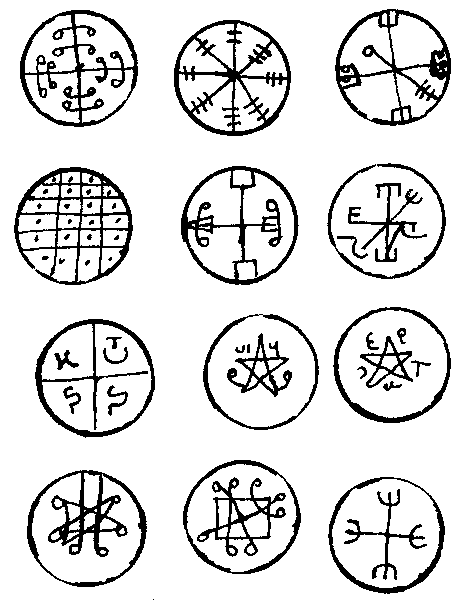
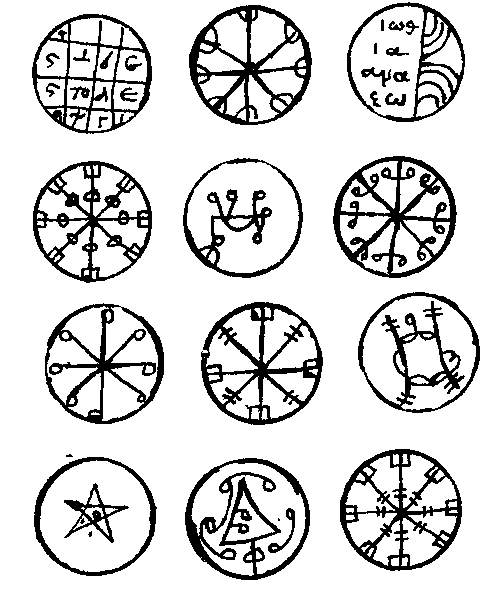
| |||||||||||||||||||||||||||