Corrections and footnotes to this digital edition copyright © 2005-2006 by Joseph H. Peterson. Updated Nov 12, 2022.
NOTE: An expanded printed edition of this text is now available:
Thanks for your support. May God's angels bless you and watch over you.
"He who refuses a copy of this book, or who suppresses it or steals it, will be seized with eternal trembling, like Cain, and the angels of God will depart from him."
Besides the biblical five books of Moses (Pentateuch), there are other writings ascribed to Moses (pseudepigraphically no doubt). The so-called Sixth and Seventh books of Moses in particular consists of a collection of texts which purport to explain the magic whereby Moses won the biblical magic contest with the Egyptian priest-magicians, parted the Red Sea, and other miraculous feats.
Many manuscripts and printed pamphlet versions had circulated in Germany, when Johann Scheible, undertook to collect the major variants. Scheible, an antiquarian from Stuttgart, published the first edition in German in 1849 as volume 6 of his Bibliothek der Zauber-Geheimniss- und Offenbarungs-Bücher, etc. Subsequent revised and expanded editions were supplemented with excerpts from writings on Jewish folklore and esoterica.
An English translation first appeared in New York in 1880, and has been reprinted more than a few times without — as far as I can tell — ever being re-edited. The editors of the many English editions seem to have lacked Scheible’s industriousness, but have instead been content with propagating any and all errors intact. All the English editions thus far have consequently been deficient in many ways, with poorly executed drawings and Hebrew lettering, drawings printed upside down, mistakes in transcription and translation, passages censured and other substantial omissions. All in all, English speaking readers have had an especially difficult challenge trying to make sense of this book.
In making this corrected edition I have drawn on the original sources, starting with Scheible’s own revised and expanded eighth edition. Additionally I have consulted the original sources drawn on by Scheible and his sources, namely the Hebrew Bible, Agrippa’ De Occulta Philosophia (1533), Sepher Raziel, de Abano's Heptameron, Arbatel Of Magick (1575), the Babylonian Talmud, and other cited authors.
This book has become quite influential in American folk-magic, and has been
extensively used by the Pennsylvania Dutch hexmeisters, Hoodoo practitioners,
and African-American root workers. I hope that this corrected edition will
be of interest to those who have suffered with the problems of prior editions,
and I welcome all suggestions.
The introduction is titled 'The magic of the Israelites'. It was added by Scheible for the second edition. While not credited in the English edition, it was written by Joseph Ennemoser, and taken from a chapter of his book Geschichte der Magie (Leipzig, 1844). Besides hiding the origin of this section, the editor of the English edition inexplicably moved it to the middle of the book.
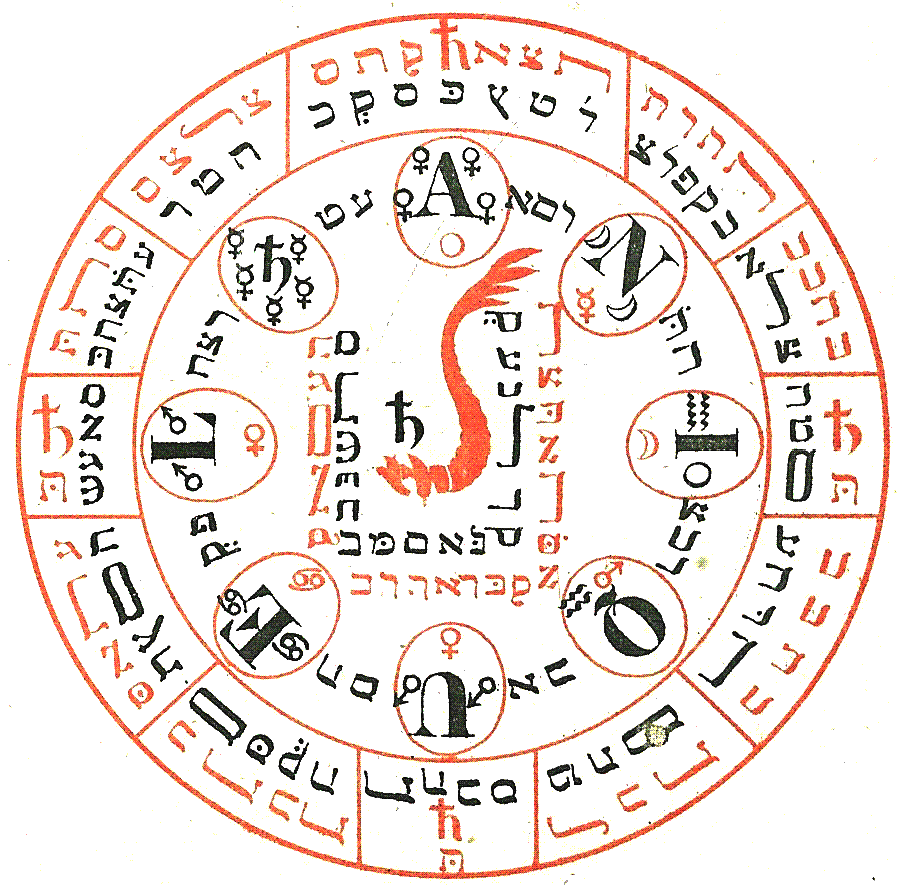
The introduction is followed by a pair of texts titled The Sixth Book of Moses and the Seventh Book of Moses. They contain a series of pseudo-Hebrew sigils and corresponding conjurations. The conjurations seem to be based on Verus Jesuitarum Libellus or a closely related text. It has strong Christian elements, though partially masked from the pseudo-Jesuit text. That the pseudo-Moses text is derived from the pseudo-Jesuit one can be demonstrated by the fact that the former contains mistakes not found in the latter. For example, where Libellus reads "et per vim Dei Patris + et per vim Dei Filii + et per vim Spiritus Sancti" (and by the might of God the Father + and by the might of God the Son + and by the might of the Holy spirit), Moses reads "et Paraim, Dei patris et Peraim Dei filii, et Peraim Dei spiritus Teti" Note the conjurations mention Agrippa by name despite the anachronism.
This is followed by several versions of a text also called the
Sixth and Seventh Books of Moses. These are very short texts, and a
side-by-side comparison of them can be done. Unfortunately, it is obvious that
they all suffer from degrees of degeneration, and it is not clear to me
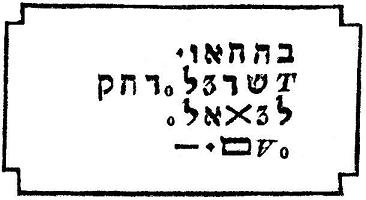
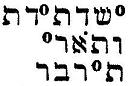
which is the most reliable. As an example, here are three versions of the
'Breastplate of Moses':
| Figure 24. | Figure 73. | Figure 81. |
|---|---|---|
 |
 |
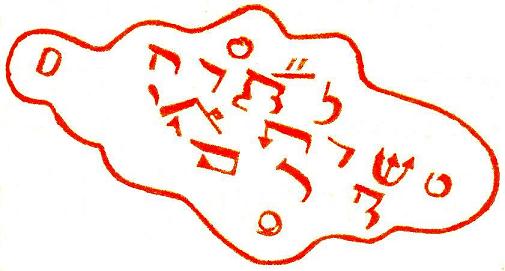
|
The section titled 'Citation of the Seven Great Princes' also appears in J. Scheible, Das Kloster (Stuttgart and Leipzig, 1846. 12 vols. Vol. 3., pp. 1128 ff) where the drawings are in black and red ink. It is one of a series of Faustian texts. Also included in the text is Semiphoras und Schemhamphoras Salomonis Regis. Butler noted that this appeared in J. C. Horst, Zauberbibliothek (Mainz, 1821-6, 6 vols. vol 3. and 4) and indeed Horst is mentioned in the preface to the English edition. Semiphoras und Schemhamphoras was also published by J. Scheible, in his Das Kloster, (Stuttgart and Leipzig, 1846. 12 vols. Vol. 3.) It made "full use of Agrippa's Third Book of Occult Philosophy, notably on the subject of the Sephiroth." (Butler. op. cit, p. 158). It is also heavily indebted to Sepher ha-Razim through its Latin versions, Liber Sepher Razielis idest Liber Secretorum seu Liber Salomonis. For examples see Biblioteca Vaticana, MS Regin. Lat. 1300, also London, British Library MSS. Sloane 3847 and 3853 and Additional 15299. For English translations see Sloane 3846 and 3826. This grimoire was well known by the end of the fifteenth century. Trithemius mentions it as one of his sources for his Steganographia. It was also apparently used by Agrippa in his book On Occult Philosophy on which see the new edition by V. Perrone Compagni.
This is followed by a translation of the Hebrew mystical text
Sepher Schimmush Tehillim, or the magical uses of the
Psalms. This was translated by Gottfried Selig (1722-1795), publisher
of the German (Leipzig) periodical Jude, about Jewish customs and practices.
This popular text is a medieval compilation, and was frequently printed in pamphlet form.
The methods of using the Psalms include sacred names derived from the
various Psalms using various Kabbalistic techniques, including transposition
of letters, such as the method known as "AT BSh" transposition, where Aleph
stands for Tau, Beth for Shin, etc. (The English editor omitted most of the
explanations on transposition):

The Psalms section is followed by a Supplement. In the German edition this has twelve sections, of which the English editor only included the first four (pp. 173-175).
The final section is
'Astrological influences upon man, and
magical cures of the old Hebrews.' This has also been omitted in some
of the English editions.
The German edition which I have used as the primary source for this text is:
TITLE: Das sechste und siebente Buch Mosis, das ist:
  Mosis magische Geisterkunst, das Geheimniss aller
  Geheimnisse. Sammt den verdeutschten Offenbarungen
  und Vorschriften wunderbarster Art der alten weisen
  Hebräer, aus den Mosaischen Büchern, der Kabbala und
  den Talmud zum leiblichen Wohl der Menschen. Wort-
  und bildgetreu nach alten Handschriften mit 42 Tafeln.
Alternate Title: Coleô Cabala. Selections. German.
Edition:      8., sehr verm. Aufl.
Imprint:      New York, Wm. Radde, 1865.
Description:  408 p. illus. 16 cm.
Subjects:     Magic, Jewish.
Other Titles: American imprints. 1865.
     Talmud. Selections. German.
     Bible. O.T. Heptateuch. Selections. German.
Call Number:  296.59 G32 1865
LOCATION:     St. John's University (Alcuin)
The English translation generally follows the 1880 English edition, but
with extensive corrections. I have retranslated passages from the German
where the original translation was confusing, awkward, or inaccurate. Many
passages which were censured from previous editions have been restored. The
Hebrew has also been corrected in some cases. I have tried to standardize
the spelling to facilitate searches, for example, I use "Kabbalah" in place
of Kabala, Kabbala, and Cabala. I am still editing this e-text. The online
edition is the only current one. All footnotes are mine (JHP). Note some of
the sigils are in color in the original, which has been lost in the earlier
English editions. For this edition I have restored all the illustrations based on
the 1865 New York edition and Das Kloster volumes 3 and 5.
I appreciate the help of Norma Dickau, Public Services Librarian at the Alcuin Library
for her untiring help in making it possible for me to photograph their copy.
| BT | Babylonian Talmud. Edited by Rabbi Dr. Isidore Epstein of Jews’ College, London. (1952) Internet version at http://www.come-and-hear.com/talmud/index.html. |
|---|---|
| EE | 1880 English edition. |
| Ger. | German |
| H | (Hebrew Bible) תורה נביאים כתובים (Jerusalem: Koren Publishers, 1969) |
| Heb. | Hebrew |
| K4 | J. Scheible, Das Kloster vol. IV (Stuttgart, 1847) |
| K5 | J. Scheible, Das Kloster vol. V (Stuttgart, 1847) |
| Lat. | Latin |
| OP | Agrippa, Heinrich De occulta philosophia (1533) |
| S | Scheible, Das sechste und siebente Buch Mosis (New York, 1865) |
|
1. S: "Wort- und bildgetreu nach alten Handschriften mit 42 Tafeln. Achtente, sehr vermehrte Auflage." EE: "... Old Writings." | |||||||||||||||||
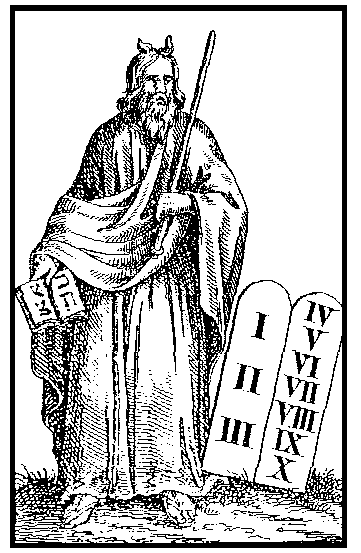 Preface. | ||||||||||||||||||
|
The first edition of this volume has been commended and criticized by
the public. It was admitted to be a valuable compendium of the curiosities
of literature generally, and especially of that pertaining to magic, but
that it was at the same time calculated to foster superstition, and thereby
promote evil — a repetition of the charge made against the honorable
Horst, the publisher of a magical library.2
|
2. J. C. Horst, Zauberbibliothek (Mainz, 1821-6). 6 vols. | |||||||||||||||||
|
In our enlightened age, the unprejudiced will observe in the publication
of such a work, only what the author claims, namely, a contribution in reference
to the aforesaid literature and culture
of no trifling merit; but in regard to the believer also,
the issue of a cheap edition will be more serviceable
than the formerly expensive productions on sorcery, which
were only circulated in abstract forms and sold at extortionate rates.
What other practical value the above named edition may possess is not
the question! Let us not, therefore, underrate this branch
of popular literature; the authors wrote in
accordance with a system which was, or at least,
seemed clear to them, and illustrious persons, in all
ages and climes have not considered the labor requisite
to fathom the mysteries of magic as labor expended in vain,
and although they condemned the form, they
could not deny the possibility or even fact
that gifted men, of inherent worth, could accomplish
such wonderful things.
| ||||||||||||||||||
|
In regard to the present edition it can only be said,
that what has previously been presented as the
so-called Sixth and Seventh Books of Moses, which have for several
centuries attracted the popular faith, in reality was in accordance
with a single old manuscript (the most legible among many), and
given word for word, divested only of orthographical
and other errors which the best interest of literature
demand — with unerring fidelity.
The publisher protests against this practice, but has instead
augmented it with different readings on the topic,
likewise supported by old manuscripts of the
Sixth and Seventh Books of Moses
so that the whole group is now brought together for the sake of completeness,
which were previously only available by lucky coincidence to the die-hard enthusiast.3
|
3. EE completely obscures the meaning of this paragraph: "In regard to the present edition it can only be said, that the so-called Sixth and Seventh Books of Moses, which have for several centuries attracted the popular faith, is reality in accordance with an old manuscript (the most legible among many), and given word for word, divested only of orthographical and other errors which the best interest of literature demand — with unerring fidelity. The publisher guarantees that not one syllable has been added." | |||||||||||||||||
|
To the first edition of this book,
as an introduction, I have added an important essay on Mosaic magic taken
from Ennemoser's Geschichte der Magie ("History of the Magic"),
(Leipzig, 1844).4
|
4. EE omits this paragraph. | |||||||||||||||||
|
| ||||||||||||||||||
Introduction.THE MAGIC OF THE ISRAELITES.1 |
1. S titles this section FIRST PART (Ger. "Erste Abtheilung"); Part 2 starts at Sepher Schimmusch Tehillim. In EE this section is placed following the section titled Seventh Book of Moses, translated by Rabbi Chaleb, but I have restored it to the order found in S. | |||||||||||||||||
|
The complete and reliable history of the human and divine — the divine revelations, and the influence of godly or pious men are found in the scriptural monuments of the old Hebrews in the Holy Scriptures. The Bible is justly styled the Holy Scripture, because it contains the knowledge of the saints, while at the same time, it unites and harmonizes word and deed, doctrine and action. It points out the true relation of man to the Omnipotent — it affords the most direct reference to the great truths of the spiritual and intellectual; it treats of the origin of the universe and its laws, through which all things have to be brought to light — of the anterior and posterior history of mankind — of his future destiny and how to attain it; of the living and visible agents which God employs in the great work of redemption, and, finally, of the most exalted of all beings — of the world's Savior, who was an universal expression in his own person, and who exhibited all divine power and action in one person, while all his forerunners were endowed only with single powers and perfections; who revealed to fallen man the highest and purest ends of his life and the means of his purification and restoration. We find among oriental nations every grade of magic — the steps necessary to solve the mysteries of somnambulism and second-sight, and the infinitely multiplied operations by which unusual occurrences are produced; in like manner we also find these things among the Israelites, but differing totally in character. In the former instance, it was the individual and his presence; in the latter, it was not the individual upon which magic depended, but upon mankind in general, and upon the great future. There, the light of man was made to shine by skilful actions, produced by the lowest arts; here, shone a pure, unclouded, quiet life, vitalized by the warm breath of the Almighty, a light shining into the future, and upon this light depended all life and action. To the Israelite seer not only the fate of single individuals stand revealed, but the fate of nations, yea, of mankind, which in the end must be reconciled to God by the unfolding of magical art, as often happened under the old dispensation, by instinctive somnambulistic influences. If we examine the history of the old covenant we shall find that this remarkable people stood solitary and alone like a pillar of fire amid heathen darkness. Although we find, among other nations, worthy men, who seek after the divine light, surrounded by darkness and uncertainty, here are men of God, bearing the impress of true faith, who give undoubted evidence of higher powers, by visible acts and signs which everywhere separate life from death, and truth from error, and while the ancient remnants of other nations show only theory without application, here we find a connected chain of acts and events — in fact, a divine and lifelike drama. Of all these things the various books of the Holy Scriptures speak with confidence, so that the history of no other people, interwoven with fables, can be compared with them. According to this, the Bible contains the light which illuminates every dark phase in life; it is the groundwork of all human actions, the guiding star of the earthly to the eternal &mdash of the intellectual to the divine, the aim and end of all knowledge. It is the first of three great lights, guiding and governing our faith, and bears no relation, to the other two great lights of the angle which shall make these actions lawful, the circle which sensualizes the fixed limits of the condition of mankind. The Bible is also more instructive and richer in reference to our subject than all other books taken together. We will, therefore, cite a few principal points, as well of the phenomena as of the mode of action and theory relating to magnetism, and then call attention especially to the healing of the sick according to scriptural teachings. We will give an account of the dreams, a great many of which are recorded in the Bible. The dreams recorded in the Bible are many and remarkable. The voice with which God spoke to the prophets and the men consecrated to Him, were generally heard in dreams. The visions of the ancients, according to the testimony of Moses, were nearly always dreams. Numbers xii. 6: "And he said: Hear now my words: If there be a prophet among you, I, the Lord, will make myself known unto him in a vision, and will speak unto him in a dream." Job 33:15: "In a dream, in a vision of the night, when deep sleep falleth upon men, in slumberings upon the bed; then he openeth the ears of men, and sealeth their instruction." I Kings iii. 5: "In Gibeon the Lord appeared to Solomon in a dream by night: and God said, Ask what I shall give thee. And Solomon said, Thou hast showed unto thy servant David my father great mercy, according as he walked before thee in truth, and in righteousness, and in uprightness of heart with thee; and thou hast kept for him this great kindness, etc., give therefore thy servant an understanding heart to judge thy people, that I may discern between good and bad: for who is able to judge this thy so great a people?" Gen. 20:3: "But God came to Abimelech in a dream by night, and said to him, Behold, thou art but a dead man, for the woman thou hast taken; for she is a man's wife; and God said unto him in a dream, Yea, I know that thou didst this in the integrity of thy heart; for I also withheld thee from sinning against me." Gen. 31:23: "And God came to Laban the Syrian in a dream by night, and said unto him, Take heed that thou speak not to Jacob either good or bad." The dreams of Joseph concerning his brethren are also remarkable. Gen. 37:5: "And Joseph dreamed a dream, and he told it to his brethren: and they hated him yet the more: and he said unto them, Hear, I pray you, this dream, which I have dreamed: For behold, we were binding sheaves in the field, and lo, my sheaf arose, and also stood upright: and behold, your sheaves stood round about, and made obeisance to my sheaf. And his brethren said to him, Shalt thou indeed reign over us? or shalt thou indeed have dominion over us?" And he had still another dream, and be told it to his brethren and said: Behold, I have dreamed a dream more: and behold, the sun and the moon and the stars made obeisance to me. And his father rebuked him, and said unto him, What is this dream that thou hast dreamed? Shall I and thy mother and thy brethren indeed come to bow down ourselves to thee on the earth?" Sacred history proves that after Joseph was sold by his brethren to the Egyptian traders that he actually became their king in the court of Pharaoh. The power of Joseph to interpret dreams is further shown by the interpretation of the dreams of the butler and baker while in prison, Gen. 1:40; so, also, of the dreams of king Pharaoh, of the seven fat and lean kine which came out of the water, and of the seven rank and good ears of corn and the seven thin and blasted ears, Gen. 41:1. In the New Testament many dreams are mentioned through which God designed to speak to his followers. In this manner Joseph, the husband of Mary, was told by an angel (Matt. 1:20), that she should conceive of the Holy Ghost and bear a son, who would become the Savior of the world; and then again, that he should take the child and flee into Egypt to escape the murderous intent of Herod; and after the death of Herod, that he should again return to Nazareth (Matt. 2:13-19). In like manner, the three wise men of the East were warned in a dream, that they should not return to Herod, but depart to their own country another way. The Apostles frequently had visions in the night; for example, Paul was commanded to go to Macedonia (Acts 10:9). And in the same book of the New Testament (Acts 18:9), we read: "Then spake the Lord to Paul in the night by a vision. Be not afraid, but speak, and hold not thy peace." Many similar passages might be quoted, e.g., 23:11; 27:23, etc., etc. Let us begin with the history of the creation, as recorded by Moses. "In the beginning God created heaven and earth." Herein lies the great first cause. God is an uncreated being — heaven and earth are the first things created; the antithesis: that which was made of God. In reference to a second antithesis, Moses speaks of light and darkness: "And darkness was upon the face of the earth, and God said, Let there be light, and there was light." Here, too, the question is about light as a creation, which, however, had for its opposite darkness; therefore did the old Egyptians regard darkness as the beginning of all things. Even according to the writings of Moses, this was the Egyptian doctrine, for he says, "Darkness was upon the face of the deep." But as the Egyptian doctrine in its first inception may be regarded as good authority, their error originated in this, that they accepted the darkness before the light; as also a like error of the Persians, inasmuch that they accepted the light before the darkness as being created, the one before the other. The light stands beside darkness as its natural opposite, created and present, as Moses plainly says: "And God divided the light from the darkness, and God called the light day, and the darkness he called night." The Bible also points oat another antithesis in the first germs and figures of the earth, namely, water and spirit — the water as matter, as the germ of the figurative, and the spirit, the Elohim, as the fruitful, active principle. "And the spirit of God moved upon the face of the waters." One-sided views led the earlier philosophers into numerous error. In this manner Thales brought everything out of the water and overlooked the spiritual active whole, in all of which he was imitated by subsequent champions of Materialism. The other one-sided view is, to hold everything as spiritual and regard matter only as an inert abstraction (caput mortuum), which was the case from the earliest period of time among Spiritualists and the advocates of Spiritualism. Moses, therefore, shows his superiority over all the disciples of Egyptian temple-wisdom, as well as of the more modern sects, inasmuch that he was enlightened by divine wisdom, and represented this subject, not in a partial manner, but in its true bearing and significance; he ascribed to matter its true worth and placed the spiritual beside it. Moreover, Moses has given the narrative of the creation in beautiful and captivating language, as for example, in regard to the waters — the difference between the wet and the dry, and how the dry land came forth from the water; how the grass and herbs, which bore seeds, and fruitful trees grew upon the earth; how the mighty deep was filled with living and moving animals, and the birds that fly in the firmament of heaven; how the earth finally brought forth living animals, each after its own kind, and last of all, how God made man "in his own image," to whom he gave "dominion over the fishes of the sea, over the fowls of the air, over the cattle, and over every creeping thing that creeps upon the earth." The Mosaic Eden was the habitation of the originally purely created beings, within whose boundaries grew the tree of knowledge of good and evil. The figure of the serpent shows the nature of the fall of man. We spoke, in another part of this work, of the original purity and wisdom of godly men. Here is the place to record additional Bible principles. To this end we avail ourselves of a mystical, interesting manuscript from which we extract what follows: (MAGIKON; or, the Secret System of an Association of Unknown Philosophers, etc., v. 27-31. Frankfort and Leipzig, 1784. A rare book, whose teachings, in many respects, agree with the Indian Brahmin doctrine).
In view of his divine origin, as an unconditional emanation from God, Adam was not only the noblest being, which, as an expression of divine power, had the preference of all others, for he never owed his existence to a mother; he was a heavenly Adam, brought into being by God himself and was not born into the world in the ordinary manner. He also enjoyed, in consequence of his nature, every prerogative of a pure spirit, surrounded by an invulnerable veil. But this was not the sensual body of the present time, which is only an evidence of his degradation — a coarse mantle — by which he sought to protect himself against the raging elements. His garments were holy, simple, indestructible, and of an indissoluble character. To this condition of perfect glory, in which he enjoyed the purest happiness, he was destined in order to reveal the power of the Almighty, and to rule the visible and invisible. Being in possession of all the prerogatives and insignia of a king, he could also use every means to fulfill his high destiny. As the champion of unity, he was secure from the attacks of all inward and outward enemies, because the veil by which he was covered (the germs of which are still within us), rendered him invulnerable. One advantage that the original pure man possessed was, that no natural poison, nor all the powers of the elements could harm him. Christ promised invulnerability to his apostles and all his followers, through the regeneration of man. In this condition man also bears a fiery, double-edged, all-penetrating sword, a living word, which combines in itself all power, and through which "everything is possible to him. Of this sword Moses says, Genesis 3:24: "So he drove out the man, and he placed at the east end of the garden of Eden Cherubim, and a flaming sword which turned every way, to keep the tree of life." In Revelations 1:16, we; read: "And out of his mouth went a two-edged sword," etc. By this sword we are to understand the living word, which was originally inherent in man, and which can only be restored to him by his return to a pure state, and by being cleansed from the blot of sensualism. It is the word of which we read in Hebrews 4:12: "For the word of God is quick and powerful, and sharper than a two-edged sword, piercing even to the dividing asunder of soul and spirit." | ||||||||||||||||||
|
Most extraordinary is the powerful, all-conquering Honover (word of power),2 of Zoroaster, which fully corresponds with the foregoing, by which Ormuzd overcame Ahriman and all evil. To continue with our quotation: In this condition of kingly honor and power, man, as the most lifelike image of his father, (whose vice-regent he was on earth), could have enjoyed the purest happiness had he properly guarded his Eden, but he committed a breach of trust. Instead of ruling over the things of sense and striving for a higher spiritual state, to which he was ordained, he imbibed the unhappy idea of exchanging the great cardinal points of light with truth, that is, he confounded light with truth, and in this confusion he lost both and robbed himself. Because he lost sight of the boundary of the kingdom over which he was placed as a watchman, and confined himself to only a portion of it, namely, the sensual, the glitter of which blinded him so greatly as to make him forget all else; because he flattered himself that he could find the light in another place than the first great fountain, he fastened his voluptuous eye on a false existence, became enamored of sensualism and became sensual himself. Through this adultery he sank into darkness and confusion, the result of which was, that he was transplanted from the light of day into the night of innumerable small twinkling stars, and now he experienced a sensual nakedness of which he was ashamed. The abuse of the knowledge of the connection between the spiritual and the bodily, according to which man endeavors to make the spiritual sensual and the sensual spiritual, is true adultery, of whom, he who is moved by the female sex is simply a consequence and an imitator. Through sin man lost not only his original habitation, and became an exile into the religious state of the fathers and mothers, having to go in the way of the flesh, but he also lost the fiery sword, and with it everything else that had made him all-seeing and unconquerable. His holy garments now became as the skin of animals, and this mortal, perishable covering afforded him no protection against the elements. With the wasted half of his body, the spiritual also added to the confusion, and discordant sounds were heard in the dark places of his spiritual domain. |
2. This is the most sacred prayer in the Zoroastrian religion. It is also referred to as the Ahuna vairya or Ahunwar prayer, i.e. Yatha ahu vairyo.... The reference to God (Ormazd, i.e. Ahura Mazda) expelling the Evil Spirit (Ariman, i.e. Anghra Mainyu) is in the Avesta, Yasna 19.15. It is elaborated in the less ancient Pahlavi text Bundahishn in chapter 1.21. -JHP | |||||||||||||||||
Although man had sunk deep in sin, the hope of a full restoration was given to him on condition of a perfect reconciliation. Without such reconciliation, however, he sinks deeper and deeper, and his return becomes still more precarious. In order to be reconciled he must become self-abased, and resist the false allurements which only serve to steep him in the mire of the elements, and he must seek, by prayer, to obtain the more exalted blessings of benevolent influences, without which he cannot draw a pure breath. In this reconciliation he must gradually overcome everything, and put away everything from him that will cloud his inner nature and separate him from the great source of his being; because he can never enjoy peace within himself and with nature around him until he has thus overcome everything opposed to his own nature, and gained the victory over all his enemies. But this can only be done when he returns the same road upon which he had wandered away. He must wean himself by degrees from the sensual by a heroic life, and like a weary, footsore wanderer, who has many steep mountains to scale continue to mount upward, until he reaches the goal, which is lost in the clouds. Overcoming one obstacle after another, he must dispel the dark vapors that intervene between himself and the true sun, so that in the end the pure rays of light may reach him without interruption. The following is a genuine scriptural doctrine according to the Indian creed, differing, however, in character:
The Almighty has provided means to aid man in the work of reconciliation. God has appointed higher agents to lead him back to Him from the error of his ways. But he can only be fully restored through the Savior of the world, who finished and perfected all that these agents had accomplished only in part at different times. Through Him all power became animated: and exalted; through Him he approaches the first and only true light, a knowledge of all things, and especially, a knowledge of himself. If the man is willing to accept this offered help, he will surely arrive at the desired goal, and he will be so firmly established in faith, that no future doubts can ever cause him to waver. If he elevates his will, so as to bring it in unison with the divine will, he may spiritualize his being already in this world, so that the higher spiritual kingdom may become visible to his eyes, and feel God nearer to him than he ever thought it possible; that all things may become possible to him, because he adds all power to his own, and in this union and harmony, with a fullness of a higher vitality, the divine agents, Moses, Elias, yea, even Christ himself, may become visible to him, when, living amid thought, he requires books no longer. In short, man can attain to such a degree of perfection, even in this life, that death will have nothing more to do than to disrobe him of his coarse covering in order to reveal his spiritual temple, because he then lives and moves within the eternal. Only when he arrives at the end of this vale of darkness, will he receive, at each stage of his journey, more extended life, greater inward power, purer air, and a wider range of vision. His spiritual being will taste nobler fruits, and at the end of his race nothing can separate him from the exalted harmonies of those spheres, of which mortal sense can draw but a faint picture. Without distinction of sex, he will begin to live the life of angels, and will possess all their powers, of which he had but a faint sign here; he will then again enjoy the incense of the eternal temple, the source of all power, from which he was exiled, and Christ will be his great High Priest (Heb. 7:17, 24, 25). Man will not only enjoy his own gifts, but he will have a part in the gifts of the elect, who constitute the council of the wise; that holy sovereign will be more exalted there than he could be here; there will be no rising or setting or the light of the stars; no changes of day and night, and no multiplicity of languages; every being will in that moment be enabled to read the name of that holy book, out of which flows life for every creature (Heb. 12:22, 23). And here, too, the views of Zoroaster are in accord with the foregoing, for he also speaks of a heavenly meeting, and the participation of every follower of Ormuzd in the sacrifices and prayers of all, etc.
In placing this prominent treatise so plainly before the reader I felt no
hesitation, because it was so clear and true, and because it seemed so
proper for this work here, and to show why only pure and truly Christian
men can perform great wonders and see visions of which the worldly-minded
have not even a conception. I will now relate a few instances
of magnetic appearances and occurrences, many of which are recorded in
the Bible.
| ||||||||||||||||||
|
The first and most striking one we find in connection with Adam.
Moses writes (Gen. 2:21) as follows: "And the Lord caused a deep
sleep to fall upon Adam, and he slept." And now, the question arises,
What kind of a sleep was this? The answer is, it was a deep sleep. It
was either the sleep of death (καρον),
or a state of lethargy (καταωορα), or a trance
(εκστασις raptus
divinus), or, was it merely an ordinary sleep? The first appears improbable,
and had this been the case, we know, that in the release of the body from
its earthly bonds, and shortly before death, the clearest instances of
second sight have occurred; but the question is not of a mortal illness,
but of a deep sleep. If it was a trance, then that inward second-sight
may be regarded the more probable. The seventy-two translators of the
Bible actually regard this sleep as a trance, and Tertullian says, in
direct reference to it, "The power of the prophecies of the Holy Ghost
fell upon him." (Accidit super illum spiritus sancti vis operatrix prophetiæ.)3
|
3. De Anima (On the Soul) 11:4. | |||||||||||||||||
|
Another remarkable vision is that which Noah had of the ark long
before the deluge occurred. Again, the call of Abraham, in which he
was commanded to leave his fatherland and move toward Haran in Canaan.
Abraham had many visions, or was the conversation of the Lord
with him, recorded in the Bible really only than a figurative expression
of intuition? Through these visions or conversations, as you will, he was
taught that he would be greatly blessed, and that he should be the father
of a great nation, etc. As he came into the sacred grove of Moreh, the
Lord again appeared unto Abraham and said: "This land will I give
unto thy seed."4
|
4. Gen. 12:7. EE: Moria. | |||||||||||||||||
|
The innocent life of the shepherds, and their frequent abode in sacred groves, very naturally brought such intuition to the very highest point of perfection, and this was especially the case, when their minds were occupied with God and godly things. And this is particularly shown in the history of the shepherd-life of the pious Israelites, not only by the ancient fathers, but subsequently, in the time of the kings and judges. Isaac and Jacob had visions similar to those of Abraham. We notice especially the vision of Jacob while journeying into Mesopotamia, in which he saw a ladder reaching from earth to heaven. It is written (Gen. 28:10 ff.): "And Jacob went out from Beersheba, and went toward Haran. And he lighted upon a certain place, and tarried there all night, because the sun was set: and he took of the stones of that place, and put them for his pillows, and lay down in that place to sleep. And he dreamed, and behold, a ladder set up on the earth, and the top of it reached to heaven: and behold, the angels of God ascending and descending on it. And behold, the Lord stood above it, and said, I am the Lord, etc. The land whereon thou liest, to thee will I give it, and to thy seed, etc. And in thee and in thy seed shall all the families of the earth be blessed. And Jacob awake out of his sleep, and he said, Surely the Lord is in this place; and I knew it not. This is none ether but the house of God, and this is the gate of heaven." How truly was Jacob's dreamed fulfilled! The promised land became the possession of the Jews; through his seed, namely, through Christ the Savior, who is the heavenly ladder upon which the angels of God ascended and descended, all the nations of the earth have been or will be blessed. We find another remarkable instance of the magnetic influence in changing the nature and complexion of living objects, in the history of Jacob. It is as follows: Jacob agreed with Laban that he would still guard his sheep, provided, that Laban would give him as a reward for his service, all spotted lambs and goats that should in the future be added to his flecks. Laban consented to this proposal, and Jacob became immensely rich. It is worth the trouble to insert the passage relating to this transaction, as an application of the mysterious doctrine of magnetism. When Jacob would no longer watch over the sheep and desired to go away with his wives and children, Laban said unto him, Genesis 30:27-43: "I pray thee, if I have found favor in thine eyes, tarry: for I have learned by experience that the Lord hath blessed me for thy sake. And he said Appoint me thy wages, and I will give it. And he said unto him, Thou knowest how I have served thee and how thy cattle was with me. For it was little which thou hadst before I came, and it is now increased unto a multitude: and the Lord hath blessed thee since my coming: and now, when shall I provide for mine own house also? And he said, What shall I give thee? And Jacob said, Thou shalt not give me anything: if thou wilt do this thing for me, I will again feed and keep thy flock: I will pass through all thy flock to-day, removing from thence all the speckled and spotted cattle, and all the brown cattle among the sheep, and the spotted and speckled among the goats: and of such shall be my hire. So shall my righteousness answer for me in time to come, when it shall come for my hire before thy face: every one that is not speckled and spotted among the goats, and brown among the sheep, that shall be counted stolen with me. And Laban said, Behold, I would it might be according to thy word. And he removed that day the he-goats that were ring-streaked and speckled, and all the she-goats that were speckled and spotted and every one that had some white in it, and all the brown among the sheep, and gave them into the hands of his sons. And he set three days' journey betwixt himself and Jacob: and Jacob fed the rest of Laban's flocks. And Jacob took him rods of green poplar, and of the hazel and chestnut-tree: and pilled white streaks in them, and made the white appear which was in the rods. And he set the rods which he had pilled before the flocks in the gutters in the watering-troughs when the flocks came to drink, that they should conceive when they came to drink. And the flocks conceived before the rods, and brought forth cattle ring-streaked, speckled, and spotted. And Jacob did separate the lambs, and set the faces of the flocks toward the ring-streaked, and all the brown in the flock of Laban; and he put his own flocks by themselves, and put them not unto Laban's cattle. And it came to pass whensoever the stronger cattle did conceive, that Jacob laid the rods before the eyes of the cattle in the gutters, that they might conceive among the rods. But when the cattle were feeble, he put them not in; so the feeble were Laban's and the stronger Jacob's. And the man increased exceedingly, and had much cattle, and maidservants, and menservants, and camels, and asses." This proves clearly that the sheep and the goats could be made to bring forth their young changed in color and appearance corresponding with the pilled rods which were placed before them by Jacob as they drank from the water. In these days, the theory that the features of the offspring of a human mother can be affected by an object upon which the mother gazes, is pronounced absurd; and yet this theory, in the very nature of things, is as fully established as the fact that the mental qualities of many children differ totally from those of their parents. The fact that the sheep and the goats, upon seeing the objects which Jacob so skillfully placed before them, brought forth their young differing in appearance from themselves, has a very deep significance. Either Jacob knew what the result of this stratagem would be from experience, or it was revealed to him in a dream, for we read, Genesis 31:10: "And it came to pass at the time the cattle conceived, that I lifted up mine eyes, and saw in a dream, and behold, the rams which leaped upon the cattle were ring-streaked, speckled, and grizzled." With the water which they drank, and in which at the same time they saw their own reflection, they transmitted the image of the speckled rods to their young. We have not the space here to enter into a more extended argument to prove the truth of this phenomenon, but the fact that the female progenitor, both human and animal, is capable at the period of gestation to transmit to her offspring the image and likeness of surrounding objects, has a surer foundation than is commonly believed to be possible. The great army of Materialists, who represent the spirit of the scriptures and of life as an ordinary earthly matter, so as to make it appear that nothing is hidden in the sanctuary that they cannot comprehend by their intellect, will never be converted, and those who rely upon the benign influences of a higher light in the temple, which will exist beyond the life of this world, will never need conversion. Moses himself, the great man of God, had many remarkable visions. These visions consisted in part of dreams and partly in ecstasies, and for this reason was he educated in all the mysteries of the Egyptians and in all their magical arts, in which he excelled all others. On account of his extraordinary piety and wisdom he has made the savior of his people from the thralldom of Pharaoh. His visions were of a diversified character. His ability to lead and govern the people was the direct result of a deep intuition. If we regard this ability as mere inward sight, then we must admit that it was a purely magical gift; if as the result of direct command of the voice of God (for according to the scriptures God often spoke personally with Moses), we find in it a confirmation of the truth, that a pious mind, open to divine influences, can also perform divine acts. The first important vision of Moses occurred at Mount Horeb, while he was yet engaged in watching over the flocks of Jethro, his father-in-law (Exod. 3:2): "And the angel of the Lord appeared unto him in a flame of fire out of the midst of a burning bush: and Moses said, I will now turn aside, and see this great sight, why the bush is not burned. And when the Lord saw that he turned aside to see, God called unto him out of the burning bush, and said, Draw not nigh hither: put off thy shoes from off thy feet; for the place whereon thou standest is holy ground." Moses, the prophetic seer, acquainted with the weakness of his brethren, full of religious zeal, and gifted with a glowing phantasia, came to the lodge of his father-in-law in Midian, where he had time and opportunity, as a shepherd, to store his mind with religious contemplations, so that in a state of ecstatic second-sight, he could review the ways and means by which he might become the leader and shepherd of his people. The centrum of his mind was open to the higher influences of God, who appeared unto him as a light in the burning bush which was not consumed, and with whom, with veiled countenance, he conversed familiarly. We find in Moses the emotions of an inward psychological struggle with hopes and fears, with extreme weakness and supernatural strength of will; of submission, reverence and obedience; of confidence, and finally of an enthusiasm, that, regarding all earthly obstacles as naught, he overcame all things. While he was thus equipped with godlike powers, he subdued the elements of nature and compelled them to testify to the greatness and glory of God by the marvelous wonders which he performed. In such ecstasies Moses could tarry long on the mountains and separate himself from the people on the journey in the wilderness, and would yet be venerated as a man of wonders. The visions of Moses embrace the present and the future. He not only delivered the commands of God from the mountain, but he also foresaw the offerings that were brought to the golden calf; he foresaw that he could prepare the children of Israel for the pure worship of God, and guard them against error and idolatry only by isolating them in the wilderness from the heathen nations around them. In addition to the above indications we need only call attention to the special visions of Moses, his gifts, his ability to transfer the power of divination to others, and class them among magnetic occurrences; we may omit the different kinds of sacrifices, the consecration and blessing with water, oil and blood, and laying on of hands, etc, as well as the stringent prohibitions against taking any part in sorcery, false divination, conjuring and inquiring of the dead. Among a few instances, resembling magnetism, we mention particularly the rod with which Moses performed his wonders before Pharaoh, and the stretching out of his hands by which he divided the waters of the sea (Exod. 14:16): "But lift thou up thy rod and stretch out thy hand over the sea, and divide it; and as Moses stretched out his hand over the sea, the waters were divided. And when the Egyptians pursued them, Moses stretched forth his hand over the sea, and the sea returned to his strength when the morning appeared; and the Egyptians fled against it, and the Lord overthrew the Egyptians in the midst of the sea, so there remained not so much as one of them." The stretching out of the hand of Moses and the wonders he performed with his rod are of great significance. With his rod he smote the rock in Rephidim, and the water gushed forth to quench the thirst of the murmuring people (Exod. 17:5): "And the Lord said unto Moses, go on before the people, and take with thee of the elders of Israel; and thy rod, wherewith thou smotest the river take in thy hand and go; and thou shalt smite the rock, and there shall water come out of it, that the people may drink." And when Amalek came and fought against Israel, Moses said unto Joshua (Exod. 17:9-11): "Choose us out men, and go out, fight with Amalek; tomorrow I will stand on the top of the hill with the rod of God in my hand. And it came to pass, when Moses held up his hand, that Israel prevailed; and when he let down his hand, Amalek prevailed." The gift of prophecy seems also to have been given to the pious elders of Israel through their intercourse with Moses, for it is written (Num. 11:23-29): "And the Lord said unto Moses, Is the Lord's hand waxed short? thou shalt see now whether my word shall come to pass unto thee or not. And Moses went out and told the people the words of the Lord, and gathered together the seventy men of the elders of the people, and set them around about the tabernacle. And the Lord came down in a cloud, and spake unto him and took of the spirit that was upon him, and gave it unto the seventy elders: and it came to pass, that, when the spirit tested upon them, they prophesied, and did not cease. But there remained two of the men in the camp, the name of the one was Eldad, and the name of the other Medad: and the spirit rested upon them: and they were of them that were written, but went not out into the tabernacle: and they prophesied in the camp. And Joshua the son of Nun, the servant of Moses, one of his young men, answered and said, My lord Moses, forbid them. And Moses said unto him, Enviest thou for my sake? would God that all the Lord's people were prophets, and that the Lord would put his spirit upon them! The various conditions of clairvoyance are clearly described by Moses. Miriam and Aaron spoke against Moses because of the Ethiopian whom he had married, and they said (Num. 12:2-8): "Hath the Lord indeed spoken only by Moses? Hath he not also spoken by us? And the Lord heard it. And the Lord came down in a pillar of the cloud and called Aaron and Miriam: and they both came forth. And he said, Hear now my words: If there be a prophet among you, I the Lord will make myself known unto him in a vision and will speak unto him in a dream. My servant Moses is not so, who is faithful in all my house. With him will I speak mouth to mouth, even apparently and not in dark speeches, and the similitude of the Lord shall he behold." And so it was also among the Israelites and other nations, and is now in our magnetic appearances and revelations by visions, and especially in dreams and dark words and figures, which is frequently the case in the lower condition of somnolency; but in the highest grades of clairvoyance, when the mind is pure as in the case of Moses, it is to behold in the true form. The personal conversations of God with Moses, and his power of beholding the Almighty in his true similitude are figurative expressions, and must not be taken in a literal sense. For the Lord speaks through revelation and by means of the light, and not by word of mouth, neither can God be seen by mortal eyes, for He says in another place, "No man can behold me and live." This language is the expression or impression of the divine word, and a light from the very purest source; it is the spiritual gift and revelation of the Deity to man, which must be taken according to the various grades of intelligence of beings, as in nature, according to the kind of light produced by different actions, whether the effect be produced upon near or distant, thick or thin, hard or soft objects, etc. This language was understood by prophets and consecrated men in all ages, and these could not communicate the light they had received in any other language than those which were spoken in their day, although, that which came over them was much more simple, comprehensive and spiritual than any spoken communication could have been. The language of God is the influence of a higher light through which the spirit which he pervades becomes electrified. God acts as a centrum only on the centrum of things, that is, on the inner or spiritual, and the outward manifestations follow ex post. It is not less significant that the bite of the fiery serpents was healed by gazing upon the brazen serpent. "And the soul of the people was much discouraged because of the way, and spake against God and against Moses. And the Lord sent fiery serpents among the people, and they bit the people; and much people of Israel died. Therefore the people came to Moses and said, We have sinned, for we have spoken against the Lord and against thee: pray unto the Lord that he take away the serpents from us. And Moses prayed for the people. And the Lord said unto Moses, make thee a fiery serpent and set it upon a pole; and it shall come to pass that every one that is bitten, when he looketh upon it, shall live." (Num. 21:4-9.) The visions and prophecies of Balaam, son of Beor, to whom Balak sent Messengers, that he might curse Israel, are also of a remarkable character. (Num. 22:23, 24): "If Balak would give me his house full of silver and gold, I cannot go beyond the word of the Lord, my God, to do less or more." So spake Balaam to Balak, who tried to bribe him to do evil. In Numbers 24:4, 15, 16, 17, 19, we have an account of the visions of the heathen seer, in which was announced the advent of Christ: "And the spirit of the Lord came upon him and he took up his parable and said: And the man whose eyes are open hath said : He hath said, which heard the words of God, and knew the knowledge of the Most High, which saw the visions of the Almighty, falling into a trance, but having his eyes open, I shall see him, but not now; I shall beheld him, but not nigh; there shall come a Star out of Jacob and a Scepter shall rise out of Israel. Out of Jacob shall come he that shall have dominion." The history of Balaam proves that the power to perform wonders was not possessed by holy seers alone. Balak, king of the Moabites, being afraid of the Israelites, desired to form a league with the Midianites. But since neither the Moabites nor the Midianites felt like engaging in hostilities with the Israelites, they resorted to magic, and since they had no magician among themselves, they sent for Balaam, who was celebrated for his powers of charming and divining. The messengers came to Balaam with costly presents in their hands (for he took money for his services as soothsayer), and demanded that he should curse this strange people. Balaam invited them to tarry over night; in the morning he arose and made known to the messengers that God neither permitted him to curse the Israelites, nor allowed him to accompany them to their country, for "that people was favored of God." Balak thinking he had not offered enough, sent more costly presents by the hands of his nobles, in order to induce Balaam to visit him and curse Israel. Balaam, a mixture of faith and fickleness, of truth and avarice, of true prophecy and magic, said to the servants of Balak: "If Balak would give me his house full of silver and gold, I cannot go beyond the word of the Lord my God, to do less or more." And yet, after he had spoken with the Lord during the night, he arose in the morning, saddled his ass, and prepared to go with the Moabite princes, and afterward told the enemies of Israel how they could lead them into idolatry. Here follows the history of Balaam's perfect somnambulism. Being a visionary, he was divided within himself, because he tried to serve God and Mammon. His conscience upbraided him. "And God's anger was kindled against him because he went: and the angel of the Lord stood in his way for an adversary against him." Now he changed his inward perception from the angel and transferred it to the ass, which now also beheld the angel standing in the way, and therefore began a rational conversation with its rider. The ass, with characteristic obduracy, preferred the fields to the uneven paths in the vineyards, and when force was employed to turn her in the way, she thrust herself against the wall, and crushed Balaam's foot against the wall, for which he smote her with his staff; and since there was no path to turn aside either to the right or to the left, the ass fell down under Balaam, and he smote her again. Finally the ass spoke to Balaam and pointed out to him his unreasonable conduct, and when he came unto himself he again saw the angel instead of the ass; but his conscience smote him ; he confessed his sin and promised to go back again. But the angel permitted him to proceed upon condition that he should speak only what the Lord had commanded him to say, which condition he fulfilled in spite of every temptation that Balak could offer; and he went not at other times to seek for enchantments, but he set his face toward the wilderness." Instead of cursing the Israelites he blessed them, and afterward actually prophesied concerning the Star of Jacob. (Num. 24.) This spurious prophet had no truly divine inspirations, but he prophesied in the same manner as do our mesmeric clairvoyants. For, first, he always went into retirement, when he was about to prophesy, to avoid outward disturbance, which no true prophet ever did. Second, His inward perceptions were opened by closing his outward senses. "So sayeth the hearer of the word, whose eyes will be opened when he bows down." It is evident that the angel with the drawn sword was a vision, and the fact that the ass speaking did not appear strange to him, proves clearly that he could not have been awake. According to the Arabic, Balaam was called "the man with the closed eye," and this induces Tholuck to compare his condition to a state of magnetic ecstasy. Third, Balaam was so incapable of distinguishing between the real object and the apparent subject, that the ass, gifted with speech, made no impression upon him, so that, after he had regained his senses, he saw the angel standing before him and bowed himself before him. Fourth, Balaam made use of certain external means to throw himself into an ecstatic state, which true prophets never did. He was led from place to place in order to obtain visions, differing in their nature, so as to make them conform with the pleasure of Balak. He even employed magic, for it is written: "And when Balaam saw that it pleased the Lord to bless Israel, he went not, as at other times, to seek for enchantments, but he set his face toward the wilderness." Fifth, finally, Balaam's ecstasies were unstable and uncertain, and his figures and expressions were symbolical, for we read, for example: "He couched, he lay down as a lion, and as a great lion." This false prophet then returned to his dwelling, but appears again later in the camp of the Midianites, where he finally perished by the sword at the hands of those whom Moses sent out to fight. In the days of the judges and kings, dreams and prophetic visions signified the same thing. In 1 Samuel 28:6, we read: "In olden times in Israel, when men inquired of the Lord, they said: Come let us go to the seer, for they were called seers who are now called prophets." In Numbers 27:18-21, when Moses asked the Lord to give him a worthy follower, it is written: "And the Lord said unto Moses, Take Joshua, a man in whom is the spirit, and lay thine hand upon him, etc., and thou shalt put some of thine honor upon him, etc. And he shall stand before Eleazar the priest, who shall ask counsel for him after the judgment of Urim before the Lord," etc. I have already quoted passages from the Bible to show that dreams and prophetic visions were regarded as the same thing; and indeed, so important were dreams, that a dreamer was placed in the same category with a prophet. "And when Saul saw the host of the Philistines, he was afraid, and his heart greatly trembled. And when Saul inquired of the Lord, the Lord answered him not, neither by dreams, nor by Urim, nor by prophets." (1 Sam. 28:6.) We read in Deuteronomy 13:1-4: "If there arise among you a prophet, or a dreamer of dreams, and giveth thee a sign or wonder, and the sign or wonder come to pass, whereof he spake unto thee, saying Let us go, after other gods, which thou hast not known, and let us serve them: Thou shalt not hearken unto the words of that prophet, or that dreamer of dreams: for the Lord your God proveth you, to know whether ye love the Lord your God with all your heart and with all your soul." From this we learn that persons who were not prophets, and who were not of a pure heart, also had prophetic visions. It would be tedious as well as superfluous to recite all the visions of the prophets. In the meantime we will not pass over the most remarkable in silence. In 1 Samuel 16, we find the history of Saul, who, after the spirit of God had departed from him, became gloomy and ill, and whose condition could only be ameliorated by the sweet sounds of music. "But the spirit of the Lord departed from Saul, and an evil spirit from the Lord troubled him. And Saul's servants said unto him, Behold now, an evil spirit from God troubleth thee. Let our lord now command thy servants, which are before thee, to seek out a man, who is a cunning player on the harp: and it shall come to pass when the evil spirit of God is upon thee, that he shall play with his hand, and thou shalt be well: and Saul sent to Jesse, saying, Let David, I pray thee, stand before me, etc. And it came to pass, when the evil spirit from God was upon Saul, that David took a harp, and played with his hand: so Saul was refreshed, and was well, and the evil spirit departed from him." When Saul saw the Philistine host his heart failed him, and he inquired of the Lord, but the Lord answered him not, "neither by dreams, nor by Urim nor by prophets. If there arise among you prophets, or a dreamer of dreams, and giveth a sign, etc. Saul was a seeker after signs and wonders, for he at one time inquired of Samuel about his missing asses; at another time he inquired of the witch of Endor, and at another time he depended upon deceptive dreams. The witch said to Saul: "Wherefore dost thou ask of me, seeing that the Lord is departed from thee, and thy kingdom is gone out of thy hand." In the books of Samuel, who was a clairvoyant in his youth, we find many prophetic visions recorded. The most remarkable of these visions were those of Samuel and David. Even Saul attempted to prophesy until the spirit of the Lord departed from him. The history of the aged king David, who could no more obtain warmth of body, even though he was covered with clothing, we have already related. A young virgin was procured, who slept in the king's arms and cherished him, and so he obtained heat. (1 Kings 1:1.) Among all the prophets of the old dispensation there was none more exalted than Elias, whose very name was a synonym for a higher grade of being. We find in him an example of great significance in magnetic transactions. He imparted the most important doctrines of life, and he gave life to such as had apparently died, a history of which is here inserted verbatim: "And it came to pass after these things, that the son of the woman, the mistress of the house, fell sick, and his sickness was so sore, that there was no breath left in him. And she said unto Elias, What have I to do with thee, O thou man of God? art thou come unto me to call my sin to remembrance, and to slay my son? And he said unto her, Give me thy son. And he took him out of her bosom, and carried him up into a loft, where he abode, and laid him upon his own bed. And he cried unto the Lord, and said, O Lord, my God, hast thou also brought evil upon the widow with whom I sojourn, by slaying her son? And he stretched himself upon the child three times, and cried unto the Lord, and said, O Lord my God, I pray thee, let this child's soul come into him again. And the Lord heard the voice of Elias; and the soul of the child came into him again, and he revived. And Elias took the child, and brought him down out of the chamber into the house, and delivered him to his mother." (1 Kings 17:17-24.) Of a similar kind a still more remarkable instance of the striking and powerful magnetic influence is given in the history of the Shunammite's son who was restored to life by the prophet Elisha. (2 Kings 4:18-37.) "And when the child was grown, it fell on a day, that he went out to his father, to the reapers. And he said unto his father, My head, my head! And he said to a lad, Carry him to his mother. And when he had taken him, and brought him to his mother, he sat on her knees till noon, and then died. And she went up, and laid him on the bed of the man of God, and shut the door and went out. And she called unto her husband and said, Send me, I pray thee, one of the young men, and one of the asses, that I may run to the man of God, and come again. And he said, Wherefore wilt thou go to him today? it is neither new moon, nor Sabbath. And she said It shall be well. Then she saddled an ass, and said to her servant, Drive, and go forward; slack not thy riding for me, except I bid thee. So she went, and came unto the man of God to mount Carmel. And it came to pass, when the man of God saw her afar off, that he said to Gehazi his servant, Behold, yonder that Shunammite: Run now, I pray thee, to meet her, and say unto her, Is it well with thee? is it well with thy husband? is it well with the child? And she answered, It is well. And when she came to the man of God to the hill, she caught him by the feet: but Gehazi came near to thrust her away. And the man of God said, Let her alone; for her soul is vexed within her: and the Lord hath hid it from me, and hath not told me. Then she said, Did I desire a son of my lord? did I not say, Do not deceive me? Then he said to Gehazi, Gird up thy loins, and take thy staff in thy hand, and go thy way: if thou meet any man, salute him not; and if any salute thee, answer him not again: and lay my staff upon the face of the child. And the mother of the child said. As the Lord liveth, I will not leave thee. And he arose, and followed her. And Gehazi passed on before them, and laid the staff upon the face of the child; but there was neither voice nor hearing. Wherefore, he went again to meet him, and told him, saying, The child is not awaked. And when Elisha had come into the house, behold the child was dead, and laid upon his bed. He went in therefore, and shut the door upon them twain, and prayed unto the Lord. And he went up, and lay upon the child, and put his mouth upon his mouth, and his eyes upon his eyes, and his hands upon his hands: and he stretched himself upon the child, and the flesh of the child waxed warm. Then he returned, and walked in the house to and fro; and went up, and stretched himself upon him: and the child sneezed seven times, and the child opened his eyes. And he called Gehazi, and said. Call this Shunammite. So he called her. And when she was come in unto him, he said, take up thy son." What may we learn from this? First, that one must be a man of God as Elisha was. Second, Elisha must have been well acquainted with the transferring of this power by means of a conductor, or he would not have sent his servant before him with the staff, by simply laying the same upon the face of the dead child, and thereby restore him to life. Third, the command that he gave unto his servant, to salute no one by the way, has a deep significance. He was to give his undivided attention to the business of raising the dead unto life, and not to be led away by any other consideration or occasion whatever. A proof that is highly necessary and important that a magnetic physician should be free from all diversions in order to concentrate all his energies upon the one object, — the patient. Fourth, the very management in this case, is incomparable. Fifth, it is a proof that perseverance and continuance is a chief requisite in a magnetic operation: you cannot fell a tree with one stroke, so Elisha, after the first effort, arose and walked to and fro in the house, and only upon the second effort did the dead lad begin to breathe. By the conduct of Elisha (and Saul), we may learn, that the inner sense may also be developed by music, as for instance, when Elisha was called upon to prophesy to the kings of Israel and Judah, against the Moabites, he said: "But now, bring me a minstrel." And as the minstrel played the hand of the Lord came upon him, and he prophesied. (2 Kings 3:15.) That they knew the method of healing by laying on of hands, and that they practiced it, is proven in the passage (2 Kings 5:11.) Naaman, the Syrian captain, expected Elisha to move his hand over the leprous part, and thus put away his leprosy. We often read that the remains of saints worked marvelous wonders and healed the sick long after their decease. This was the case with Elisha, for we read (2 Kings 13:20): "And Elisha died, and they buried him. And the bands of the Moabites invaded the land at the coming in of the year. And it came to pass as they were burying a man, that behold they spied a band of men; and they cast the man into the sepulcher of Elisha: and when the man was let down, and touched the bones of Elisha, he revived and stood upon his feet." If it might probably appear, that in the earliest ages men were chiefly given to prophecy and inner perceptions, in our day and among us the female more frequently possesses these gifts: still, there are numerous instances of prophetic women recorded in the Bible also, as, for example, the woman of Endor, who possessed the spirit of divination and to whom Saul went to inquire of, Huldah, the Prophetess, (2 Kings 22:14), and Deborah, the wife of Lapidoth, etc. Let us once more take a retrospective glance upon the people of Israel, according to the history of the Old Testament, and upon the ancient days of the Orientals, and compare the magic among them to that of later years and we shall find many and essential differences. In the first place, I have remarked before, how that the people of Israel stood single and alone before all the heathen nations, and how the magic among them assumed an essential and diversified form. For although the Jews remained so long in Egypt, they brought very little Egyptian magic with them on their return; that is, of the genuine theurgical magic art, which is the result of natural powers and of human inventions. These magical ecstasies and wonder workings were more of the nature of divine inspiration, while the black art, practiced by natural means, which was to produce supernatural effects, was met with severe punishment as an unholy work of sorcery and witchcraft. We find quite the contrary in heathendom, since here the true knowledge of the divine was either lacking altogether, or it was adulterated by traditions and darkened by mysteries. As for instance, in Egypt Athor, according to the Theogony of Hesiod, the darkness of night was worshipped as the great unknown, through profound silence; but to the Israelites the light appeared in the unity of God, whom they worshipped with loud hymns. In the entire old world of Heathendom the power of the principle of nature governed, and brought down the spiritual vibration to the level of the terrestrial or earthly. The true magic of the divine was hid from that erring people, being covered with a veil through which but few glimpses of light penetrated. The light shown in the darkness, but the darkness comprehended it not. Hamberger says: "Heathendom was capable only to take up single rays, as it were, in an oblique direction, but the elect of God, as the posterity of Shem, in whom mankind was to be exhibited as such, and to whom all the rest of mankind, as the mere common people (εϑνη Gojim) were retained, they could rejoice not only in a circuitous, but in a central influence on the part of the Lord. "Thou art a holy people unto the Lord, says God. (Deut. 7:6.) The Lord thy God hath chosen thee to be a special people to Himself, above all people that are upon the face of the earth."
Israel was appointed thereto, not so much to conceive and grasp the
outward glory of God, the ideal world, but much more His inner being,
to be led deeper and deeper into the sanctuary of divine personality.
This, however, cannot be done at once; and if Israel is not the only
pardoned and favored, but if through him all the nations of the earth
shall blessed, this could only be accomplished gradually, and by degrees.
Madam Schlegel says: "A longing or love is the root and beginning of
every higher and divine knowledge. Perseverance in searching, in faith,
and in the contest of life, only prefigure the middle of the way; the
termination must always remain something that is hoped for. The necessary
epoch for preparation to this gradual process may not be overturned nor
set aside by the noblest strivings of man. The character and the history
itself of the Hebrew nations are greatly misunderstood, for the very reason,
that these things are not duly observed. The whole existence of this people
was built only upon hope, and the highest centre of their inner life was
placed at a great distance in the future. Upon this also rests the chief
difference in the method of the holy deliverance of the Hebrews,
as is exhibited by other old Asiatic nations. In the old records of
these nations their glance in the proper historic parts is directed
more toward the glorious past, with a regretful feeling in consequence
of that which man has since lost. Out of all the fullness of these touching,
holy remembrances, and out of the oldest joint proverbs, Moses, in his most direct
and fixed revelations for the Hebrew children according to the wisest law
of economy, brought out but very little, and only what seemed the most indispensable
and necessary for his people and the object of God with the same. And as all
the writings of the first lawgiver, who for this sole object led and brought
out his favorite people from Egyptian servitude in a spiritual sense and
according to the whole mode of thought, until up to the time of the prophet
king and singer of psalms to the last voice of warning and promise that died
away in the wilderness — the outward contents
and the inward understanding are, according to
prophetic writings,
so may the people themselves be called a prophetic people in the highest
sense of the word, and is such really, taken historically, in the whole
course of the world and in their wonderful destinies they were and are
such.
| ||||||||||||||||||
|
Molitor5 says further: — "The leading of the Israelites furnishes the
most apparent proof of the divine nature of religion. Among all nations
there are oracles, and in all important affairs and transactions inquiry is
made of them, and nothing is undertaken in life unless the favorable judgment
of the gods is first obtained. Meantime these oracles do not appear to be
positive leaders of the people. They simply reply to inquiries made. Not in
a single heathen religion, therefore, do we observe a really positive, sensitive
and divine guidance. But man stands here, solely in his own power. The case is
entirely different with the people of Israel, who are nothing, and have nothing
of themselves, but whose whole existence and guidance is singly the work of Divinity.
Where is there a nation to be found that had such an ethical guidance? Where do you
find a people who have made humility and obedience and a childlike surrender to God,
their first and chief duty, and accepted chastisement as a token of love, and were
brought to their destination through adversity and humiliation? True, there are
guidances and trials also in Heathendom, but they are trials only in the vigorous
subduing of evil, and the Courageous bearing of great burdens. Nowhere, therefore,
do we find merit or praise for baseness or lowness. When, for instance, it was said
of Moses: "He was an humble man," it was a compliment which was never bestowed upon
a heathen hero." (Kabbalah, Part III., page 116.)
|
5. Franz Josef Molitor (1779-1861) | |||||||||||||||||
|
The Hebrew prophets and the heathen seers present an essential difference. Even if the ground-work of natural magical visions appear here as elsewhere; if imagination and sympathy — if the outer influences of nature often produced like affects, and if the Israelites had learned and brought with them many and various Egyptian secrets, as for instance, Samuel's School of Prophets in the Old Testament gives ample proof, as also the holy inspired dance, the prophetic signing, etc., has in it something contagious, insomuch that prophetic students were seized and overcome, as was also Saul, who fell in with them and prophesied, so that the proverb, "How came Saul among the Prophets?" still shows something very curious and surprising; yet, in view of the motive and effect, great differences are found, so that they well deserve to be held to view in this place. They are as follows: 1. The Magician, the Indian Brahmin, the mystical Priest, etc., brings himself into an ecstatic condition, and into supposed union with God, by self-elected methods; Moses and the true prophets of Israel receive an unexpected call to serve Him. 2. The Magician elevates himself by his own innate strength to a higher state and condition than the world by whom he is surrounded; he isolates himself intentionally and his isolation becomes imperative, and through it follow the various castes and grades in life, as, for example, the Indian and Egyptian castes, which produces a special influence upon the diversified conditions of earthly life and intellect; Moses and the prophets are more casual, and in the passive dread of deep solitude, they suddenly hear the call and follow in humility, with veiled countenances. The liberation of his people is not effected by a strong will, and he claims no preference; he does not separate the different castes, but he separates the organic unity of the people from heathen blindness, which he dedicates to God; he is himself the expounder of the faith of God's overruling providence; of the hope in future punishment; of the love of God, and of order and justice among men. 3. Contempt of the world and pride in his own worthiness and knowledge characterize the magical seer. A wise use of life, obedience in serving God and a constant recollection of his sinful weakness, incites the prophet to implore divine help, to pray for a knowledge of the truth, to fulfill not his own, but a higher will. To the Brahmin, for example, the earth is a hell, a place of torment; to the prophet it is a school, through which, in the performance of duty, the peace of true happiness may be found. 4. The magician is a lawgiver, the prophets are obedient disciples, who preach and explain the revelations of God. 5. There we have the means of falling into a state of ecstasy, self-denial and unnatural mortification of the body. Here the world is adapted to the most judicious enjoyment of life. The prophet does not require extraordinary means to fall into a state of ecstasy ; he utters the immediate word of God without preparation and without mortifying the body, presents it, and lives among his kind. 6. The index of prophecy itself, in the highest ecstasies of the magicians, is a kind of light luster; when they are steeped therein, the world with its signatures, and perhaps too, the inner condition of the spirit may become plainly visible, like unto the clairvoyants of our day; but their lips are sealed in this ecstatic state of happiness and in the dazzling luster of a pathological self-illumination. Therefore, the numerous antagonistic figures of truth and deception, of sensational emotions and phantasmagoria in broken and jarring forms, of convulsions and contortions of the body and the soul, which we find among our mesmeric subjects. Their visions are, like those of certain somnambulists, not reliable, and cannot, in their proper surroundings, be understood without a previous explanation. With the prophets, the visions according to form, are the illumination of a mildly divine light, reflected from the mirror of a pure mind, which retains a perfect personality, and causes a feeling of dependence on God and the outer world. The index of their visions relates to the general concerns of life in respect to religion and citizenship; the prophet speaks and his words are true doctrines, uttered clearly for the benefit of all men and ages, and comprehended by all. He seeks happiness yet finds it not in penance, but in his calling, in spreading abroad the word of God, not in secret contemplations, but by imparting it to his fellow-beings through active cooperation. The true prophet, therefore, is not lost in inward contemplations, neither does he forget himself in the world, but he continues in living relation with God and his neighbor, in word and in deed. Finally, 7. Since the motives and proceedings differ essentially among inspired races, so their aims and results also differ. The Indian magician mourns on account of the gradual lowering of the spiritual from its original luster, following the rapidly succeeding eras of the world into perishing nature and into the kingdom of death, and deprecates the misery connected therewith, namely, discontent, the confusion and laceration of the spirit, all of which we may find among the different heathen nations. On the other hand, how greatly has universal brotherhood and companionship increased, step by step, through the agency of the true prophet, and how has the spiritual been glorified! The spirit that waved over the Jewish religion in the west spread its peaceful influences farther and wider, and while in the former instance everything is lost in weakness and darkness, in the latter mountains are removed by active faith, and trees are planted by mutual help and counsel, whose fruit will only ripen for enjoyment in another world, toward which we should turn our faces and our exertions. The aim of the magician's life is to secure a pleasurable inward contemplation; the true prophet lives by faith and not by sight. Historians and philosophers of modern times have declared that the ecstatic visions of the prophets of Israel and those of the apostles were identical with magnetic appearances. In order to form a clearer judgment of the circumstances given above, we will add the following: True prophets receive an extraordinary call from God, and are urged by the Holy Spirit to proclaim the will and counsel of God. They are called seers, men of God, servants and messengers of the Lord, angels and watchmen. The marks of the true prophets of the Old Testament were: 1st. That their prophecies agreed with the doctrines of Moses and the patriarchs (Deut. 13:1). 2nd. Their prophecies were fulfilled (Deut. 18:21; Jer. 28:9). 3rd. That they performed miracles, but only when a special covenant was made, or when a special reformation was to be undertaken. 4th. That they agreed with other prophets (Isa. 8:2; Jer. 26:18). 5th. That they led a blameless life (Jer. 27:4; Mic. 2:11). That they exhibited a holy zeal in the work of God (Jer. 26:13) ; and 6th, That they possessed great elocutionary powers (Jer. 23:28, 79). Their office consisted in this, 1st, That they instructed the people, when the priests, whose duty it was, became indifferent. 2nd. That they restored the slack and decayed worship of God (2 Kings 17:18; Ezek. 3:17). 3d. That they foretold future events, and to this end asked counsel of God (1 Kings 14:2, 3; Ezek. 22:5-8). 4th. That they prayed for the people and in this manner averted impending judgments (Gen. 20:7; 2 Kings 19:2); and 5th, That they composed the will of God (1 Chron. 29:9). The same may be said of the apostles and the preachers of the living word. They were called ministers because Christ had himself chosen them and sent them to the ends of the earth to proclaim the atonement and gather His elect. They did not force themselves in to his service, but Christ called them in a direct manner, and taught them personally to proclaim the advent of the Messiah, and with these credentials, to perform wonders through the divine word. This new doctrine originated expressly from the prophets of the old covenant: repent and believe in the gospel of the atonement, and prove thereby that ye love God above all things and your neighbor as yourselves. Their lives proved that they were true followers in the footsteps of their Lord and Master, in word and deed, in works and in suffering. If we select these characters by which to form our judgment, it will not be difficult to distinguish between magnetic sight and prophetic inspiration, not to regard the former too highly, and not to underrate the latter. For if their superficial appearance at first sight seems the same, their difference will soon become apparent when we examine them in a threefold point of view, namely, of cause, content or form and intention. According to the cause, the palpable difference consists in this, that magical and magnetic second-sight is mainly the work of man, which grows out of a diseased physical soil, no matter whether it is developed by the arts of the physician or whether it is unfolded by chance. An abnormal condition of health always precedes it, and the somnolent state of the outward senses is the first condition of it. If in one person this mesmeric disposition is greater than in another, then the physiological foundation is in his own body, and if occasional circumstances promote second-sight in others, then such causes belong to the kingdom of nature, which binds the clairvoyant in strong bonds and which remains his determinate state even should he reach the highest degree. Prophetic inspiration is not a procreation of nature or of man but it is an emanation of the Holy Spirit and a divine decree. The divine call comes unexpectedly, and the physical condition has no connection with it whatever. The physical powers can never become the determinate powers, but they remain dependent upon the spirit, which makes it a means to spiritual aims. A mesmeric life with changed functions of the senses and a physical crisis does not take place here. Secondly, according to form, magnetic second-sight depends directly upon the health and on the life of the seer, or rather, it predominates in the relative modes of earthly life. The clairvoyant directs his attention at will to self-selected objects, at least in a majority of instances, or he interprets his own visions, conducts his own affairs or those immediately surrounding him, or he suffers himself to be outwardly determined without active and persistent independence, and without activity for the common good. Purely human nature, affectation and inclination are never wanting in the magic circle of the seer, and the operation of his will and his faith produces no supernatural or permanent effect, either upon himself or upon others. The true prophet, according to form, has no diversity of visions, but an unchanging index of scriptural work — the annunciation of Him, who is the Beginning and the End, and by whom all things were created. A prophet is not only a seer, but he is the organ of the divine will. Instruction in the true knowledge of God, and spreading abroad his kingdom, which is truth and love, is his only and constant occupation, therefore he fights against error and wickedness, in order to overcome the world. That which is worldly or changeable — bigotry or sensuality, health, riches and honor in the world, and dominion over his fellow-men, is not his affair. He does not preach a present, but a future state of happiness, genuine peace in God, and the hope of eternal life in His presence, not from personal impulse or selfishness, or from human considerations, but as a willing instrument of perpetual enlightenment, inspired by God himself—a worthy example in work and walk; as an obedient servant and a mediator between God and man, between time and eternity, between heaven and earth. Through prayer, and in word and deed, the prophet continues in a living relation with God and his fellow-beings. True prophets do not isolate themselves, neither do they sink into the absorbing depths of their own visions, feelings and relations. Their prophecies do not refer to personalities, but to the fate of nations and the world, therefore, are they able in their works to exhibit supernatural powers, strengthened by the omnipotent power of their faith and will, and this power they exercise over their own bodies as well as over the bodies of others and over all nature in its wide and temporal boundaries. The sudden conversions and changes of opinion, the instantaneous healing of severe and lingering diseases, the warnings against threatening dangers, and help for the needy from a distance, giving consolation and strength in trouble and suffering, etc., are proofs of their divine powers. As we have already stated, the aim of the true prophets was, the revelation of the divine word to man; the spread of the kingdom of God on earth; the ennobling and well-being of the human race. Impelled by the spirit of God, upon whose assistance they relied, their efforts were directed to nothing less than to spread the light of truth and to infuse courage into their fellow-beings, to fight against evil; to awaken mutual attention and assistance, and to extend peace and happiness among men. Self-aggrandizement and the personal advantage of these organs of the Deity were not thought of. The foundation of all their works was faith in the power of God, and they fulfilled the whole sum of the commandments through love, the noblest of all virtues, "but the fruit of the spirit is love" (Gal. 5:22); "And God gives wisdom to them that love Him," (Eccles. 1:10); "And His banner over me was love." (Song of Sol. 2:4.) To these obvious variations the children of Israel bear special witness. 1st. That the causes of inward visions were actually objective, and that there is something outside of human intelligence that governs and controls the world of man, and that too, independently of the inner centrum of the mind, while the peripheral sense of day and nature are either inactive, or while they are in a very subordinate condition. 2nd. That there is a still more exalted spiritual region which takes a positive hold upon the reason and offers revelations which are not of a natural order, and which cannot exist in these lower regions, and which are not merely phantasies, illusions or hallucinations of an abnormal condition of the brain. "The hand of the Lord was upon them." 3rd. The ignoring, or rather, the denial of sophistical rationalism, especially by the Israelites is also represented superficially, just as the pantheistical philosophy of nature is, which distils everything into a common mass, and which represents the prophets and the saints only as somnambulistic sects, upon a somewhat higher plane than is ascribed to them in the partial Tellurian dark ages. 4th. Notwithstanding that this class of visions has an outward resemblance to the magical and magnetic, as well according to the anthropological expression as to the symbolical representations as we have already seen, and it should remind us of magnetic relations Inasmuch as prophetic revelation agrees with the purest forms of second-sight, and whereas dream-visions and fortune-telling originate from circumstances and conditions, so we may find many preparations and arrangements in the old covenant, the same as we have learned to know them among the rest of the magicians of the Orient. We often find among the prophets also, that they secluded themselves in solitary places, and that they fasted and gave themselves up to quiet contemplation. They, like the clairvoyants, speak of an inward higher light, of a light that enlightens them, and they admit this higher illumination to be the spirit of the Eternal, whose hand came upon them and transfigured them, and they walked, as the Psalmist says, in the light of His countenance, "For in Thy light, we shall see light; the Lord my God will enlighten my darkness. Thou art the living fountain and in thy light we see the light." (36, 10, 18, 29.) The prophets describe the divine higher light as an instantaneous view, presented very frequently in the most familiar symbols, of which the vision of Daniel, by the side of the great river Hiddekel, is one of the most remarkable, and which will serve as an illustration (Dan. 10:2—21): "In those days I Daniel was mourning three full weeks. I ate no pleasant bread, neither came flesh nor wine in my mouth, neither did I anoint myself at all, till three whole weeks were fulfilled. Then I lifted up mine eyes, and looked, and behold a certain man clothed in linen, whose loins were girded with fine gold of Uphaz: His body also was like the beryl, and his face as the appearance of lightning, and his eyes as lamps of fire, and his arms and his feet like in color to polished brass, and the voice of his words like the voice of a multitude. And I Daniel alone saw the vision: for the men that were with me saw not the vision; but a great quaking fell upon them, so that they fled to hide themselves. Therefore I was left alone, and saw this great vision, and there remained no strength in me: Yet I heard the voice of his words: and when I heard the voice of his words, then was I in a deep sleep on my face, and my face toward the ground. And behold, a hand touched me, which set me upon my knees and upon the palms of my hands. And he said unto me, O Daniel, a man greatly beloved, understand the words that I speak unto thee, and stand upright: for unto thee am I now sent. And when he had spoken this word unto me, I stood trembling. Then said he unto me, Fear not, Daniel: for from the first day that thou didst set thine heart to understand, and to chasten thyself before thy God, thy words were heard, and I am come for thy words. And when he had spoken such words unto me, I set my face toward the ground, and I became dumb. And behold, one like the similitude of the sons of men touched my lips: then I opened my mouth, and spake, and said unto him that stood before me, O my lord, by the vision my sorrows are turned upon me, and I have retained no strength, for how can the servant of this my lord, talk with this my lord? for as for me, straightway there remained no strength in me, neither is there breath left in me. Then there came again and touched me one like the appearance of a man, and he strengthened me, and said, O man greatly beloved, Fear not; peace be unto thee, be strong, yea, be strong. And when he had spoken unto me, I was strengthened, and said, Let my lord speak; for thou hast strengthened me. Then said he, Knowest thou wherefore I came unto thee? but I will show thee that which is noted in the scripture of truth, etc." The following passage from Passavant will serve as an illustration of this vision: | ||||||||||||||||||
|
"Such a condition, and so penetrating an illumination of the spirit can find its agreement only in the original relation of the creature to the Creator. The created spirit does not generally exist for itself, nor by itself, but only in reference to absolute being. The more perfect the creature, the more inward and free is the communion between the creature and the Creator — the more is man a free agent and a co-worker with God. That which holds good in human nature and in all spiritual power in perception and accomplishment, holds good also especially in the region, in which the human spirit, free from earthly nature and of the bonds of time and place, is more active. As we have, therefore, assumed, that the highest magical operation is, where the human spirit becomes the divine organ, so we are justified in assuming, that the highest magical knowledge must be a divinely illuminated power of second-sight, a spiritual beholding, which is moved and led by the divine spirit. So far now, as we must regard the most inward communion of the creature with the Creator as the final destiny of created spirits, so may we regard the holy power of prophecy as an anticipation of a higher and more perfect condition, in which man knows as he is known (1 Cor. 13:9), where his spiritual freedom shall have attained a knowledge in which he can no longer be circumscribed by earthly laws. But since man must elevate himself to that which is good as well as receive good, so this law of the free and created spirit will repeat itself, because man can raise himself, in different degrees to a higher order in this world, and become enlightened in the same degree. If taken in this connection, the power of the divine seer is not to be regarded separately from other spiritual powers by which he can overcome anything foreign to his nature, but rather as a fixed form, a normal and regenerated soul-power. The spirit of man, the image of God, may become the mirror in which the divine type is reflected just in proportion to the purity of this image." (Passavant's Magnetic Life. Second edition, p. 167.)6 |
6. Johann Carl Passavant (1790-1857), German physician. I have not located an English edition, but his Untersuchungen: uber den Lebensmagnetismus und das Hellsehen originally appeared in 1821, and was substantially rewritten in 1837: 2. umgearb. Aufl. Frankfurt am Main: Brönner, 1837. | |||||||||||||||||
|
Further it will only be necessary to remark, in a general way, that God has made use only of the nobleness of the spirit of Israel for the education and redemption of the human family, and that this people, which had become attached to heathen idolatry, and were disobedient and refractory, could only be brought slowly to their true destiny in the severe school of adversity and by heavy chastisements. The way from Ur in Chaldea to Canaan, which was taken by the patriarch Abraham, how far it stretched through its lengths and breadths across to Egypt, and from thence through the wilderness to the promised land of which they were to take possession! Yea, the children of Israel were compelled to wander hither and thither in the wilderness during a period of forty years on account of their vacillation between the service of God and heathen idolatry ; were sent in captivity to Babylon; the holy city had to be destroyed, and finally, they were compelled to endure the very fullness of woe and persecution, and all because of their vacillating between the service of the true God and of heathen idolatry. If Israel then is, as it is represented, the favored people of God, then it can be nothing less than the pearl of perfection, and consequently the mirror of perverseness, which always strives after outward forms and ceremonies, and seeks happiness in nature and the dissipations of the present, a happiness which cannot be found on earth. The divine word of revelation alone can disclose the happiness of the peace and blessedness of Paradise, and in order to become partakers thereof, the spirit of man must become inured to two great qualifications, namely, natural obedience to the law and a more than natural hope of reaching his final destiny beyond the life of earth. In order to teach the children of Israel humble obedience to the laws, they were exposed to the severest trials and subjected to the meanest slavery. To this people and to no other, the commandments were communicated in thunder tones by divinely appointed leaders, in order that it might heed with the inner depths of the mind and not merely superficially with the outward senses. Sacrifices and feasts were not to serve as temporal occasions of rejoicing, but they were to serve as a typical covering through which might be seen the true light of the coming Messiah, as the flower-bud turns toward the approaching light of the sun. The Mercy-seat, the Cherubim, the Holy of Holies, the Pillar of Fire, and Solomon's Temple, are all symbolical manifestations originating in magical visions and point to the coming of Christ. That the entire Mosaic regulation was symbolical and hieroglyphical is admitted by every expert, and the following words express this fact clearly: "and look that thou make them after their pattern, which was showed thee in the mount." Moses, the man of God, therefore, constitutes in the history of the children of Israel the second period of the beginning of religious development. The forms and ceremonies of the law were only now strictly enforced in order to impress men with the importance of the revealed word. But how long a period, intervened between the wanderings and sufferings of the Israelites, the wonders by which they were surrounded, the death of the firstborn in Egypt, the lightning which flashed from the heights of Mount Sinai, and the time of King David, with whom commenced the third period. "He was ruddy, and withal of a beautiful countenance, and goodly to look to," (1 Sam. 16:12) and he, the shepherd of his father's sheep was chosen by the Lord to be king over His people. His obedience toward God, and his unwavering faith not only caused it to be said of him, "that he was a man after God's own heart," but as the root of Judah, born in Bethlehem, he also became the type of Christ. He was both king and prophet, and had to bear many troubles and trials. As a servant of God he sought to lead the children of Israel to God at Jerusalem, the mountain of peace, where finally, the mild, illuminating light of the divine Prince of Peace appeared to the world out of the dark, transitory night, on the cross. "Now I say, that the heir, as long as he is a child, differeth nothing from the servant, though he be Lord of all; but is under tutors and governors until the time appointed by the father. Even so we, when we were children, were in bondage under the elements of the World." (Gal. 4:1-3.) "But when the fullness of time was come, God sent forth his Son, made of a woman, made under the law, to redeem them that were under the law, that we might receive the adoption of sons." (Gal. 4:4, 5.) The coming of Christ on earth was not an accidental occurrence as other natural events were. His coming was a revelation ordained by God from the foundation of the world. I have already shown in my anthropological views, that Christ, if he actually was the Son of God, would necessarily have to appear at a fixed time and place, and that his appearance would constitute the beginning of the second period of human power, and that this event would take place on the western coast of Asia. THE NEW COVENANT.Having brought forward many of the most extraordinary events of the old covenant which have reference to magic and magnetism, it seems important in more than one sense, also to speak of the new covenant, in order to extract from it that which concerns us so directly, because in the new covenant the magical healing of diseases was effected in so many instances without visible means, as well by Christ himself as by the apostles, from which it would appear that all these miracles and healings were the result of nothing else than magic or magnetism. There are a few extremes here which have been maintained by both the advocates and opponents of these miracles, which we will notice more particularly in this place. In concluding this section we will glance at the existence and signification of Christianity in a general sense, as well as the relation which it bears to magic. The men of God under the old covenant, who performed such great wonders, and accomplished such wonderful works, were always rather more on the side of humanity than that of the divine, that is, they always evinced only single powers and perfections. The universal expression of full perfection became an absolute reality only through Christ. He it was who first unbarred the new door — severed the chains of slavery, and pointed out the true image of perfection and wisdom in all their fullness to man. Christ again restored to humanity the assurance of immortality. He elevated the spiritual being to a temple of holy fire, and made it a living altar and incense to an eternal peace. | ||||||||||||||||||
|
"Since the first man Adam" we read in the Magikon,7 "is the first fountain of evil, so none of his posterity could be the Savior, because weakness could not rule over strength; to be a Savior it required a being that was more than man. Since God alone is superior to man, this agent or Savior could be nothing less than the essential idea of divine powers. In order to awaken a consciousness in the soul of man of what God really was, he had to bear the Divine character in himself. Even the various judgments of men regarding Christ, show conclusively that all power, all gifts and perfections were united in him." |
7. See above. | |||||||||||||||||
|
There are beings for whom the Redeemer has already come, others for whom he comes now, and still others for whom he is yet to come. Since his advent all things have become simplified, and he will simplify himself more and more until everything earthly will vanish. A great sabbath of universal love and peace, as it was in the creation, will signalize the end. He entered the Holy of Holies as the true High Priest, and restored to the elect, through his spirit, not only the lost words of the old book, but gave them a new one, richer in content for the healing of all evil, and for making them invulnerable. In addition he gave to them the holy incense of prayer, and showed them, that without it they would be unable, except through Him alone, to obtain every principle of life. He performed on earth what is found above. He was constantly active, as the highest embodiment of wisdom, in spiritual and temporal acts of charity, and united both in one. But this could only be when He himself was joined in this unity on earth in which he was joined from all eternity. In the end he crowned his work by conferring a spirit which created a knowledge and vitality that were never experience before. He chose an object of sense as a channel through which to communicate the highest powers of life. Even man may transfer his weak powers on any object: how much more must the mysteries (baptism by water, the communion through bread and wine), instituted by Himself, have possessed a power which man could never possess. The action of the Holy Communion is at the same time corporeal, spiritual and divine, and all things therein contained must become spirit and life, because He himself, who instituted it, was the spirit and the life. Each true Christian is a living expression of this doctrine and an image of its author. He possesses fervor enough to absorb everything that is diseased and dissolute, and his life is a daily offering in humility and holy fear before God, for the mysteries of God are only revealed to those who fear Him. The true Christian relies upon the commandments of the author of his name. Only such a man can enter into the counsel of peace. If the highest human wisdom continues to be a tottering and perishable structure, a single ray of the sun of the world will make him purer and wiser than all the wise of this earth. Since there are mysteries in every religion, so there are certain things of indescribable power and of the highest weight in Christianity which cannot be explained. So long as these were known only to the true possessors as a sanctuary, Christianity was at rest. But after the great of earth began to set their feet within this sanctuary and desired to see with unprepared eyes; so soon as it was converted into a political machine, divisions and uncertainties ensued. Upon this came the High Priests who separated themselves farther and farther from original purity, and in this way a misshapen mixture of a true monstrosity resulted. Sophists, who flourished like weeds, multiplied these evils by their subtleties, separating that which was united, and covering with darkness and death what was formerly light and life. If even a few traces of purity, zeal and power could be seen here and there, they could accomplish nothing, because the horrors of desolation had already become too general and were preferred by too many. These corruptions were the cause, in later times, that the structure of Christianity was sapped in its very foundations. Only one step from Deism to utter ruin. Out of Deism grew a still worse brood of materialists, who declared that all connection of humanity with higher powers to be idle imagination, and who did not even believe in their own existence. It was very seldom that the generations of the earliest times sinned through great enterprises; those of later periods, on the contrary, sinned through nullity. But there is a truth whose sanctity cannot be shaken, and which will remain firm as long as the world exists.
But if man, through his reconciliation and return to God, and through
a true Christian life, receives the powers which the Savior promised to
his followers, namely, "To expel serpents, to heal the sick, and to cast out
devils," and this to the same extent that he did himself, (John 14:12), and
if such a Christian man can in deed and in truth perform greater wonders than
one who lives in a state of sin (and we find this to be the case not only with
the apostles, but with all godly men of every age), then we must accord to man
what is human. I have already spoken of the Christian method of healing, and
inasmuch as I refer back to it in this place, the fact will not admit of a
doubt, that the healing of Christ as well as by the apostles really had
reference to magic and magnetism. They never obtained the means to heal
diseases from the apothecary, neither did they possess any secret remedies
or magical essences; they possessed an inherent power to heal
diseases, and by words they cast out devils, restored the dead to
life, healed, through prayer and the laying on of hands, the lame
and paralytic, and caused the blind to see and the dumb to speak.
To prove this, not however to represent them solely as magnetic cures,
but to examine them as humanly divine wonders, I will mention a few
cures performed by Christ and his apostles as they stand recorded by
the Evangelists and the Acts of the Apostles:—
"When he was come down from the mountain, great multitudes followed him. And, behold, there came a leper and worshipped him, saying, Lord, if thou wilt, thou canst make me clean. And Jesus put forth his hand, and touched him, saying, I will; be thou clean. And immediately his leprosy was cleansed." (Matt. 8:1-3.) "And when Jesus was entered into Capernaum, there came unto him a centurion, beseeching him to heal his servant. And Jesus saith unto him, I will come and heal him. The centurion answered and said, Lord, I am not worthy that thou shouldest come under my roof: but speak the word only and my servant shall be healed. When Jesus heard it, he marveled, and said to them that followed: Verily I say unto you, I have not found so great faith, no, not in Israel. Go thy way; and as thou hast believed, so be it unto thee. And his servant was healed in the selfsame hour." (Matt. 8:6-13.)
"And when Jesus had come into Peter's house, he saw his wife's mother
laid, and sick of a fever. And he touched her
hand, and the fever left
her: and she arose and ministered unto him." (Matt. 8:14, 15. Mark 1:29.)
| ||||||||||||||||||
|
"When the Even was come, they brought unto him many that were possessed with devils: and he cast out the spirits with his word, and healed all that were sick." (Matt. 8:16. Mark 1:32. Luke 4:40.) "And, behold, they brought to him a man sick of the palsy, lying on a bed and Jesus seeing their faith said unto the sick of the palsy: Son, be of good cheer; thy sins be forgiven thee." (Matt. 9:2; Mark 2:3.) "And, behold, a woman, which was diseased with an issue of blood twelve years, came behind him, and touched the hem of his garment: For she said within herself. If I may but touch his garment, I shall be whole. But Jesus turned him about, and when he saw her, he said, Daughter, be of good comfort; thy faith has made thee whole. And the woman was made whole from that hour." (Matt. 9:20-22.) "And when Jesus came into the ruler's house, and saw the minstrels and the people making a noise, he said onto them, Give place; for the maid is not dead, but sleepeth. And they laughed him to scorn. But when the people were put forth he went in, and took her by the hand, and the maid arose." (Matt. 9:23-26)
"And when Jesus departed from thence, two blind men followed him,
etc. And when he was come into the house, the blind men came unto
him: And Jesus saith unto them, Believe ye that I am able to do this?
They said unto him, Yea, Lord. Then touched he their eyes, saying,
According to your faith be it unto you. And their eyes were opened."
(Matt. 9:27-30.)
The man with the withered hand he healed through the words: "Stretch forth thine hand: and it was restored whole like the other." (Matt. 12:10-13.) "And when the men of that place had knowledge of him, they sent out into all that country round about, and brought unto him all that were diseased; and besought him that they might only touch the hem of his garment: and as many as touched were made perfectly whole." (Matt. 14:35, 36.) The daughter of the woman of Canaan, who was grievously vexed with a devil was restored through the faith of the woman. (Matt. 15:22-28.) "And great multitudes came unto him, having with them those that were lame, blind, dumb, maimed, and many others, and cast them down at Jesus' feet; and he healed them." (Matt. 15:30; Luke 7:22.) The lunatic who ofttimes fell into the fire and into the water could not be healed by the disciples. But when Jesus rebuked the devil he departed out of him and the child was cured from that very hour. Jesus said unto his disciples: " Because of your unbelief, ye could not cure him, For verily I say unto you, if ye have faith as a grain of mustard seed, ye shall say unto this mountain, Remove hence to yonder place; and it shall remove; Howbeit this kind goeth not out but by fasting and prayer." (Matt. 17:14-21.) Two blind men on the road to Jericho cried unto the Son of David for help: "Then touched he their eyes, saying: according to your faith be it unto you. And their eyes were opened." (Matt. 10:27-36.) He healed the lame and the blind in the temple at Jerusalem, who came to him to be healed. (Matt. 21:14.) He healed the man in the synagogue who had a spirit of an unclean devil, whom he rebuked, saying, "Hold thy peace, and come out of him." (Luke 4:33.) "Now when the sun was setting, all they that had any sick with divers diseases brought them unto him; and he laid his hands on every one of them and healed them." (Luke 4:40.) "Now when he came nigh to the gate of the city (Nain), behold, there was a dead man carried out, the only son of his mother. And when the Lord saw her, he had compassion on her, and said unto her, Weep not. And he came and touched the bier. And he said: Young man, I say unto thee, Arise. And he that was dead sat up and began to speak. And he delivered him to his mother." (Luke 7:12-15.) Mary called Magdalene, out of whom went seven devils, the wife of Chuza and many others possessed of evil spirits were healed and freed. (Luke 8:2, 3.) The man possessed of a legion of devils which were driven into a herd of swine. (Luke 8:27-33.) "And behold, there was a woman which had a spirit of infirmity eighteen years, and was bowed together, and could in nowise lift up herself. And when Jesus saw her, he called her to him and said unto her, Woman, thou art loosed from thine infirmity. And he laid his hands on her, and immediately she was made straight, and glorified God." (Luke 13:11-13.) He healed the king's son at Capernaum who was at the point of death, through the faith of the lad's father. (John 4:47.) The man who had an infirmity thirty and eight years, whom no one would carry into the pool at the sheep market, whose waters when troubled by the angel healed all diseases, he cured by the words: "Rise, take up thy bed and walk." (John 5:2-8.) The man that was born blind he healed with ground clay and spittle. "He spat on the ground and made clay of the spittle, and he anointed the eyes of the blind man with the clay, and said unto him, Go, wash in the pool of Siloam. He went his way therefore, and washed, and came seeing." (John 9:1-7.) St. Mark relates a still more remarkable cure effected by Christ on a blind man: "And he cometh to Bethsaida, and they bring a blind man unto him, and besought him to touch him. And he took the blind man by the hand, and led him out of the town; and when he had spit on his eyes and put his hands upon him, he asked him if he saw aught? And he looked up and said, I see men as trees, walking. After that he put his hands again upon his eyes, and made him look up; and he was restored and saw every man clearly." (Mark 8:22-25.)
He raised Lazarus from the dead through a fervent prayer to the
Father. "Then when Jesus came, he found that he had lain in the grave
four days already. It was a cave and a stone lay upon it. Jesus said,
Take ye away the stone. Martha, the sister of him that was dead, saith
unto him, Lord, by this time he stinketh; for he hath been dead four days.
Jesus saith unto her, Said I not unto thee, that if thou wouldst believe,
thou shouldst see the glory of God? Then they took away the stone from the
place where the dead was laid. And Jesus lifted up his eyes and said,
Father, I thank thee that thou hast heard me. And when he thus had
spoken, he cried with a loud voice, Lazarus, come forth? And he that
was dead came forth, bound hand and foot with grave-clothes; and his
face was bound about with a napkin. Jesus saith unto them, Loose him
and let him go." (John 11:17, 38-44.)
| ||||||||||||||||||
|
These are incidental healings performed by our Savior and recorded
by the Evangelists. There are other legendary narratives of wonders
performed by Christ which are not recorded by the Evangelists, of which
I will mention only one. It may be found in the History of Jesus, by
Eusebius (chap. xii., p. 16), from which Bushing extracted his
"Weekly Intelligence for Inquiries into History, Magic and Learning of the Middle Ages"
(vol. II., p. 64, Dec, 1817. Breslau)." It is also printed in
Rosegarden's Legends. As an extraordinary instance of the vocation and
power of Christ and his divine mission and love to man will not prove uninteresting
to the friends of Christianity, we will give the contents of several letters written
by Abgarus, King of Edessa, who lived contemporary with Jesus.
| ||||||||||||||||||
|
The extraordinary mission of Christ and the fame of the wonders which
he wrought were noised abroad to the most distant lands, especially his
divine power to heal all kinds of diseases. These rumors also attracted
the attention of Abgarus, who was the victim of a severe sickness. On this
account he wrote the following letter to Jesus:
"Abgarus, King of Edessa, to Jesus, the compassionate Savior, who appeared in the flesh, in the neighborhood of Jerusalem, All Hail!
"I have heard of Thy exalted virtues and of the wonderful cures performed
by Thee without the use of medicine or herbs. The report sayeth,
that Thou causest the blind to see, the lame to walk, and thou
cleansest the leprous. Thou drivest out unclean spirits, and those that are
plagued with grievous diseases Thou healest, and Thou bringest the dead
back to life. As I heard these reports concerning Thee, I formed two
opinions: either that Thou art God, descended from the heights of Heaven,
or that Thou art the Son of God, from whom all these wonderful works
proceed. Therefore I write this unto Thee, fervently praying that Thou
wouldst undertake the trouble to heal me from the heavy sickness by which
I am punished. I am told that the Jews threaten Thee with great evil, and
resist Thee in anger. It is true, I have but a small city, but it is well
appointed and fortified and celebrated, so that it will afford us everything
needful."
Thus wrote Abgarus to Christ. Enlightened by divine light, this short
letter contains what is of true worth, being full of power and virtue. The
following answer was sent by Jesus to Abgarus the King, by the hands of
Ananias, who was selected as a messenger:
| ||||||||||||||||||
|
"Abgarus! Blessed art thou, who hast not seen, yet believed on me.
It is written that those which see me believe not on me, that those
who see me not may believe on me and be saved. As thou writest to me,
I must of necessity fulfill those things for which I was sent into the
world; after I have accomplished all these things I shall again be
taken up to him who sent me. As soon as I shall have ascended, I will
send to you one of my disciples, who will heal you of your painful
disease, so that your life and the lives of yours may be preserved."8
|
8. Eusebius, Ecclesiastical History 1:13. For a slightly more recent translation, see M.R. James, The Apocryphal New Testament (Oxford: Clarendon Press, 1924) | |||||||||||||||||
|
After the ascension of Christ into heaven, Judas, who was also called
Thaddeus, one of the seventy disciples, was sent to Abgarus, who tarried
over night on his journey at the house of Tobias, the son of Tobit. Abgarus
heard that the disciple whom Jesus had promised to send to him, had arrived,
for Tobias had told Abgarus that he had entertained a mighty man of Jerusalem,
who healed many diseases in the name of Jesus. "Bring him in to me," said
Abgarus. Tobias went immediately to Thaddeus and said: "Abgarus the king
sends me to you, and desires that I should lead you to him, in order that
you may remove the disease by which he is tormented." "Let us go," answered
Thaddeus. "For on his
account was I sent here." On the morning of the next day, Tobias took
Thaddeus with him and they went to Abgarus. Upon his arrival the
lords of the castle stood ready to defend Abgarus, but when the disciple
entered Abgarus observed a bright light in his countenance. As Abgarus
saw this he humbly worshipped Thaddeus. The astonishment of all present
was most complete, for they could not see the strange appearance which
Abgarus saw. "Thou art indeed the disciple of Jesus, the Son of God, who
promised me in his letter when he said: 'I will send you one of my
disciples, who will heal your infirmity, and give you your life and the
lives of those belonging to you!' " Hereupon Thaddeus replied: "I
have been sent to you because of your trust in Jesus who sent me." And
further: "If the faith you have in him increases more and more, then the
desire of your heart will be fulfilled according to your faith." Abgarus
answered: "I have faith in him to this extent, that if the Roman power
did not hinder me, I would annihilate the Jews who crucified Him, with
my hosts." Thaddeus said, "The Lord our God, Jesus Christ, fulfilled
the will of his Father, and when his will was accomplished, he was taken
up to his Father." Then said Abgarus, "I believe in Him and in his Father."
Thaddeus answered: "Therefore I lay my hands upon thee
in the name of Jesus," and as he did so, Abgarus was made whole from
that very hour.
| ||||||||||||||||||
|
To this belongs the tradition which relates to the sending of the picture
of Christ to Abgarus. According to some authors, principally the Damascenes,
Abgarus sent a painter to Jerusalem to paint a likeness of Jesus; but the
painter was not able to finish a portrait of him because of the splendor of
his countenance. Then the Lord stamped his likeness on his mantle through
divine power, and in this manner satisfied the desire of Abgarus. According
to others, Jesus impressed his features on a linen kerchief and sent it to
Abgarus. Be this matter of finishing and sending of this picture as it may,
the Damascenes show through later circumstances that such a picture was at
Edessa at some time or other, otherwise we should be compelled to reckon the
narrative describing the siege of the city of Abgarus by the Persian king
Kosroes as among discoveries that cannot be authenticated. According to this
legend the walls of Edessa, built of the wood of the olive tree, were
surrounded by Kosroes with a funeral-pile of poplar wood, in order to burn
them. The then reigning king of Edessa, who is not named, had recourse to the
linen shroud upon which were impressed the features of Christ and which was
sent to Abgarus. Hereupon (divina vi)9 a terrible whirlwind arose which blew
the flames away from the city, igniting the funeral-pile of poplar wood, by
which all in its immediate vicinity were consumed.
|
9. Divina vi: with divine strength. | |||||||||||||||||
|
That the promises respecting Christ, namely, that he would heal the
sick, were fulfilled, is proven by the additional wonders which were
wrought by the apostles, who healed diseases in the same manner that
their Master did:—
"And a certain man lame from his mother's womb was carried, whom they laid daily at the gate of the temple which is called Beautiful, to ask alms of them that entered into the temple, who, seeing Peter and John about to go into the temple, asked an alms. And Peter, fastening his eyes upon him with John, said, Look on us. And he gave heed unto them, expecting to receive something from them. Then Peter said, Silver and gold have I none; but such as I have give I thee: In the name of Jesus Christ of Nazareth rise up and walk. And he took him by the right hand and lifted him up, and immediately his feet and anklebones received strength, and he, leaping up, stood and walked, and entered with them into the temple, walking and leaping, and praising God. (Acts 3:2-8.) "And believers were the more added to the Lord, multitudes both of men and women, inasmuch as they brought forth the sick into the streets, and laid them on beds and couches, that at the least the shadow of Peter passing by might overshadow some of them. There came also a multitude out of the cities round about unto Jerusalem, bringing sick folks, and them which were vexed with unclean spirits: and they were healed every one." (Acts 5:14—16.) The history of Simon, the sorcerer, who, on account of his knavery could not perform these wonders, and who attempted to buy the gift to work these wonders from the apostles with money, is especially remarkable. This wonderful story is also applicable to the Simons of our day. "But there was a certain man called Simon, which beforetime in the same city used sorcery (magic), who was converted under the preaching of Philip and was baptized. And the apostles gave unto the new converts the holy spirit. Then they laid their hands on them, and they received the Holy Ghost. And when Simon saw that through laying on of the apostles' hands the Holy Ghost was given, he offered them money, saying, Give me also this power, that on whomsoever I lay hands, he may receive the Holy Ghost. But Peter said unto him, Thy money perish with thee, because thou hast thought that the gift of God may be purchased with money. Thou hast neither part nor lot in this matter: for thy heart is not right in the sight of God. Repent therefore of this thy wickedness, and pray God, if perhaps the thought of thy heart may be forgiven thee. For I perceive that thou art in the gall of bitterness and in the bond of iniquity." (Acts 8:9—23.) See also the history of Eneas, who had kept his bed for eight years and was sick of the palsy. (Acts 9:33, 34, 36-41.) Of the same kind are also the wonderful works of Paul, who challenges our wonder on account of his strength of spirit and his power in all things. "And there sat a certain man at Lystra, impotent in his feet, being a cripple from his mother's womb, who never had walked; the same heard Paul speak, who steadfastly beholding him and perceiving that he had faith to be healed, said with a loud voice, Stand upright on thy feet. And he leaped and walked." (Acts 14:8-10.) "And God wrought special miracles by the hands of Paul, so that from his body were brought unto the sick handkerchiefs or aprons, and the diseases departed from them, and the evil spirits went out of them." (Acts 19:11, 12.)
The young man named Eutychus who fell from the third story and was
taken up dead, and was restored by Paul in the following manner: "And
Paul went down, and fell on him, and embracing him said, Trouble not
yourselves, for his life is in him. When he therefore was come up
again, and had broken bread and eaten, and talked a long while, even
till break of day so he departed. And they brought the young man alive, and were
not a little comforted." (Acts 20:8-12.) "And it came to pass that the
father of Publius lay sick of a fever and of a flux: to whom Paul entered
in and prayed, and laid his hands on him and healed him. So when this
was done, others also, who had diseases in the island, came, and were
healed." (Acts 28:8, 9.)
Having already spoken about the import of Christian healing and given more or less of a historical character, I will submit the matter to each reader to form his own conclusions to their special peculiarities, in order that he may select that which is most instructive. One thing must not be omitted, in conclusion, and that is, we must first become Christians before we can perform cures by Christian methods. Very few are really Christians who call themselves such; they are only Christians in name and appearance. The art of healing, according to scriptural principles, deserves special mention in this place, in more than one respect, not only because something truly magical takes place therein, but because scriptural healing is often regarded as the only true one. The principles of this art of healing have been fully established according to certain declarations and doctrines of the Bible. (See Lev. 26:14; Deut. 28:15-22, etc.; Exod. 14:26; also, Eccles. 38:9; Ps. 107:17—20.) In this manner, therefore, there exists a higher medical science than the ordinary one, and other pious persons than physicians can heal diseases. "The believing physician," says Marcarius," is like unto God, but the medical body belongs to the heathen and to the unbeliever." But according to the wise saying of Sirach, the physician is entitled to honor, for he says: "Honor a physician with the honor due unto him for the use ye may have of him, for the Lord hath created him, and he shall receive honor of the king. The skill of the physician shall lift up his head, and in the sight of great men he shall be in admiration." But he too believes that the physician is made only for the sinner: "He that sinneth before his Maker, let him fall into the hands of the physician." (Sirach 38:15.) In the New Testament also diseases generally are ascribed to sin. Jesus said to the paralytic when he healed him: "Thy sins are forgiven thee," and he was made whole. And when he healed the man at the pool of Bethesda, who had an infirmity thirty-eight years, when he met him afterward in the temple, he said to him: "Behold, thou art made whole; sin no more, lest a greater evil befall thee." (John 5:14.) The apostles too, and all the saints, insisted upon first curing the patient morally, for a true restoration of the diseased body and spirit can only be effected by a return to God. It is truly remarkable that the wise men of the East, Zoroaster, and all the advocates of the doctrines of emission (system of emanation), the Kabbalists, as well as all later Theosophists, all of whom possessed extraordinary power to heal diseases, defended this doctrine. By some of these, diseases are charged directly to sin, while others attribute them to evil spirits, with whom man becomes associated through sin. That evil spirits are the cause of diseases, destroying and vitiating the healthy sap of the system, no one with less spiritual views than the Theosophists possessed will deny; these are the true bands which Satan has bound. (Luke 13:16.) The originally pure doctrine of Christianity, however, was prepared in early times by the advocates of the system of emanations, which was much more destructive through misrepresentations by model Christians than was intended. Saturninus, Basilides, and Karpokrates stood at the head of those according to whose theory everything proceeded from the Æon (heavenly powers). Christ himself was to them an Æon of the first rank, who, by a rigid restraint from sensualism subdued demons (evil spirits), and he who lives as Christ did can subdue them likewise. "Out of ÆMan, the chief outlet," says Basilides, "heaven was brought into existence." According to Valentine, one of the most celebrated teachers of that day, the Æons were divided into classes, even into male and female classes. Thus, the chief female Æon was the Holy Spirit. By laying on of consecrated hands the subject was made the recipient of this Æon and was sent out to heal demoniac diseases. Notwithstanding that this digression created a variety of ideas, differing from the original doctrine, the effort to heal diseases according to scriptural principles continued for a great length of time a ruling struggle for moral improvement and perfection. If a being is in earnest to live in unconditional obedience toward God, and becomes coverted to God through living, active faith, then God becomes his physician, and he no longer requires the services of an earthly doctor. As soon as the soul is in a perfectly healthy condition, it is stated, so soon will this health be communicated to the body, or rather, the sufferings of the body cannot be regarded as disease — these sufferings cannot affect the soul which has been elevated to heaven. But if a man is not capable of such a self-cure, then let him turn to the physician, for "God created him, and he hath given men skill, that he might be honored in his marvelous works:" (Sirach 28:6.) The particular manner in which the physician is to heal according to scriptural principles, is apparent in the foregoing. He must in the first place, become a truly Christian physician, that is a physician priest. He is able to help the sick only through his own health, especially the health of his own soul, and then only when he himself is pure. He must heal the inner man (the soul), for without rest in the soul (inward peace) there can be no real cure of the body; it is therefore indispensable that a true physician must also be a true priest. The question, whether a scriptural physician is above the necessity of using medicines, or whether he may at times avail himself of their use in healing diseases, can also be easily answered scripturally, and it stands in the same relations as does the question whether a magnetic physician requires any medicines? Generally he must possess the power as a scriptural, and more especially as a Christian physician to heal diseases through prayer and the Divine word, and without medicines; and only in certain cases and when he himself does not possess this power in a sufficient measure, can he avail himself of the use of medicine. They are not made in vain. "For medicine comes from the Most High. The Lord hath created medicines out of the earth, and he is wise that will not abhor them. With such doth he heal men and taketh away their pains." (Sirach 38:4, 7.) Medicines are good, but they are seldom sufficient, " Go up into Gilead and take balm," says Jeremiah, "in vain shalt thou use many medicines, for thou shalt not be cured." (Jer. 46:11.) There are in the meantime also examples in the Bible where, in rare instances, recourse was had to physical remedies. Moses, by casting wood into the waters of Marah, made them sweet. (Exod. 15:25.) His cure for leprosy by washing, purifying, etc., was truly remarkable. Elias threw salt into the bitter spring, and it became wholesome ever afterward. He also cast meal into the pot, wherein was death, and the vegetables became harmless. Isaiah laid figs on the glands of King Hezekiah and healed him. Tobias cured his blind father with fishgall, a cure that was shown him by an angel. And even Jesus anointed the eyes of the blind man with spittle and clay, and told him to wash in the pool of Siloam, etc. As for the rest, according to the Bible, only outward remedies were used in healing, and these of the simplest and most unstudied kinds. Internal remedies were not used. The means of cure consisted in spiritual purification, in conversion from sin, in prayer to the Father of Life — the physician of the believer. So we read in James 5:13-16: "Is any among you afflicted? let him pray. Is any merry? let him sing psalms. Is any sick among you? let him call for the elders of the church, and let them pray over him, anointing him with oil in the name of the Lord. And the prayer of faith shall save the sick, and the Lord shall raise him up; and if he have committed sins they shall be forgiven him. Confess your faults one to another, and pray for one another, that ye may be healed. The effectual fervent prayer of the righteous man availeth much. In St. Mark 6:12, we read: "And they went out and preached that all men should repent. And they cast out devils and anointed with oil many that were sick and healed them." | ||||||||||||||||||
|
But the scriptural physician does not always heal, and the disease is not
always an evil. If temporal enjoyment and earthly felicity were the destiny
and end of man, for which the great majority are striving, then should we be
justified in regarding sickness as a great misfortune and a heavy punishment,
which many will not admit of having deserved. But this planet is not a place
of undisturbed peace—not the abode of beings who shall rejoice in a final
happiness. Light and shade, day and night, rest and activity, love and hate,
peace and war, joy and sorrow, fortune and misfortune, health and sickness, life
and death, are the constant changes of this world, and they are not due to
accident, but are arranged with caution by a higher hand, to serve as a
touchstone, that we may through affliction and suffering, by overcoming evil
and purifying ourselves from sensualism, prepare for a better existence. The
main object is the health of the soul and the spirit; the health of the body
is a secondary matter. If the soul is in a state of health the body will become
healthy as a consequence. "His flesh shall be fresher than a child's; he shall
return to the days of his youth." (Job 33:25.) If such a strong soul
should not become well he will not feel bodily suffering, because he already
enjoys a fort taste of the blessedness of the other world. True happiness and
perfect rest cannot be found on earth; therefore we should not wonder, but
neither should we weep, because of the evanescence of quiet, unmixed
pleasure — of purest love, because it is so soon overcast by dark clouds
and driven away by fierce storms — neither should we mourn because true happiness
can only be found in another world,
because true health exists only in the souls, of
those who are truly united with God, and because help, consolation, and blessing come
only from the Father in heaven.10
|
10. S continues with this note promoting his edition of
Abramelin: Wer umfassend sich belehren will über die Verfahrungsarten der alten Hebräer bei Heilung törperlicher Gebrechen und Erreichung fast unglaublicher Wirkungen in den verschriedensten Richtungen und zu mannigfaltigen Zweckenm den verweisen wir auf nachstehendes außerordentliche Werk, das die merkwürdigsten Aufschlüsse und Anweisungen enthält: Die eyptischen großen Offenbarungen, in sich begreifend die auggefunden Geheimnißbücher Mosis, oder des Juden Abraham von Worms Buch der wahren Praktik in der uralten göttlichen Magie und in erstaunlichen Dingen, wie sie durch die heilige Kabbala und durch Elohym mitgetheilt worden. Sammt der Geisterund Wunderherrschaft, welche Moses in der Wüste aus dem feurigen Busch erlernet, alle Verborgenheiten der Kabbala umfassend. Aus einer hebräischen Pergament-Handschriften von 1387 im XVII. Jahnhundert verteutscht und wortgetreu herausgegeben. Köln 1725. Gebunden. (380 Seiten.) 4 fl. (Von deisem Buche besißt die Antiquariatshandlung von J. Scheible in Stuttgart zur Zeit mehrere Examplare. Auch zu haben bei Wm. Radde, No. 300 Broadway, New-York.) |
|||||||||||||||||
|
| ||||||||||||||||||
|
MAGIA ALBA ET NIGRA UNIVERSALIS SEU NECROMANTIA,
that is, that which embraces the whole of the White and Black Art
(Black Magic,) or the Necromancy of all Ministering Angels and Spirits;
how to summon and make requests (or demands) of the nine Choirs1 of the
good angels and spirits:
Saturn, Jupiter, Mars, Sun, Venus, Mercury, and Moon.
|
1. S: "zitire und verlange die IX. Chori...." EE: "cite and desire the IX. Chori..." The text frequently includes Latin words set in Roman font to distinquish it from the German text, which is in a Fraktur font. The EE rarely translates the Latin. Agrippa enumerates the nine choirs of angels in OP2.13. They correspond with the Primum Mobile (Seraphim), the Sphere of the Zodiac (Cherubim), and the seven planets mentioned here: Saturn (Thrones), Jupiter (Dominations), Mars (Powers), Sun (Virtues), Venus (Principalities), Mercury (Archangels), and Moon (Angels). | |||||||||||||||||
|
The most serviceable angels are the following:
SALATHEEL, MICHAEL, RAPHAEL, URIEL,
together with the Necromancy of the black magic of the best Ministering Spirits
in the Chymia et Alchymia of Moses and Aaron.
| ||||||||||||||||||
|
That which was hidden from David, the father of Solomon, by Solomon's High Priest ZADOK,2 |
2: So S; EE: "by the High Priest SADOCK". See 3 Kings 1:8, 32, and passim. I have followed the spelling in KJV. | |||||||||||||||||
 |
This illustration is not found in S, but was taken from K5, plate 16 opposite p. 1160. | |||||||||||||||||
|
as the highest mystery, but which was finally found in the year CCCXXX.,
among others, by the first Christian Emperor Constantine the Great,
and sent to Pope Sylvester at Rome, after its translation under Julius II.
Pontifice max. Typis manalibus3 sub pœna excommunicationis de nunquam
publica imprimendis sent to the Emperor Charles V., and highly recommended
in the year MDXX., approved by Julii II. P. M. Cme. duos
libros quos Mosis condidit arter antistis summus sedalitate SADOCK.
Libri hi colorum sacra sunt vota sequentur spiritus omnipotens qui vigil
illa facit at est sumis pia necessaria. Fides.
|
3. EE: Manabilis. | |||||||||||||||||
Instruction.
These two Books were revealed by God the Almighty to his faithful
servant Moses, on Mount Sinai, intervalle lucis, and in this manner they
also came into the hands of Aaron, Caleb, Joshua, and finally to David
and his son Solomon and their high priest Zadoc. Therefore, they are
Bibliis arcanum arcanorum, which means, Mystery of all Mysteries.
The Conversation of God. | ||||||||||||||||||
Adonai, Sother, Emanuel, Ehie,4 Tetragrammaton, Ayscher, Jehova, Zebaoth, the Lord of Hosts, of Heaven and Earth; that which appertains to the Sixth and Seventh Book of Moses, as follows: |
4. EE: Ehic | |||||||||||||||||
Adonai, E El, Zebaoth, Zebaouha, Jehovah, E El, Chad, |
5. In spite of the editor of EE pledging that "not one syllable has been added," there are frequent omissions, including Hebrew letters interspersed in the text. | |||||||||||||||||
Eheye, Ayscher, Jehel, Yazliah, Elion |
||||||||||||||||||
The ministering angels and spirits of the four elements as well as of the seven planets.6 Hear also the voice of thy God wherewith I give thee the seven seals and twelve tables. — Schem, Schel, Hamforach, that the angels and spirits may always yield obedient service to thee, when thou callest, upon them and citest them by these seven seals and twelve tables of my omnipotence; and hereunto thou shalt also have herewith a knowledge of the highest mysteries. |
6. S is somewhat ambiguous: "Der 4. Elementen Dienstengel und Geister, wie auch der 7 Planeten." EE: "Over the ministering angels and spirits of the fourth element as well as of the seven planets." | |||||||||||||||||
Therefore, thou, my faithful friend, dear Moses, take thou the power and high might of thy God. THE FIRST MYSTERY.
Sigillum Chori Servilium Archangelorum [Seal] of the Ministering Archangel.  CONJURATION. | ||||||||||||||||||
|
7. In Arbatel OCH rules over Solar things. 8. EE: Agios, Tehirios, Perailitus, Alpha et Omega, Beginning and End, God and Man-Sabaoth, Adanai, Agla, Tetragrammaton, Emanuel, Abua, Ceus, Elioa, Torna, Deus Salvator, Aramma, Messias, Clerob, Michael, Abreil, Achleof, Gachenas et Peraim, Eei Patris et Peraim Eei filii, et Peraim Dei spiritus Teti. "Perailitus" should probably read "Paraclitus." Solomon, Manasses, Agrippa, and Cyprian are all mentioned in the little magical booklet knows as Verus Jesuitarum Libellus. Manasses (spelled Manasseh in some versions) is known in Tobit (Apocrypha), chapter 14 and other Bible passages. |
|||||||||||||||||
|
Figure 2. The Seal.9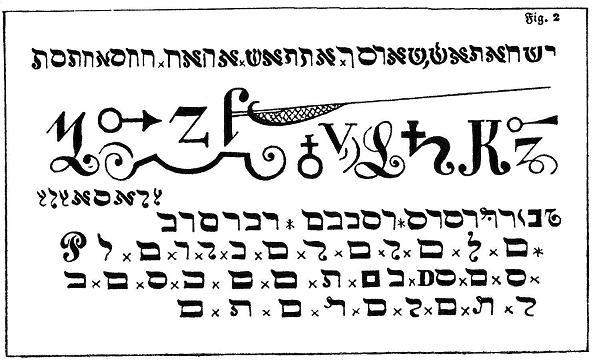 |
9. In the EE these drawings are printed in reverse, that is to say, black background with white characters. They are also largely illegible, so I have used S instead. | |||||||||||||||||
|
The most useful ministering archangels of this seal are the following with their Hebrew verbis revelatis Citatiori divinitus coactivis: Uriel, Arael, Zacharael, Gabriel, Raphael, Theoska, Zywolech, Hemohon, Yhahel, Tuwahel, Donahan, Sywaro, Samohayl, Zowanos,10 Ruweno, Ymoeloh, Hahowel, Tywael. |
10. EE: Zowanus. | |||||||||||||||||
 THE MYSTERY OF ALL MYSTERIES.
The particularly great secret and special use of this
THE SECOND MYSTERY OF THE SEAL. The Name is True.
Seal of the Choir of Hosts seu Dominatorium of the Ministering Angels.
CONJURATION. | ||||||||||||||||||
|
11. In Arbatel PHUL (sic) rules over Lunar things. 12. EE: Laroyol. 13. EE: Uini. |
|||||||||||||||||
Figure 3. The Seal.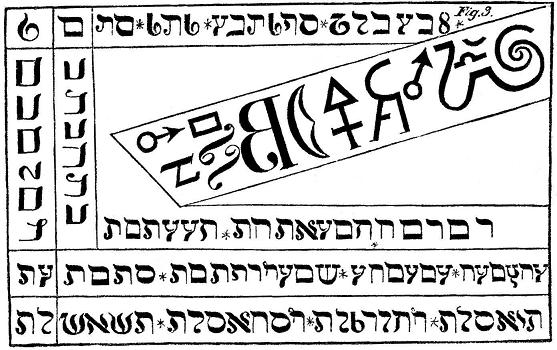
This Seal from the Choir of the Dominationen, or Hosts, the following
are the most useful: Aha, Roah,
Habu, Aromicha, Lemar, Patteny, Hamaya, Azoth,
Hayozer, Karohel, Wezynna, Patecha, Tehom.  The special secret of this Seal is the following ex Thoro Bibliis arcanorum, Sacra Script. If a man carries this Seal with him, it will bring him great fortune and blessing; it is therefore called the truest and highest Seal of Fortune. | ||||||||||||||||||
THE THIRD MYSTERY OF THE SEAL.14 |
14. S: Das dritte Geheimniß des Siegels. EE: The mystery of the third seal. | |||||||||||||||||
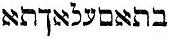
Seal of the Ministering Throne Angels ex Thoro III. Bibliis Arcanorum.  CONJURATION. | ||||||||||||||||||
|
15. In Arbatel BETHOR (sic) rules over things ascribed to Jupiter. In the list below
this name appears as "Tehom."
16. S: Throhnus 17. EE: Hdon. |
|||||||||||||||||
Figure 4. The Seal.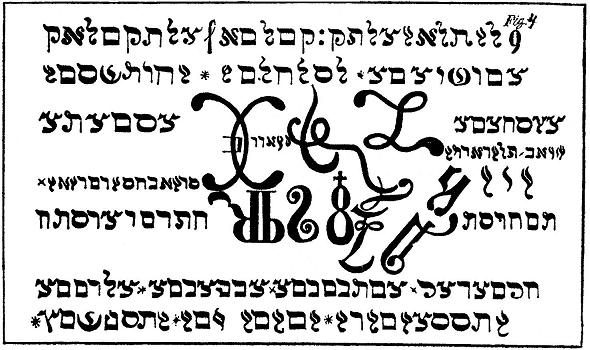 | ||||||||||||||||||
|
The ministering Throne Angels of this Seal are the following;
Tehom,18 Haseha, Amarzyom, Schawayt, Chuscha,
Zawar, Yahel, Lahehor, Adoyahel, Schimuel,
Achusaton, Schaddyl, Chamyel, Parymel, Chayo,
|
18. This name appears as "Tehor" above. | |||||||||||||||||
 The special secret of this Throne is also ex Thoro III. Bibliis arcanorum script. Carrying this Seal with you will cause you to be very agreeable and much beloved, and will also defeat all your enemies. | ||||||||||||||||||
THE FOURTH SEAL, OF THE MINISTERING
|
19. S: Das vierte Siegel der dienstbaren Cherubim und Seraphim mit ihrem Charakteur. EE: "... Characteristics." | |||||||||||||||||
CONJURATION. | ||||||||||||||||||
|
20. EE: Ahub 21. EE: Eoluth |
|||||||||||||||||
Figure 5. The Seal.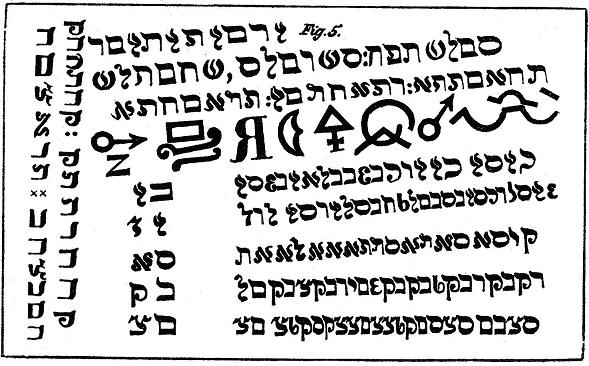 The most obliging ministering Cherubim and Seraphim of this Seal are the following with their Hebrew calling: Anoch, Sewachar, Chaylon, Esor, Yaron, Oseny, Yagelor, Ehym, Maakyel, Echad, Yalyon, Yagar, Ragat, Ymmat, Chabalym, Schadym.  The special secret of this Seal is the following [from] Thora IVta. Bibliis arcan. — To carry this Seal upon the body will save a person from all misery, and give the greatest fortune and long life. The Fifth Seal. | ||||||||||||||||||
Seal of the Angels of Power.22 |
22. The angelic choir of Powers (or Potestates) is associated with Mars (OP2.13). | |||||||||||||||||
CONJURATION. | ||||||||||||||||||
|
23. This name appears as "Shoel" below. 24. EE: Jerazol 25. EE: Tomaiach |
|||||||||||||||||
The Fifth Seal. Figure 6. The Seal.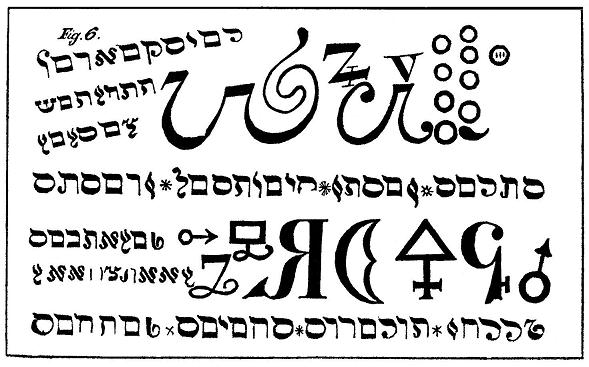 The most serviceable Power-Angels with their verbis heraicis citatiores divinis ex Thora Vta. ser. are the following:
Schoel, Hael, Sephiroth, Thamy, Schamayl, Yeehah,
Holyl, Yomelo, Hadlam, Mazbaz, Elohaym,  | ||||||||||||||||||
|
The special secret of this Seal is the following ex Thora V D B. A.24 |
24. B. A.: Biblia Arcanorum ("The Bible of Secrets") | |||||||||||||||||
 If this Seal be laid upon the sick in full, true faith, it will restore him, if, N. B., he has not lived the full number of his days. Therefore, it is called the Seal of Power. THE SIXTH MYSTERY.The Seal of the Power-Angels seu Potestatum ex Thoro VI. Bibliis Arcanorum, over the Angels and Spirits of all the Elements. CONJURATION. | ||||||||||||||||||
|
||||||||||||||||||
Figure 7. The Seal.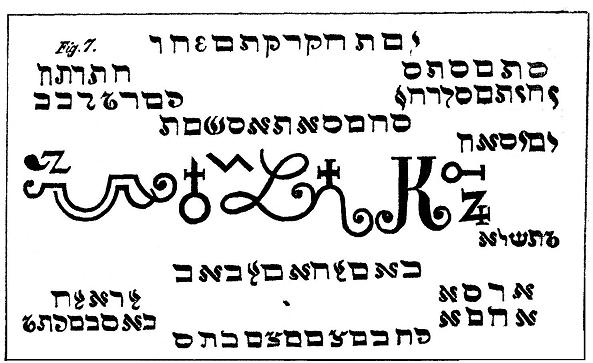 | ||||||||||||||||||
|
The most obedient Angels of Power, seu Potestates, with their Citatioriis Diviniis verbis hebraicis, are the following four elements: Schumnyel,25 Alymon, Mupiel, Symnay, Semanglaf, Taftyah, Melech, Zeolam,26 Waed, Sezah, Safyn, Kyptip, Taftyarohel, Aeburatiel, Anyam, Bymnan.27 This is the mystery or Seal of the Might-Angels. The peculiar Arcanum of this Seal of the Mighty is the following: ex Thora VIta Arcanorum sacra scriptura. If a man wears this Seal in bed, he will learn what he desires to know through dreams and visions. |
25. EE: Schunmyel 26. EE: Seolam 27. EE: Bymnam |
|||||||||||||||||
THE SEVENTH SECRET SEAL.
Of the Most Obedient Angels, Cœli Cœlorum legionum over the Angels
of the Seven Planets and Spirits.
CONJURATION. | ||||||||||||||||||
Figure 8. The Seal.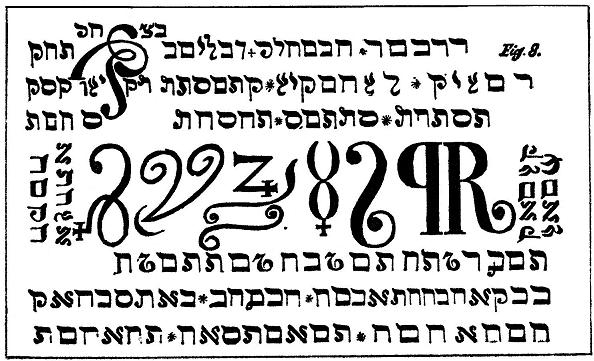 The most obedient Angels and Spirits of this Seal of the Seven Planets are the following: Ahaeb, Baneh, Yeschnath, Hoschiah, Betodah, Leykof, Yamdus, Zarenar, Sahon.
This Seal, when laid upon the treasure earth, or when placed within
the works of a mine, will reveal all the precious contents of the mine. As
the VII. Arcanorum.
End of the Sixth Book of Moses. | ||||||||||||||||||
Figure 10. The First Table of the Spirits of the Air.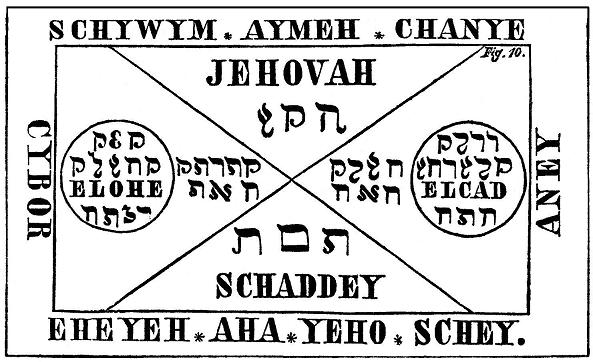
To carry upon the person the First Table of the Spirits of the Air who are as quick to help as thought, will relieve the wearer from all necessity. Figure 11. The Second Table of the Spirits of Fire.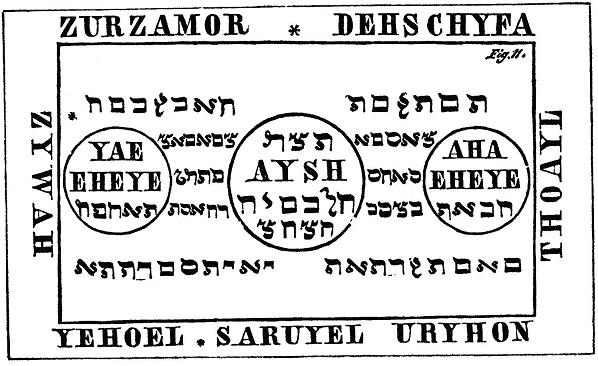 | ||||||||||||||||||
|
1. EE: Ihros. | |||||||||||||||||
Figure 12. The Third Table of the Spirits of the Water.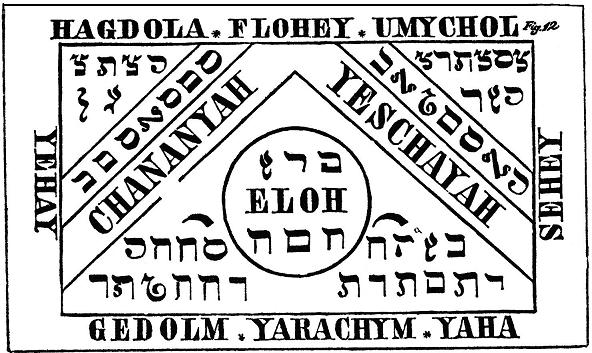
The Third Table brings great fortune by water, and its spirits will
amply supply the treasures of the deep.
Figure 13. The Fourth Table of the Spirits of the Earth.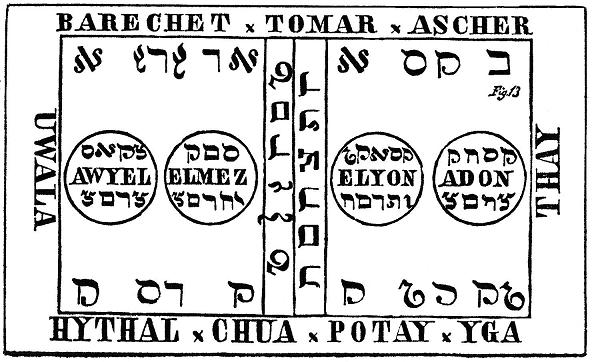
This Fourth Table will give the treasures of the earth, if it be laid in
the earth. Its spirits will give the treasures of earth at all times.
Figure 14. The Fifth Table of Saturn.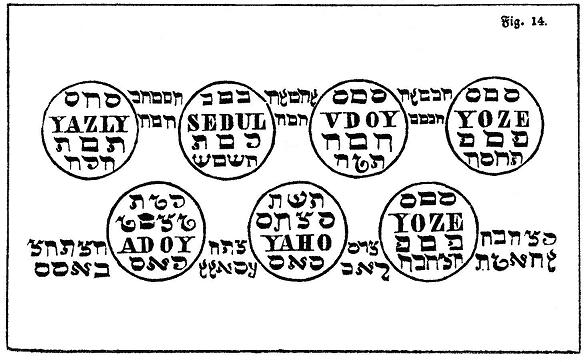 | ||||||||||||||||||
|
2. EE: Sove. 3. "F. f. f": "Fiat. Fiat. Fiat." |
|||||||||||||||||
|
The Spirits of the Fifth Table of Saturn will serve in everything according
to wish; their Table will bring good luck in play.
Figure 15. The Sixth Table of Jupiter.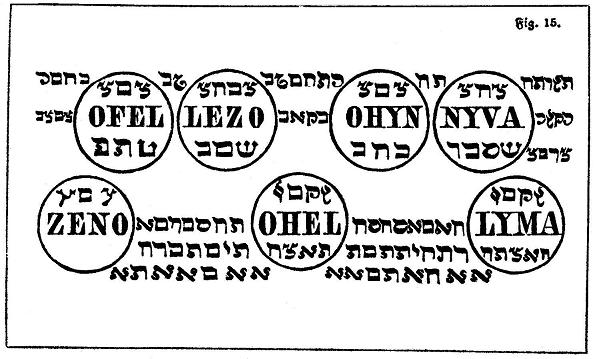 | ||||||||||||||||||
|
4. EE: Orlenius. | |||||||||||||||||
|
The Sixth Table of Jupiter assists in overcoming suits at law, dispute, and at play, and their spirits are at all times ready to render assistance.
Figure 16. The Seventh Table of the Spirits of Mars.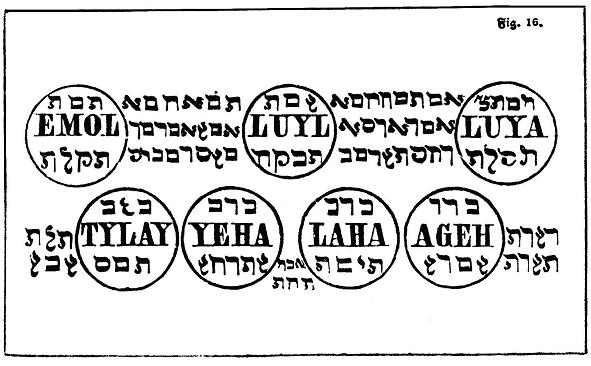 | ||||||||||||||||||
|
5. EE: Luiji. | |||||||||||||||||
|
The Seventh Seal of Mars brings good fortune, in case of quarrels. The Spirits of Mars will help you. Figure 17. The Eighth Table of the Spirits of the Sun. | ||||||||||||||||||
|
6. EE: Wrjch. 7. S: Daß Ihr vor mir erscheinet also wahr Zebaoth, welchen Mosis .... |
|||||||||||||||||
|
The Eighth Table of the Spirits of the Sun will help to attain places of
honor, wealth, and they also give gold and treasure.
Figure 18. The Ninth Table of the Spirits of Venus.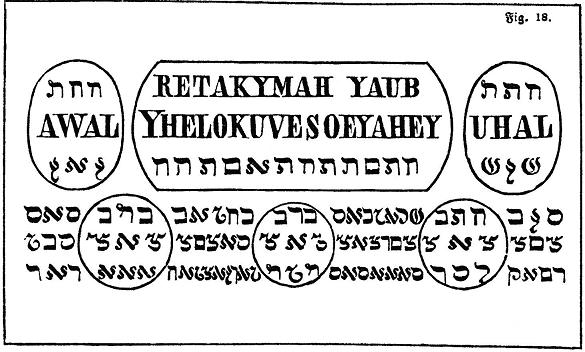 | ||||||||||||||||||
|
8. EE: Awel. | |||||||||||||||||
|
The Ninth Table of the Spirits of Venus makes one beloved in all respects
and makes known secrets through dreams. Its spirits also assist liberally
in all kinds of business.
Figure 19. The Tenth Table of the Spirits of Mercury.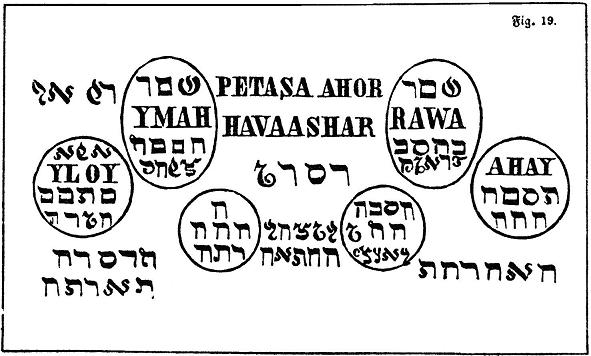
The Tenth Table of the Spirits of Mercury give wealth in chemistry.
These spirits contribute treasures of the mine.
| ||||||||||||||||||
Figure 20. The Eleventh Table of Spirits [of the Moon].9 |
9. S omits this section heading. The EE reads "The Eleventh Table of Spirits", but the Moon is probably intended, as it is the only one of the 7 traditional planets not included elsewhere. | |||||||||||||||||
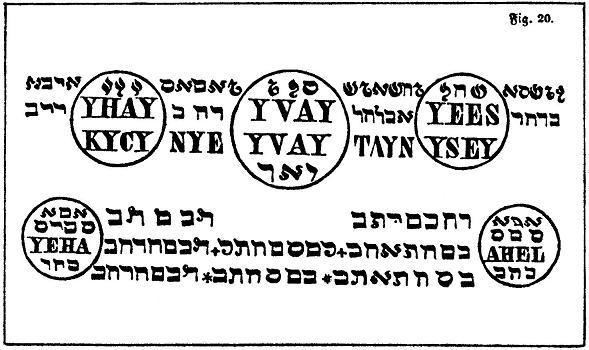 | ||||||||||||||||||
|
9. EE: Elho * Kijlij. | |||||||||||||||||
|
The Eleventh Table (See Fig. 20) gives luck and fortune; its Spirits
give the treasures of the sea.
Figure 21. The Twelfth Table of Schemhamforasch.On all Spirits of the Magia Alba et Nigra. | ||||||||||||||||||
|
10. S, EE: "Sadrach, Mijsach und Abed-negro";
"Sadrach, Mijsach, and Abed-negro" These three biblical personalities are mentioned
frequently in magical texts, including the Key of Solomon, Lesser Key of Solomon,
Heptameron, and Verus Jesuitarum Libellus. 11. Dan. 3:12-30. |
|||||||||||||||||
|
This Twelfth Table, laid upon the Table or Seal of the Spirits, will compel them to appear immediately, and to serve in all things.
The General Citation.Necromantia, Seu Magia Alba et Nigra Translated ex Thora XXta Bibl. Arcan.Aba, Jehovah, Agla, Aschaij, Chad, Yah, Saddaij, Vedreh, Aschre, Noosedu, Zawa, Agla. Here utter the names of the Angels of the Seal or Table, and their proper names. | ||||||||||||||||||
Eheije, Aijscher, Eheije,12 Weatta, Eloheij, Harenij, Yechuateche, Hagedola, Merof, Zaroteij, Agla, Pedenij, Zije, Kotecha, Barach, Amijm, Gedolijm, Verachena, Aleij, Weijazijlotij,13 Mijkol, Zara, Umikol, Ra, Schadaij, Jehovah, Adonai, Zeboath, Yah,14 Elohim, Yeasch, Jepfila, Vaij, Bearechet, Vaij, Yomar, Ahaha, Elohim, Ascher, Hithalleij, Chuabotheij, Lepha, Vaij, Yehuel. |
12. EE: Eneije. 13. EE: Weijazijloti. 14. EE: Zah. |
|||||||||||||||||
|
Here stop for a short time in prayer to God. Surrender yourself into the will of Almighty God; He will conduct your undertaking to your best interest. Hereupon take again the Seal or the Table written on parchment, in your hand, and begin anew the citation above. Should your desire still remain unfulfilled, continue as follows: | ||||||||||||||||||
Hamneijs, Hakha, Elohim, Horro, Heotij, Meo, Dij, Adhaijijon, Hazze, Hamalach, Haggo, Elohij, Mijcol, Rhab, Yeba, Reeh,15 Elhaneah, Tijmneik, Ka, Rebe, Hem, Schemne,16 Schembotaij, Veischak, Vegid, Gulaooc, Kereb,17 Haarez, Jeha. |
15. EE: Rech. 16. EE: Sohemne. 17. EE: Kered. |
|||||||||||||||||
|
Since the effects and appearances will now follow, your wishes are fulfilled, otherwise repeat the Citation toties quoties.18
|
18. toties quoties: as often as (desired). | |||||||||||||||||
Figure 22. The Magical Operation is made within this Circle.19 | ||||||||||||||||||
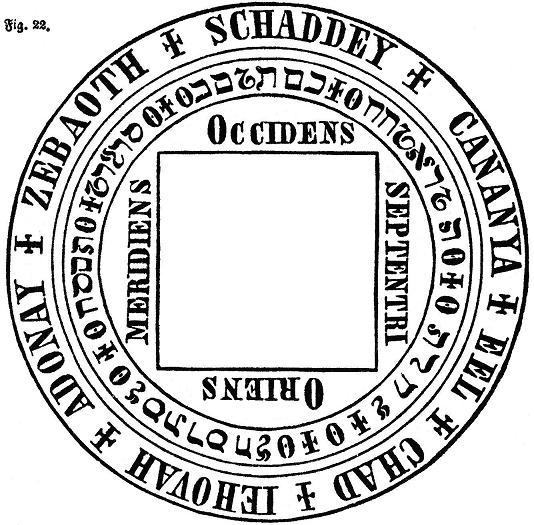 |
19. Oriens, Meridies, Occidens, Septentrio: East, South, West, North. | |||||||||||||||||
The Ministering Familiars or MysteriesARE THE FOLLOWING: | ||||||||||||||||||
|
20. EE: Astoreth. 21. III Regum and IV Buch Regum refer to the Third and Fourth books of Kings, which chronicle Solomon's reign. 22. Judicum: Book of Judges. The 9th chapter recounts the reign of Abimelech, while chapter 13 recounts the birth of Samson. 23. EE: Thoijil. |
|||||||||||||||||
|
These must be cited by the Twelfth Table at the time of an Eclipse by the Sun or Moon. This Moloch familiarum or Ammonitarium Ministering Spirits the following Generation-Seal for all services caracteristico obedientiale. Figure 23. [The Generation Seal]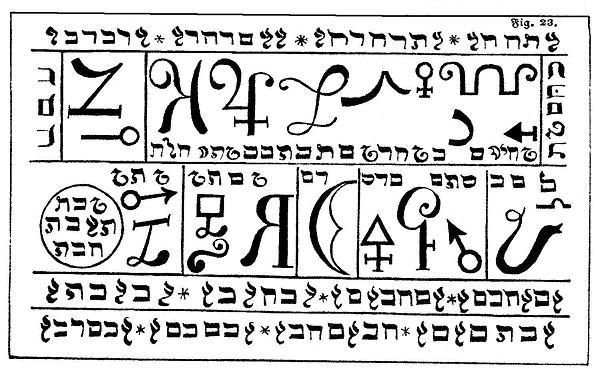
This seal, at the time of citation, must be written on parchment and
be held in the right hand. But it must not be read.
End of the Seventh Book of Moses. | ||||||||||||||||||
|
1. So S; EE reads "Volume II of the Sixth and Seventh Books of Moses - Formulas of the
Magical Kabala," etc. 2. I.e. The Key of Solomon, King of Israel. EE: Clavicula of Solomon the King of Israel. |
|||||||||||||||||
NOTE
| ||||||||||||||||||
|
Jehova, aser Eheje Cether Elion3 Eheje. |
3. EE: Eleion. Needless to say, this does not correspond with the Hebrew letters in the drawing. | |||||||||||||||||
|
The Most High, whom no eye hath seen, nor tongue spoke;
the Spirit, which did great acts and performed great wonders.
This Breastplate and Helmet pronounced mean Holiness.
Figure 25. HELMET OF MOSES AND AARON.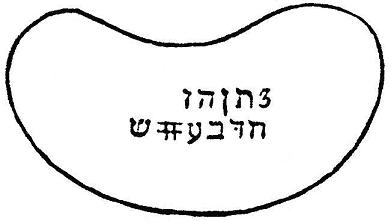 Hiebel mare actitas barne donene ariaerch.
These are the names which the old Egyptians used instead of the unutterable
name of Asser Criel, and are called "The Fire of God," and
"Strong Rock of Faith." Whoever wears them on his person, on a gold
plate, will not die a sudden death.
Figure 26. BREASTPLATE OF AARON.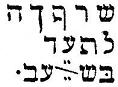 Sadajai amara elon hejiana vananel phenaton ebcoel merai. | ||||||||||||||||||
|
That is, a Prince of Miens,4 the other leads to Jehova. Through this God spake to Moses. |
4. S: "Ein Fürst der Angesichter" (a Prince of Faces). This is the equivalent to the Hebrew "Sar ha-Panim." This is a title usually given to the angel Metatron. | |||||||||||||||||
Figure 27. MAGICAL LAW OF MOSES.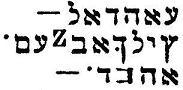 Aila himel adonaij amara Zebaoth cadas yeseraije haralius.
These words are terrible, and will assemble devils or spirits, or they
will cause the dead to appear.
Figure 28. THE INSCRIPTION ON THE VESSEL OF THE HOLY SHRINE.5 | ||||||||||||||||||
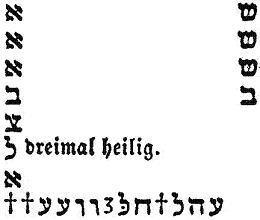 |
5. I.e. the Ark of the Covenant. See below. S: "Die Umschrift auf dem Kelch des Heiligthums" ("The inscription on the vessel of the holy shrine/relic.") EE: "The inscription on the chalice of holiness." Dreimal heilig: Thrice holy. Also seen as Lat. "Sanctus Sanctus Sanctus", Heb. "Kadosh, Kadosh, Kadosh." From Isaiah 6:3. | |||||||||||||||||
|
Eliaon joena ebreel eloijela aijel agoni sochadon.
These words are great and mighty. They are names of the Creator
and the characters on the Ark of the Covenant.
Figure 29. CONJURATION OF ELEAZAR, THE SON OF AARON.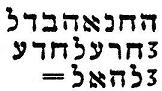 | ||||||||||||||||||
|
Uniel dilatan Sadai paneim usamigaras caliphos sasna panesoim6 Jalaph. |
6. EE: panoi soim. | |||||||||||||||||
|
These names, if anyone desires to accomplish anything through the four elements or any other things connected therewith, will prove effective, but they cannot be translated into English. Figure 30. DISMISSION OF ELEAZAR, AARON'S SON.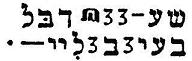 | ||||||||||||||||||
|
Leay yli Ziarite zelohabe et negoramy Zien latebm dama mecha rameti aziri.7 |
7. EE: ra meti ozira. | |||||||||||||||||
|
Through this dismission all things dissolve into nothing.
Figure 31. CITATION OF GERMUTHSAI, OR LEVIATHAN.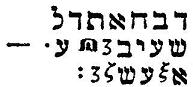 Lagumen Emanuel therefori mechelag laigel yazi Zazael.
With these names Eleazar bound and unbound the spirits of the air.
Figure 32. DISMISSION OF LEVIATHAN.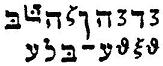 Malcoh, Sadaij, cubor Damabiah menkie lejabel maniah ijejavai.
That is: Strong, mighty spirit of hell, go back into thine works, in the name of Jehova.
Figure 33. BALAAM'S SORCERY.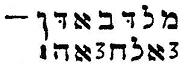 Meloch, hel alokim tiphret hod jesath. This brings vengeance upon enemies, and must not be disregarded, because it contains the names of the Seven Tables of the Ark of the Covenant. | ||||||||||||||||||
Figure 34. EGYPT
|
8. I.e. Moses' confrontation with the Egyptian sorcerers. Compare also with alternate versions of this text below where this is given as "Egitgim" and "EGIFGIM". | |||||||||||||||||
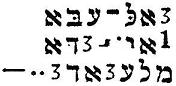 | ||||||||||||||||||
|
Tanabtain ainaten pagnij aijolo asnia hichaifale matae habona9 hijcero. |
9. EE: habonr. | |||||||||||||||||
|
With these words Moses spake to the sorcerers in Egypt. They signify:
"the Lord appeared to his servant in the fire, to seal the world in
its four quarters, and the underworld.
Figure 35. CONJURATION OF THE LAWS OF MOSES.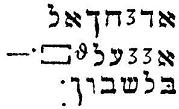 | ||||||||||||||||||
|
Aijcon dunsanas pethanir thrijgnir ijon cijna nater lavas10 pistoin. |
10. EE: lavis. | |||||||||||||||||
|
If you wish to pronounce these words you must fast three days, and you
can perform wonders therewith. They cannot be translated on account
of the Hebrew characters.
Figure 36. GENERAL CITATION OF MOSES ON ALL SPIRITS.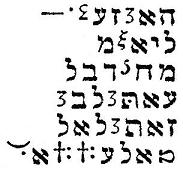 | ||||||||||||||||||
|
Elion goena adonaij cadas ebreel, eloij ela agiel, aijoni sachadon, essuselas Elohim, delijon jau elijnla, delia jari Zazael Palieman Umiel, onala dilatum Sadatj, alma Jod Jael Thama.11 |
11. EE: Elion goeua adonaij cadas ebreel, eloil ela agiel, aijoni sachadon, essuselas Elohim, deliion jau elijula, delia jari Zazael Paliemao Umiel, onala dilatum Sadati, alma Jod Jael Thama. | |||||||||||||||||
|
This citation is great and mighty; they are the names of the Creator,
and the names of the two Cherubim on the Mercy-seat,
Zarall and Jael.
Figure 37. DISMISSION OF MOSES.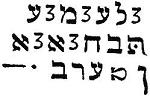 | ||||||||||||||||||
|
Kaszedim bachanda nezahhad Jehod Elohim asser eheie Zalim.12 |
12. EE: Waszedim bachanda hezanhad Jehov Elohim asser ehoie Zalim. | |||||||||||||||||
Figure 38. GENERAL CITATION OF MOSES ON ALL SPIRITS. | ||||||||||||||||||
|
Ahezeraije comitejon Sede leji thomos Sasmagata bij
ul ijcos Joua Eloij Zawaijm.13
|
13. Compare with passage given in the SEMIPHORAS and SCHEMHAMPHORAS section below: "Comiteijon, sede aij, throtomos, sasmagata bij vl ijcos" | |||||||||||||||||
|
These are the high and powerful utterances which Moses employed in
the awakening of the Leviathan, in order to compel him to serve his
Lord. The first cannot be uttered and was used by the first inhabitants
of earth as a mighty Lord. The whole is good, but not every one can
obtain it in perfection without severe discipline.
Figure 39. CHARACTERS
| ||||||||||||||||||
|
Maja affabij Zien, Jeramije Latabi damajesano noij lijoij Leaij glij ijre Eijloij liecle loate Eli Eli mecharamethij rijbisas sa fu aziri14 reacha. |
14. EE: azira. | |||||||||||||||||
|
The Citation names the twelve evil spirits of man, through the help
of the Father, or the Hebrew Eli; it is terrible.
Figure 42. THE SPIRIT APPEARS IN A PILLAR OF CLOUD.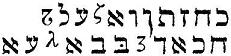
| ||||||||||||||||||
|
Kahai conor anuhec Zelohae vole15 hebei ede nego raneij hahabe gizaon. |
15. EE: zole. | |||||||||||||||||
Appendix to the General Citation of Moses on all Spirits.We, N. N., in this circle, conjure and cite this spirit Fatenovenia, with all his adherents, to appear here in this spot, to fulfill our desires, in the name of the three holy Angels, Schomajen Sheziem, Roknion Averam, Kandile, Brachat Chaijdalic, Ladabas, Labul, Raragil, Bencul, in the name of God. Amen! Figure 43. THREE NEW SIGNS WITH FROGS, LICE, AND PESTILENCE.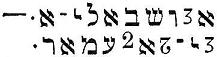 | ||||||||||||||||||
|
Ablan, ageistan, Zoraten,16 Juran, nondieras portaephias pognij aizamai. |
16. EE: Zoratan. | |||||||||||||||||
Figure 44. THREE NEW SIGNS WITH CATTLE PLAGUE, BOILS, AND HAIL.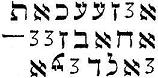 Ararita Zaijn thanain, miorato raepi sathonik pethanit castas lucias calbera natur sigaim. Figure 45. GRASSHOPPERS AND DARKNESS.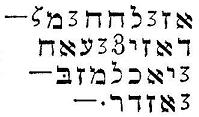 | ||||||||||||||||||
|
Hassaday hayloes, Lucasim elayn17 jacihaga, yoinino, sepactitas barne lud casty! |
17. EE: elayh. | |||||||||||||||||
Figure 46. THE SPIRIT APPEARS IN THE BURNING BUSH.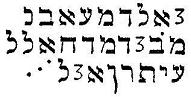 | ||||||||||||||||||
|
Baha18 cuci hiebu ziadhi elenehet na vena vie achya salna. The spirit which appears here is God himself. |
18. EE: Baba. | |||||||||||||||||
Figure 47. MOSES CHANGES THE STAFF INTO A SERPENT.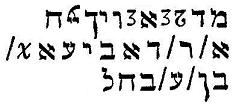 | ||||||||||||||||||
|
Micrata raepi Sathonik pethanisch, pistan ijttinge hijgatign19 ijghizian temgarondusnia20 castas Lacias astas ijecon cijna caltera Caphas. |
19. EE: hijgatijn 20. EE: temgaronusnia. |
|||||||||||||||||
Figure 48. MOSES CHANGES WATER INTO BLOOD.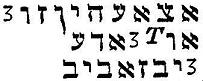
Aben agla manadel slop siehas malim hajath hajadosch
ijonem, cedas ebreel amphia, demisrael muelle
leagijns amaniha.
| ||||||||||||||||||
|
Principal Citation on all Ministering Spirits of the Air and of Earth, the like of which Manasses and Solomon used as the true Key of Solomon, King of Israel.1 |
1. S: Schlüssel Salomonis Regis Israel; EE: Key of Salomonis Regis Israel. | |||||||||||||||||
EXCERPTFROM | ||||||||||||||||||
THE TRUE KEY OF SOLOMON2 AND OF THE GIRDLE OF AARON, |
2. I.e. Clavicula Salomonis. EE: THE TRUE CLAVICULA OF SOLOMON. | |||||||||||||||||
|
bequeathed as a testament to all the wise Magicians, which all the old Fathers possessed and employed, to have and fulfill all things through the illustrious power of the mighty God Jehovah, as He, the great Monarch, gave to His creatures, who worship him day and night with reverence and in fear, who call loudly upon his name in secret, and sigh to him as their origin, as of him and from him existing reasonable beings, as on the point of being environed with the pains of the elements, who strive after the highest being to and with God. To these He has given this, who will not forget him in the pleasures of this world, who, still bearing suffering without forgetting the reality, nor the perishing luster of the world. You must stand upon a prominent rock, hold a palm-twig in your right hand, and wear a wreath of laurel around the temple. Then turn toward the East and say: Alija Laija Laumin Otheon!upon this a halo of light will surround you, and when you become sensible of this light, then fall upon your knees and worship. Then say in an audible voice, slowly and distinctly: | ||||||||||||||||||
Figure 49. CITATION:3 |
3. EE omits this heading. | |||||||||||||||||
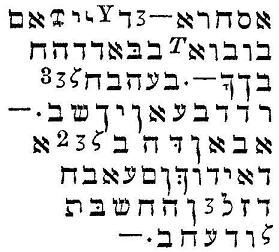 | ||||||||||||||||||
Eliam yoena adonai cadas4 ebreel eloyela agiel, ayoni5 sachadon ossuselas eloym de liomar elynla lelia yazi zazall palielman6 Unnel ovela dilatam Saday alma panaim alym canal densy usami yasas calipi calfas sasna saffa sadoja aglata pantomel amriel azien phanaton sarze penerion ya Emanuel Jod jalaph amphia than domirael alowin. |
4. EE: cadus 5. EE: ayom 6. EE omits. |
|||||||||||||||||
Figure 50. CHARACTERS.7 | ||||||||||||||||||
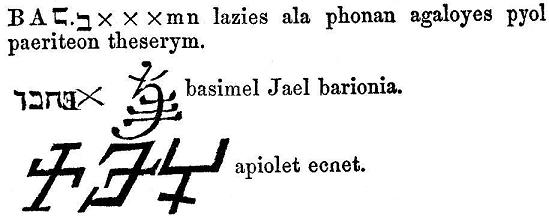 |
7. EE: B A m n lazies ala phonfin agaloyes pyol paerteon theserym / [figure] basimel Jael barionia / [figure] apiolet cenet. | |||||||||||||||||
 FINIS. FINIS.
[Figure 51.]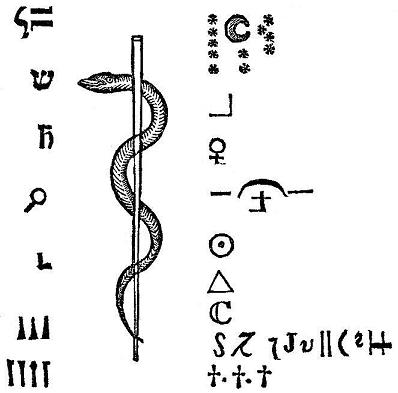 TREATISE OF THE SIXTH BOOK OF MOSES. | ||||||||||||||||||
Chapter I.—THE SPIRIT APPEARS TO MOSES IN A BURNING BUSH. Figure 52. |
1. Compare figure 46. | |||||||||||||||||
 Chap. II.—MOSES CHANGES THE STAFF INTO A SERPENT. Figure 53.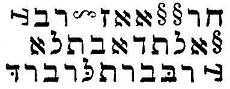 Chap. III.— MOSES CHANGES WATER INTO BLOOD. Figure 54.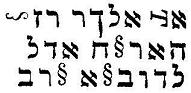 Chap. IV.—THREE NEW SIGNS WITH FROGS, GNATS, AND FLIES. Figure 55.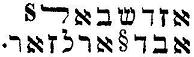 Chap. V.—THREE SIGNS OF CATTLE PLAGUE, BOILS, AND HAIL. Figure 56.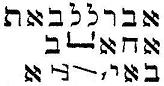 Chap. VI.—THREE SIGNS OF GRASSHOPPERS AND DARKNESS. Figure 57.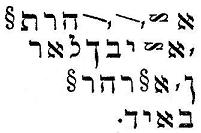 Chap. VII.—GENERAL CITATION OF MOSES ON ALL SPIRITS. Figure 58.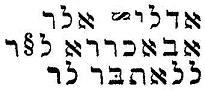 | ||||||||||||||||||
[Figure 59. Pentacle.]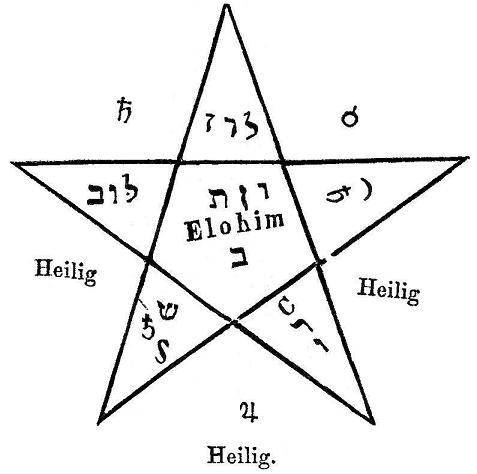 |
There are two alternate versions of this pentacle given below. In the second one the symbol
above the right point looks like the common astrological symbol for Mars, which is probaby
what is intended here. "Heilig heilig heilig": Holy Holy Holy. This is familiar in Latin as "Sanctus Sanctus Sanctus". |
|||||||||||||||||
End of the Sixth Book of Moses. | ||||||||||||||||||
TREATISE SION.THE SEVENTH BOOK OF MOSES.1 |
1. This section is simply another alternate version of the above. The figures are very similar. | |||||||||||||||||
Chapter I.—THE SPIRIT APPEARS IN A PILLAR OF FIRE BY NIGHT. Figure 60.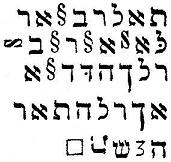 Chap. II.—THE SPIRIT APPEARS IN A PILLAR OF CLOUD BY DAY. Figure 61.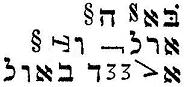 Chap. III.—BALAAM'S SORCERY. Figure 62.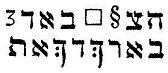 | ||||||||||||||||||
Chap. IV.—EGYPT
|
2. I.e., the words Moses spoke to the Egyptian sorcerers. See above. | |||||||||||||||||
Chap. V.—CONJURATION OF THE LAW OF MOSES. Figure 64.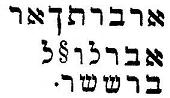 | ||||||||||||||||||
Chap. VI.—GENERAL CITATION OF MOSES ON [ALL SPIRITS]3. Figure 65.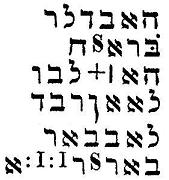 |
3. Words in [] are missing in my printed copy, but see above. The EE repeats this chapter head below, and thus has two Chapter VIIs. | |||||||||||||||||
Figure 66. DISMISSAL.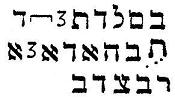 Chap. VII.—CONJURATION OF ELEAZAR. Figure 67.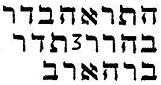 Figure 68. DISMISSAL.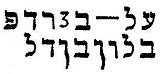 Chap. VIII.—CITATION OF QUERNITHAY OR LEVIATHAN. Figure 69.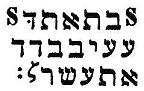 Figure 70. DISMISSAL.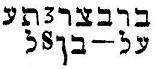 Chap. IX.—MAGICAL LAWS OF MOSES. Figure 71.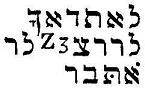 Chap. X.—HELMET OF MOSES AND AARON. Figure 72.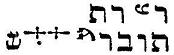 Chap. XI.—BREASTPLATE OF MOSES. Figure 73.Chap. XII.—BREASTPLATE OF AARON. Figure 74.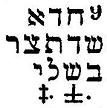 Chap. XIII.—THE VESSEL OF THE HOLY SHRINE [I.e. ARK OF THE COVENANT]. Figure 75.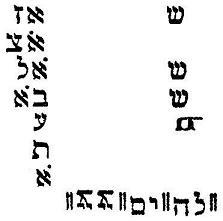 FOR THE LEFT HAND. Figure 76. FOR THE RIGHT HAND. Figure 77.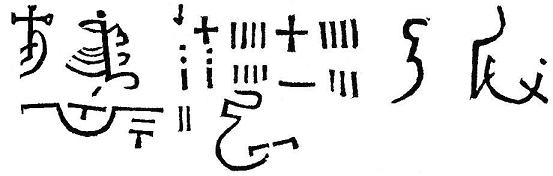
TRANSLATOR'S PREFACE.Since the Oriental transcript of this work was imperfect in many parts, the translation of it had to be taken according to the great original book, on account of the purity of its text, and, therefore, it won for itself the advantage of understanding and completing the exercises with serenity and confidence. The translator, in the meantime believes, that no one, who feels honestly called to these things, can ever be made the subject of ill-fortune, or be deceived by the wiles and deceptions of the old serpent, the inevitable fate that will and must fall to his lot under any other exorcisms, and that he may cheerfully and safely move thence, because only the angels of God will perform the service required by Him.
The Vestibule of the Entrance.— | ||||||||||||||||||
|
The language and manuscript of
this rare and eternal monument of light, and of a higher wisdom, are
borrowed from the Cuthans, a tribe of the Samaritans, who were called
Cuthim in the Chaldee dialect according to the Talmud, and they were
so called in a spirit of derision. They were termed sorcerers, because
they taught in Cuthah, their original place of abode, and afterward, in
Samaria,
[the Sixth and Seventh Books of Moses, which means]1
the Kabbalah or Higher Magic (Book of Kings). Caspar,
Melchior, and Balthasar, the chosen arch-priests, are shining lights
among the eastern Magi.2 They were both kings and teachers — the
first Priest-teachers of this glorious knowledge, and from these Samaritan
Cuthans — from these omnipotent priests of the Fountain of Light, which they
called Nergal,3
according to the traditions of Talmud,4 originated the
Gypsies, who, through degeneracy, lost the consecration of their primordial
power.
|
1. This phrase is omitted in the EE. 2. EE: magicians. Caspar, Melchior, and Balthasar are the traditional names of the three Magi. These names are attested as early as the 7th century CE, but other traditions exist. The magi are the priests of the Zoroastrian religion, which was the dominant world religion at the time of Jesus, and taught the coming of a world savior (Saoshyant), so their endorsement would be vital. 3. On Nergal, the god idolized and enshrined by the people of Cuth. 2 Kings 17:29. S: Priestern der Lichtquelle, die sie Nergal nannten.... EE: priests of the fountain of light, who were called Nergal.... 4. Nergal is mentioned in the Babylonian Talmud, Sanhedrin 63, where Rab Judah says the idol of Nergal was in the image of a cock. He appears in the epic of Gilgamesh as Erragal, god of the Netherworld. Nergal is also invoked by Hammurabi in his Law Code. Considered a prototype of Lucifer; this identification might be intended by the author of this pamphlet (“S. Tz. N”) given the epithet “Fountain of Light.” |
|||||||||||||||||
LAWS OF ENTRANCE.1. Before you can enter the temple of consecrated light, you must purify your soul and body during thirteen days. 2. As a brother and disciple of the new covenant, or as a Christian, you must receive the holy sacrament for the glorification of three kings — Caspar, Melchior and Balthasar. 3. Three holy masses must be read as often as you make use of this Book in your priestly service with your intention fixed upon the three glorified [verklärten drei Königen] kings.
4. You must provide yourself with a ram's horn, wherewith to call together
the angels and spirits. This horn must be included in your intentions
of the holy mass.
| ||||||||||||||||||
|
5. You must wear a breastplate of parchment, one span high and wide,2
inscribed upon it the names of the twelve apostles with the
five-fold name of Shemhamforash, in the same order that it is placed on the last leaf.
|
2. EE: ten inches high and ten inches wide. | |||||||||||||||||
|
6. You must draw a circle around you upon white paper, or upon sky-blue silk. Its circumference shall be thirteen feet, and, at the distance of each foot, one of the following names must be written, viz: | ||||||||||||||||||
Moseh, Messias, Aron,3 Jehova, Adonai,4 Jesus, Christus, Caspar, Melchior, Balthasar. Al. Al. Al. |
3. EE: Aaron. 4. EE: Adoni. |
|||||||||||||||||
|
7. Between each name you must place the holy symbol of Horet, —
namely: 8. The breastplate must be included in the intention of the holy mass. 9. Through consecration with holy triple king's-water and with three burning wax tapers, you must finally pronounce a benediction over this book, the horn, the breastplate, and the circle, after reading a well-selected mysterious ritual.
10. You may enter alone, or begin this great work with two companions,
by day or by night, but always from the first to the thirteenth of
the month, and during the thirteenth day, and through the whole night of
the new moon, and also during full moon, when the three planets, Saturn,
Mars, and Jupiter ( 11. You must always stand with your face toward Zion, or toward the rising of the sun.
12. He who refuses a copy of this book, or who suppresses it or steals
it, will be seized with eternal trembling, like Cain, and the angels of God
will depart from him.
INTRODUCTION AND BEGINNING.BREASTPLATE OF MOSES. | ||||||||||||||||||
|
Schedusi, Wedusi,5 Tiwisi. — I have sinned, I shall sin. |
5. EE: Weduse. | |||||||||||||||||
|
Prayer.— Eternal God of our all! Our God! hear our voice, spare and have mercy upon us. Accept our prayer in mercy and with pleasure. I have sinned. I have committed transgressions. I have sinned before Thee; I have done that which is displeasing unto Thee here in the earth. For the sake of Thy great name pardon me all the sins and iniquities and transgressions which I have committed against Thee from my youth. Perfect again all the holy names which I have blemished, great Champion, terrible, highest God, eternal Lord, God Sabaoth. HELMET OF MOSES AND AARON. | ||||||||||||||||||
|
Wechutu,6 Tukal, Beschufu,7 Gutal.— If I shall sin, I shall blow with the great horn. |
6. EE: Wochutu. 7. EE: Beschufa. |
|||||||||||||||||
|
Here the horn must be blown, three times in succession, toward the four corners of the earth, or toward the four quarters of the earth. For the ram's horn, in the old covenant, is the symbol of omnipotence and of purification, or of beauty, truth, and holiness. BREASTPLATE OF AARON. | ||||||||||||||||||
|
Dehutu, Ewusaltu,8 Bescholam. — You have sinned. I shall sin in peace. |
8. EE: Euwsaltu. | |||||||||||||||||
|
Prayer.— The Lord, King of all Kings, holy and praised is He, the Father, God, Son of God, the Holy Spirit of God are three in one among these three. In the power of Thy might and Thy right, release those that are bound, receive the prayer of Thy people, strengthen us, purify us, oh, terrible Hero, us who worship Thy only name. Protect them as the apple of Thine eye, bless them, cleanse them, repay them always in mercy and justice. Mighty, holy Lord, reward Thy congregation with Thy great goodness. Thou, the only and exalted God, appear unto Thy people with Thy holy name; receive and remember our prayer; hearken unto our cries, Thou who knowest all secrets and who knowest our desire! Here the horn must be blown as before! MAGICAL LAWS OF MOSES.Kuta-Al, Lewuwat.— We are great! Our hearts!
Prayer.—— Oh, Lord, arise, that mine enemies may be destroyed and
that they may fly; that those who hate Thee may be scattered like smoke
— drive them away. As wax melteth before the fire, so pass away all
evil-doers before God, for God has given Thee the kingdom. Pour out Thy wrath
over them. Thy wrath seize them. Thou shalt stand upon leopards and adders, and
Thou shalt subdue the lion and dragon. With God only can we do great things.
He will bring them under our feet.
THE VESSEL OF THE HOLY SHRINE.Al, Al, Al. Arise, Thou eternal Angel! This must be repeated three times in a loud voice, and also through the symbol of the horn, for he is an angel of the sanctuary. Prayer.— Thou, that art, and wast, and wilt be in the old and new convenant! Eternal, Jehovah, Jesus Christ, Messiah, All-beautiful, All-true, All-holy! All-loving and All-merciful in the old and in the new covenant. Thou hast said: Heaven and earth shall pass away, but my words shall not pass away. Thou hast said: I came not to destroy the old covenant, but to fulfill it. Thou hast said: He who sees me sees the Father. Thou hast said: If ye have true faith, ye can perform the wonders which I have done, yea, ye will perform yet much greater wonders than I have done. Come also to me for the sake of my faith, come also unto me for the sake of Moses, Thy messenger of faith. Reveal also to me Thy mysterious name from Jehovah, as Thou once did to Thy fire prophet Moses, in solitude; come, and say unto me in love, through the heart of Moses and with the tongue of Aaron: | ||||||||||||||||||
|
Schebual!9 I shall come! |
9. EE: Scahebual. | |||||||||||||||||
THE CONJURATION OF ELEAZAR.
Duwatu, Buwatie, Bemaim.— I come to you on the water! DISMISSAL OF ELEAZAR. | ||||||||||||||||||
|
Orum, Bolectu,10 Ubajom.— Cursed by night and by day! |
10. EE: Bolectn. | |||||||||||||||||
CITATION OF QUERNITHAY OR LEVIATHAN.These, as well as the following exorcisms, contain only the peculiar names of the angels who will permit the conjured spirits to appear, or will compel them by force to appear. Here the three angels of omnipotence will be called up to drive forth the monsters of hell, namely: Elubatel, Ebuhuel Atuesuel! Each name must be repeated three times. DISMISSAL.I beseech and conjure thee, angel Elubatel, conduct N. N. from my presence. Each angel's name must be called three times toward the four quarters of the earth, and three times must be blown with, the horn. Chap. III.— BALAAM'S SORCERY. | ||||||||||||||||||
|
Onu, Baschem, Nischba, Huoretz.11— In the name of God I conjure the Earth. |
11. EE: Onu, Baschba, Nischoaz Hueretz. | |||||||||||||||||
Chap. V.— CONJURATION OF THE LAWS OF MOSES. | ||||||||||||||||||
|
Keischu, Nischba, Lawosem.—12 How to be God, so swarest Thou to our parents. |
12. EE: Keisehu, Nischba, Lawemso. | |||||||||||||||||
|
Prayer.— Eternal of Eternals! Jehovah of Light, Adonai of Truth! Messiah of the All-merciful! Jesus Christ the beloved and All-redemption and love! Thou hast said: Who seeth me seeth also the Father. Father, eternal Father of the old and new covenant; triune Father, triune Son, triune Spirit, our Father, I beseech and conjure Thee by the eternal words of Thy eternal truth. And now the seventeenth chapter of John, or the prayer of Jesus, must be prayed. Closing Prayer of the Conjuration of the Law.— Eternal God Jehova, Thou hast said: Ask and it shall be given you. I pray that Thou mayest hear Thy servants Caspar, Melchior, and Balthasar, the arch-priests of Thy fountain of light! I pray that thou mayest bid Thy angels to purify me from all sin; that they may breathe upon me in love, and that they may cover me with the shadow of their wings. Send them down! This is my prayer in peace! Chap. VI.— EGITGIM.Conjuration of three angels. | ||||||||||||||||||
|
Gubril! Mechuel! Nesanel!13 By the lamp of the threefold eternal light, let N. N. appear before me. |
13. EE: Gebril! Meachuel! Nesanel. | |||||||||||||||||
|
Three calls with the voice and three with the horn. Chap. VII.— GENERAL CITATION OF MOSES ON ALL SPIRITS. | ||||||||||||||||||
Tubatlu! Bualu! Tulatu! Labusi! Ubisi!14— Let there appear and bring before me the spirit of N. N. |
14. EE: Ublisi. | |||||||||||||||||
|
Each of these five omnipotent angels must be called three times toward the four corners of the world, with a clear and powerful voice, and when the name of each is pronounced three times, then three sounds must be made by the horn. The name of each angel therefore, must have three calls with the voice and three with the horn. DISMISSAL OF MOSES.Ubelutusi! Kadukuliti! Kebutzi!— Take away from my presence the spirit of N. N. Twelve calls with the voice, and twelve with the horn, for each name. Figure 78. FOR THE LEFT HAND.These signs were used at the time of burnt-offering in the holy temple.  Figure 79. FOR THE RIGHT HAND.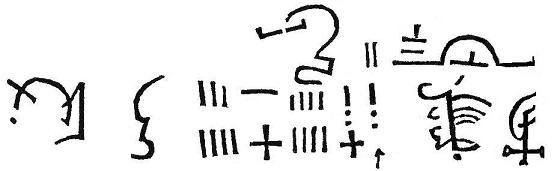 These are also symbolical of the plagues of Pharaoh in Egypt.
Schema Israel Adonai Elhoejno, Ekat.— Hear, oh
Israel, the Lord Our God is God alone.
THE SEVENTH BOOK OF MOSES.Chap. I.—THE REVELATION OF ZION.
| ||||||||||||||||||
|
Talbusi!1 Latubusi! Kalubusi! Alusi! |
1. EE: Talubsi. | |||||||||||||||||
|
Arise and bring me the Pillar of Fire that I may see. The name of each angel must again have three calls by the voice directed to the four quarters of the earth and an equal number by the horn. Chap. II.— THE SPIRIT APPEARS IN A PILLAR OF CLOUD BY DAY.Bual! come! Aul! arise! Tubo! I come! Wegulo! arise! | ||||||||||||||||||
|
In this place the blowing will be repeated.2
|
2. I.e. blowing of the horn, as above. | |||||||||||||||||
Chap. III.— GENERAL CITATION OF MOSES ON ALL SPIRITS.Adulal! Abulal! Lebusi! Arise and bring before me the spirit N. Calls with the voice and horn as already known. Here follows the Pentagon, or, the Omnipotent Five-Corners. Figure 80.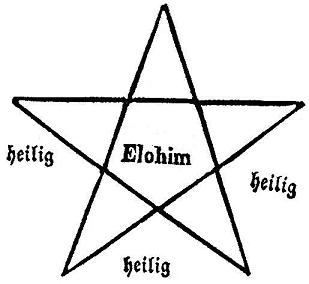 | ||||||||||||||||||
|
This mysterious figure must be written before the exorcism, in the
open air, and in the ground, with consecrated chalk or with the index
finger of the right hand dipped in holy three-kings-water, the same as
it is written up on the paper, but each line must be thirteen feet in
length. The conjuror then kneels in the centre of the star, with uncovered
head and with face turned toward Zion, and calls first in a loud
voice, coming from the heart, the names of Caspar, Melchior, and Balthasar,
thirteen times, and after calling these thirteen times, he must
also then call the high and sacred name of Elohim3 375 times with equal
fervor and faith. But only as has already been stated in the Laws of Entrance,
No. 10, in the first three days or nights of the new moon, or full moon, or
when Saturn, Mars and Jupiter appear in the heavens.
|
3. EE: Elokim. | |||||||||||||||||
Chap. IV.— THREE NEW SIGNS WITH FROGS, MICE, LICE AND SIMILAR VERMIN.Adus! Baachur! Arbu! Ulu! Frogs, mice, lice, and similar vermin, arise in our service. Chap. V.— THREE SIGNS WITH CATTLE PLAGUE, BOILS, AND HAIL.Abull, Baa! Plague, boils, etc., arise in our service. Chap. VI.— THREE SIGNS WITH GRASSHOPPERS AND DARKNESS.Ardusi! Dalusi! Grasshoppers, Darkness, arise in our service. These are the plagues which the Cuthians often employed in their exorcisms for punishment. [IV.] Revelation of the Sixth Book of Moses.Chap. I.— THE SPIRIT APPEARS UNTO MOSES IN A BURNING BUSH.CONJURATION.Kaluku! Ubesu! Lawisu!— Arise and teach me.... Calls with voice and horn as is already known. Chap. II.— MOSES CHANGES THE STAFF INTO A SERPENTTuwisu! Kawisu! Lawisu!— Arise and change this staff into a serpent. Calls with voice and horn as usual. [CHAP. III.—] MOSES CHANGES WATER INTO BLOOD. | ||||||||||||||||||
Akaultu!4 Tuwalu! Labatu!— Arise and change this water into blood. |
4. EE: Akauatiu. | |||||||||||||||||
|
Calls with voice and horn as usual. Here follows the Latin title of this book, from which these magical fragments are extracted.
BIBLIA
Arcana magica Alexandri  (Magi), (Magi),ACCORDING TO  (REVEALED) TRADITION OF THE (REVEALED) TRADITION OF THEVI & VII BOOKS OF MOSES. TOGETHER WITH THE MAGICAL LAWS. Ex Verbis H (humano) Intellectui sigillatis Verbis. Nunc Apostolica † (auctoritate) consecrata de novo confirmata †  † (licentia) † (licentia)Script. de Eppbio | ||||||||||||||||||
|
Anno MCCCLXXXVIII.1
|
1. I.e. 1388. EE: MCCCXXXVIII. | |||||||||||||||||
|
| ||||||||||||||||||
|
Now Moses appears on the right of the sheet,2 in a simple priestly garb, holding the tree of life, which has four leaves in the right hand, and the ram's horn in the left. |
2. See figure 104. S: Nun erscheint gleich auf dem Seitenblatte rechts Moseh .... (Now Moses appears on the right side of the sheet....) | |||||||||||||||||
|
Upon his heart rests the cross; a wide, white band flows over his shoulder and breast, a broad, white girdle graces his loins. He stands upon a kind of hat, which is decorated with three flowers. On the right hand of the hat reposes a dove having a ring in her bill, on the left side and over the head of Moses a threefold tripod with magical hieroglyphics thereon rises upward. 1. Upon the leaves of the tree of life you read the words: Besulo! Bedunim! Labatel! | ||||||||||||||||||
|
That is, if you are not pure, or if you do not become pure as a virgin through the two angels Bedunim3 and Lebatel,4 you cannot reach toward the tree of life. |
3. EE: Bunedreim. 4. EE: Lebutal. |
|||||||||||||||||
|
2. A hat adorned with three flowers, upon which Moses stands, and from which a dove with ring in her bill appears to descend, that is: If you preserve faith and hope with holy care, the spirit of omnipotence will emanate from you. | ||||||||||||||||||
|
3. A threefold intertwined triangle, extending from the feet to the
head, having inscribed upon it the names of the
three angels: Meachuel, Lebatel, Katuel,5
that is: And the three angels of the triune God, Meachuel,
Lebatel, Ketuel, will surround and carry you upon their hands.
|
5. EE: Meachuel, Lebatei, Ketuel. | |||||||||||||||||
|
On the reverse side of the picture of Moses, or rather on the first leaf,
according to Oriental reckoning, appears the elevated, winding and
crowned serpent, holding a ring in her teeth. Around the serpent may
be seen the moon, the stars, planets, water and many other magic hieroglyphical
signs. On the left side of the tail may be seen seven nails, on the right side
are magical hieroglyphics making the name of Schemhamphorasch.
To see Jesus Christ with the cross, that is to say: Jesus Christ,
through his love, and by his seven wounds and through his death on the
cross, for his love's sake, has overcome the kingdoms of this world, and
thus took again from the old serpent, the devil, the seal-ring of human
omnipotence, or the happiness of man to all the eternal eternities, in
order to fulfill the old covenant in the new covenant, for the eternal glorification
of the eternal Father in the eternal Son, through the eternal Spirit. Amen.
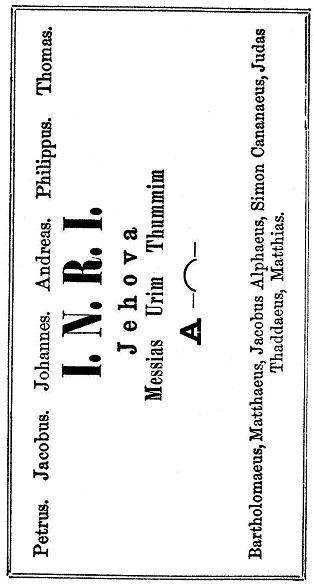
This table belongs to the chapter of the laws [of entrance].
VI.
Biblia. Arcana Magica Alexander  ACCORDING TO THE TRADITION OF THE VI et VII BOOKS OF MOSES TOGETHER WITH THE MAGICAL LAWS. ex Verbis Rebellatis (H) intellectui Sigi- latis verbis Nunc Apostolica † Consecrat de nove Confirmata  Script. De Elstro. MCCCLXXXIII. Figure 81. BREASTPLATE OF MOSES.Figure 82. HELMET OF MOSES AND AARON.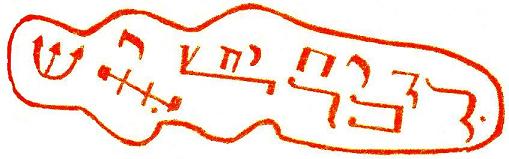 Figure 83. BREASTPLATE OF AARON.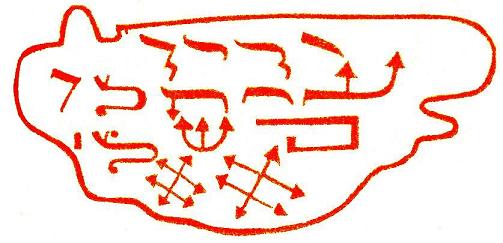 Figure 84. FOR THE LEFT HAND. Figure 85. FOR THE RIGHT HAND.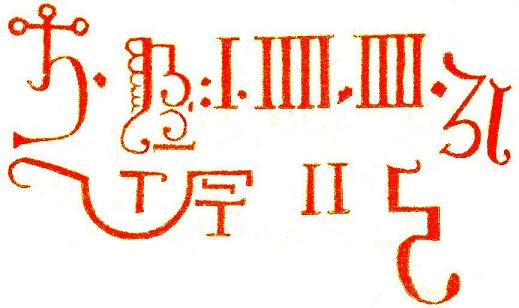
Hear, oh Israel, the Lord our God is God alone. Amen.
 Tradition of the Sixth Book of Moses. Tradition of the Sixth Book of Moses.Chap. I.— THE SPIRIT APPEARS IN A BURNING BUSHFigure 86. CITATION OF MOSES.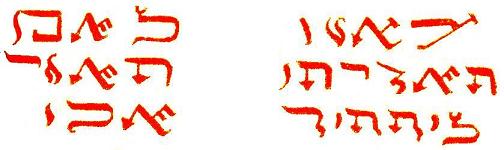 Chap. II.— MOSES CHANGES THE STAFF INTO A SERPENT. Figure 87.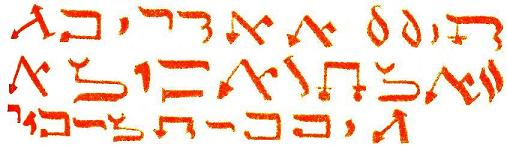 Chap. III.— Moses Changes Water Into Blood. Figure 88.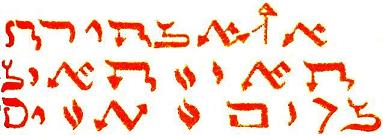 Chap. IV.— Three New Signs With Frogs, Lice, and Similar Vermin. Figure 89.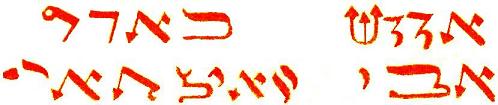 Chap. V.— Three Signs of Cattle [Plague], Boils, and Hail. Figure 90.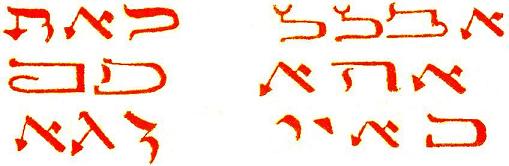 Chap. VI.— Three Signs With <Grasshoppers, and> Locusts [and Darkness]. Figure 91. Chap. VII.— GENERAL CITATION OF MOSES ON ALL SPIRITS. Figure 92.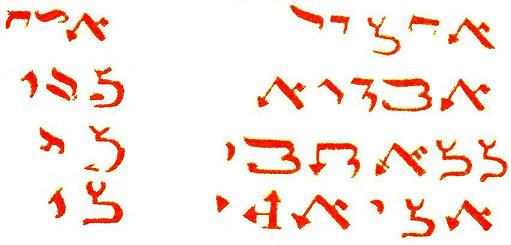 Figure 93.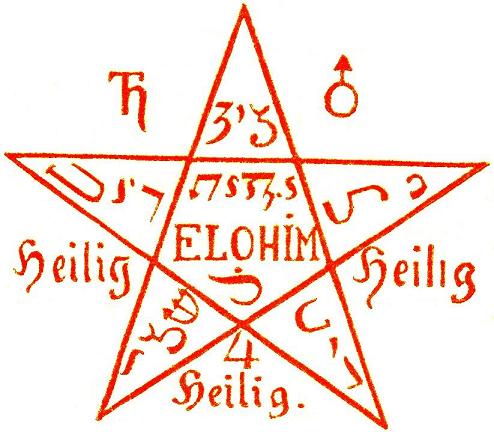 END OF THE SIXTH BOOK OF MOSES.Tradition of the Seventh Book of Moses.
Chap. I.— THE SPIRIT APPEARS IN A PILLAR OF FIRE BY NIGHT. Figure 94.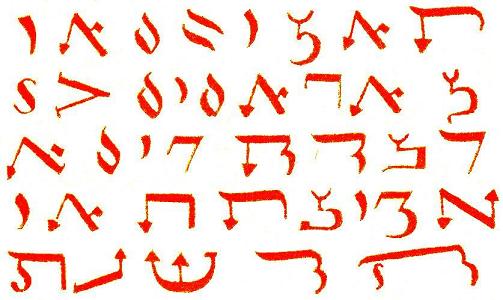 Chap. II.— THE SPIRIT APPEARS IN A PILLAR OF CLOUD BY DAY. Figure 95.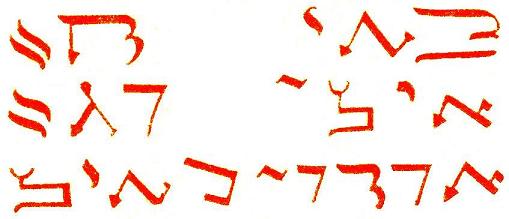 | ||||||||||||||||||
Chap. III.— BALAAM'S SORCERY.1 Figure 96. |
1. S: Biliams Zauberei. | |||||||||||||||||
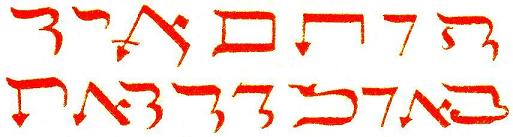 Chap. IV.— EGIFGIM. Figure 97.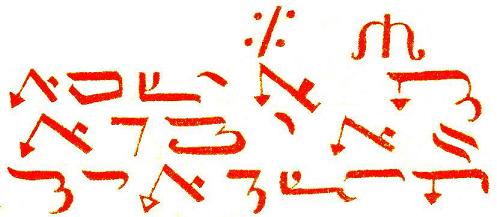 Chap. V.— CONJURATION OF THE LAWS OF MOSES. Figure 98.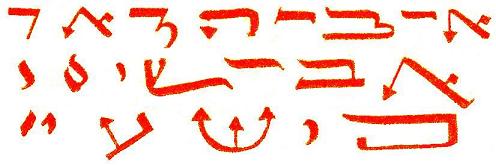 Chap. VI.— GENERAL CITATION OF MOSES ON ALL SPIRITS. Figure 99.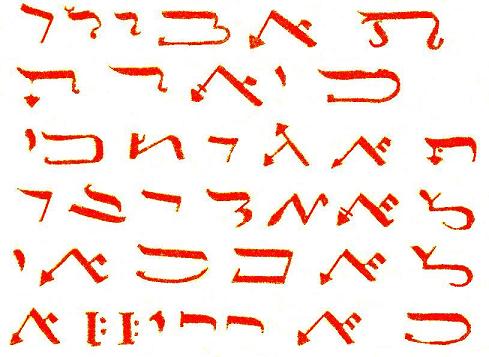 | ||||||||||||||||||
Figure 100. DISMISSAL OF MOSES.2 |
2. In the EE this figure is printed upside down. | |||||||||||||||||
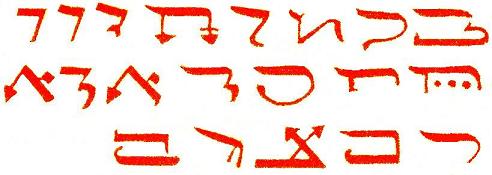 Figure 101. MAGICAL LAWS OF MOSES.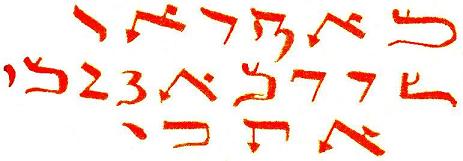 | ||||||||||||||||||
Figure 102. [THE INSCRIPTION ON] THE VESSEL OF THE HOLY SHRINE.3 |
3. S: "Der Kelch des heiligthums". This description is omitted in the EE. | |||||||||||||||||
 | ||||||||||||||||||
Figure 103. SYMBOL OF THE CROWNED SERPENT WITH ITS MAGICAL HIEROGLYPHICS.4 |
4. This description and the next are not found in the original German edition. The EE also reverses the order of these two drawings. | |||||||||||||||||
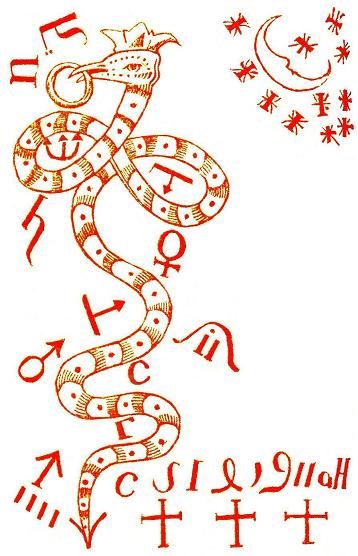 Figure 104. DIAGRAM ILLUSTRATING THE SYMBOLS EMPLOYED BY THE ISRAELITES IN THEIR LAWS OF MAGIC.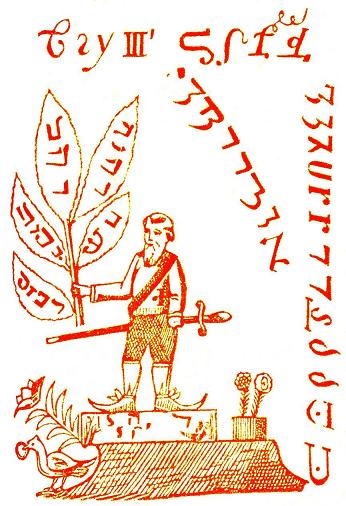 Figure 105. CONJURATION OF ELEAZAR.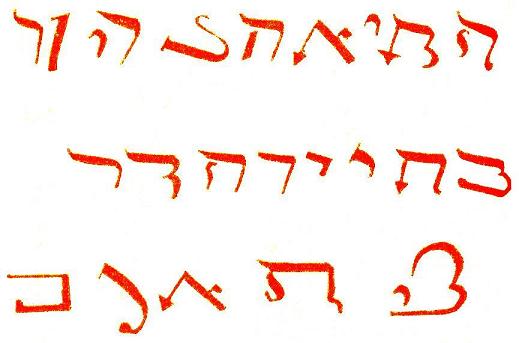 Figure 106. DISMISSAL OF ELEAZAR.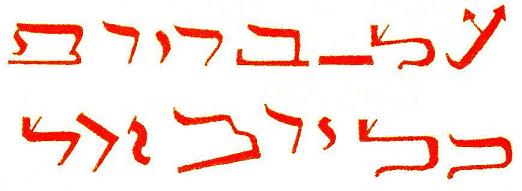 | ||||||||||||||||||
Figure 107. CITATION OF QUERMILLAY5 OR LEVIATHAN. |
5. S: quermillaÿ; EE: QUERMILLAM. Earlier variants in the present compilation read Germuthsai and Quernithay. | |||||||||||||||||
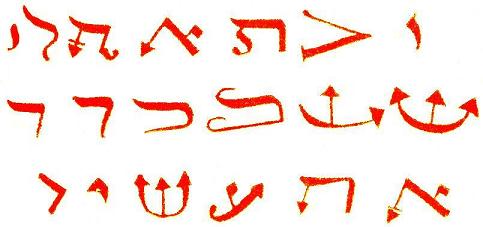 Figure 108. DISMISSAL OF QUERMILLAY OR LEVIATHAN.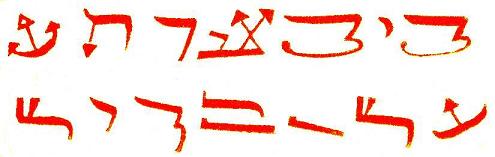 APPENDIX.
| ||||||||||||||||||
Magical (Spirit-Commando) beside the Black Raven.1
Romae |
1. K5, pp. 1124 ff. German title reads, "D. I. Faust, dreyfacher Hoellen-zwang und Magische (Geister-Commando), nebst den schwarzen Raaben." EE omits the author and title for this section i.e. "Dr. J. Faust, Threeford Harrowing of Hell, and..." There are a large number of magical texts bearing Faust's name, and the title Höllen-Zwang. See Butler, Ritual Magic (1949, p. 181 ff.) The real Faust probably lived about 1480-1540, so the date (MDI=1501) actually coincides with his life. | |||||||||||||||||
PRÆFATIO.
Quiam per ILLVSTREM et Generosum
D. ARNOLDVM comitem Benthemï2 Tichelenburgi-steinfordii
Dominum in Rhoed et Wivelhoven magica
Arcana originalia celeberrimi D. Joannis FAUSTI
in Germania ex Kundling oriundï Baroni HERMANNO
in Mosa Ripa ad Geldriae fines Batoburgico Episcopo
fideliter admanuata et anno quadragesimo supra sesquimillesimum
ad VATICANUM APOSTOLICUM NOSTRUM ROMAM
per eum transmissa sunt,
volumus: ut haec Typis imprimantur, ad Arcanum
Pontificatus mandentur et sicut pupilla oculi in archivio
Nostro serventur et custodiantur atque extra Valvas
Vaticanas non imprimantur neque inde transportentur,
si vero quiscunque temere contra agere ausus fuerit,
DIVINAM maledictionem latae sendentiae ipso facto
servatis, Nobis solis reservandis se incursurum sciat,
ita mandamus et constituimus Virtute Apostolica
Ecclesiae JESU CHRISTI sub poena Excommunicationis
ut supra Anno secundo Vicariatus Nostri.
ROMAE. VERBI INCARNATI Anno M. D. I.
ALEXANDER VI.
D. G. PONTIFEX.3 F. Piccolomeneus Cardinalis Caneell.4 |
2. Count Arnold Jobst of Bentheim (Germany) (d. 1643) was a Lutheran convert.
3. Pope Alexander VI (Rodrigo Borgia) (1431-1503) had a very sinister reputation, including black magic (cf. Butler, Ritual Magic, p. 181). 4. Cardinal Piccolomini was one of the electors who held out to the end against him. |
|||||||||||||||||
APPROBATIO.
simul et instructio Vaticana Sapienti paucis maxima,
praeterea assecuratur a sua Sanctitate desuper facto Consecratio
Canonica.
*
 * *LECTOR. | ||||||||||||||||||
Ne spernas librum, si non intelligis esto. |
Frigidus in pratis contando rumpitur anguis: "The cold meadow-snake is asunder burst." - Virgil, Eclogues 8. | |||||||||||||||||
|
| ||||||||||||||||||
D. I. F.2(†INSTRUCTIONS.) |
2. D.I.F: Dr. Iohann Faust (the alleged author) | |||||||||||||||||
|
If you want to cite and compel spirits to appear visibly before you and render you obedience, then observe the following instructions: 1. Keep God's commands as much as you can possibly do. 2. Build and trust solely upon the might and power of God; believe firmly on his omnipotent help in your work, and the spirits will become your servants and will obey you. 3. Continue your citations, and do not cease, even if the spirits do not appear at once. Be steadfast in your work and faith, for the doubter will obtain nothing. 4. Take especial notice of the time, viz: | ||||||||||||||||||
|
3. So K5, p. 1126. EE reads "twelve until two o'clock." | |||||||||||||||||
|
The Sabbath keep holy to the Lord Sabaoth, Adonai, Tetragrammaton. 5. It must, at the same time, be new moon. Perhaps you may say, "Why these hours and signs — are they not all the days of the Lord?" It is true; but not all hours, and all signs, are favorable to rule over their spirits. | ||||||||||||||||||
|
6. Complete the following circle,4 described in this work, on parchment, written with the blood of young white doves. The size of the circle may be at your own option. |
4. There must be some corruption in the text here. The circle is obviously intended to be drawn on the ground, since the Magus is directed to enter into it (see below), and the four cardinal directions are labelled — Oriens (East), Meridies (South), Occidens (West), and Septentrio (North). The directions to draw the design on parchment with the blood of a dove is probably intended for the seal of the spirit, which also would explain the red ink. | |||||||||||||||||
|
7. If you wish to undertake the operation, be sure to consecrate the circle previously. (See this Circle.)Figure 109. Circle written on parchment with the blood of young white doves.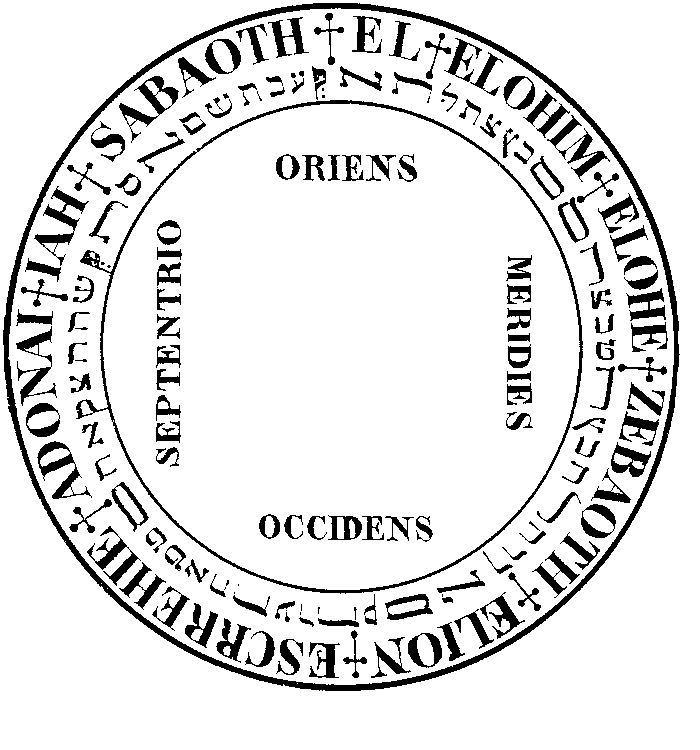 Ego N. N. consecro, et benedico istum Circulum per Nomina Dei Attissimi in eo Scripta, ut sit mihi et omnibus Scutum et Protectio Dei Fortissimi + Elohim + Invincibilis contra omnes malignos Spiritus, eorumque Potestates. In Nomine + Dei Patris + Dei Filii + Dei Spiritus Sancti. Amen. Upon your entrance into this circle speak as follows: Tetragrammaton, Theos, Ischiros, Athanatos, Messias, Imas, Kyrie Eleison. Amen. After you have entered the Circle begin your operation with the following prayer from the Ninety-first Psalm.
He that dwelleth in the secret place of the Most High shall abide under
the shadow of the Almighty. I will say of the Lord, He is my refuge
and my fortress, my God, in Him will I trust. Surely he shall deliver me
from the snare of the fowler and from the noisome pestilence. He
shall cover thee with his feathers, and under his wings shalt thou trust.
His truth shall be thy shield and buckler. Thou shalt not be afraid for
the terror by night, nor for the arrow that flieth by day. Because thou
hast made the Lord, which is my refuge, even the Most High, thy habitation.
There shall be no evil befall thee, neither shall any plague come
near thy dwelling. Because he hath set his love upon me, therefore will
I deliver him. I will set him on high because he hath known my name.
He will call upon me and I will answer him; I will be with him in
trouble, I will deliver him and honor. With long life will I satisfy him
and show him my salvation, even so help me and all them that seek thy holy
CITATIONSOF THE SEVEN GREAT PRINCES FROM THESixth and Seventh Books of Moses
| ||||||||||||||||||
CITATION OF AZIEL.5+ Agla + Cadelo + Samba + Caelem + Awenhatoacoro + Aziel + Xorwotho + Yzewoth + Xoro + Quotwe + Theosy + Meweth + Xosoy + Yschyros + Gaba + Hagay + Staworo + Wyhaty + Ruoso + Xuatho + Rumwe + Ruwoth + Zyros + Qualos + Wewor6 + Vegath + Wysor + Wuzoy + Moses * + Aziel + * |
5. EE: "CITATIO AZIELIS: Agla Cadelo, Samba, Caclem, Awenhatoacoro, Aziel, Zorwotho,
Yzewoth, Xoro, Quotwe, Theosy, Meweth, Xosoy, Yachyros, Gaba,
Hagay, Staworo, Wyhaty, Ruoso Xuatho, Rum, Ruwoth, Zyros,
Quaylos, Wewor, Vegath, Wysor, Wuzoy, Noses,* Aziel.*" 6. K5: "Wowor". |
|||||||||||||||||
CITATION * OF ARIEL*7+ Yschyros + Theos + Zebaoth + Wyzeth + Yzathos8 + Xyzo + Xywethorowoy + Xantho + Wiros + Rurawey + Ymowe + Noswathosway9 + Wuquethowesy + Zebaoth + Xymo + Zvswethonowe + Yschyrioskay10 + Ulathos + Wyzoy + Yrsawo + Xyzeth + Durobijthaos11 + Wuzowethos12 + Yzweoy + Zaday + Yrswethwytho + Kamwoy + Yswo + Yzwothweth + Zaday + Zywaye + Hagathorwos + Yschyros + Imas + Tetragrammaton + Ariel. *†*†*†*
|
7. EE: "CITATIO ARIELIS: Yschyros, Theor Zebaoth, Wyzeth, Yzathos, Xyzo,
Xywethorowoy, Xantho, Wiros, Rurawey, Ymowe, Noswathosway, Wuvnethowesy,
Zebaoth, Yvmo, Zvswethonowe, Yschyrioskay, Ulathos, Wyzoy, Yrsawo, Xyzeth,
Durobijthaos Wuzowethus, Yzweoy, Zaday, Zywaye, Hagathorwos, Yachyros, Imas,
Tetragrammaton, Ariel." 8. K5: Yzhatos. 9. K5: Noswethosway. 10. K5: Yschyryoshay 11. K5: Durobotthaos 12. K5: Wuzoywethos |
|||||||||||||||||
CITATION * OF MARBUEL *13+ Adonay + Jehova + Zebaoth + Theos + Yzhathoroswe + Wehozymathos + Zosim + Yghoroy + Vegorym + Abaij + Wogos + Gijghijm + Zewoij + Ykosowe + Wothym + Kijzwe + Zijwoth + Omegos + Hehgewe + Zebaoij + Wezator + Zijbuo + Sijbetho + Ythos + Zeatijm + Woxoe + Sijwoijmwethij + Pharvoij + Zewor + Wefgos + Ruben + Hebathoroos + Stawowe + Zijen Zijwowij + Haros + Worso + Yzwet + Zebaoth + Agla + Marbuel. *†*†*†*
|
13. EE: "CITATIO MARBUELIS: Adonay, Jehova, Zebaoth, Theos, Yzhathoroswe,
Wehozymathos, Zosim, Yghoroy, Vegorym, Abaij, Wogos, Gijghijm, Zewoij,
Ykosowe, Wothym, Kijzwe, Uijwoth, Omegros, Hehgewe, Zebaoij, Wezator,
Zibuo, Sijbetho, Ythos, Zeatijm, Wovoe, Sijwoijmwethij, Pharvoij, Zewor,
Wefgos, Ruhen, Hvbathoroos, Stawows, Zijen, Zijwowij, Haros, Worse, Yzwet,
Zebaoth, Agia, Marbuel." K5: "+ Adonay + Jehova + Zebaoth + Theos + Yzhathoroswe + Wehozymathos + Zosym + Yghoroy + Vegorym + Abay + Wogos + Gyghym + Zewoy + Ykosowe + Wothym + Kyzwe + Zywoth + Omegos + Mehgewe + Zebaoy + Wezator + Zybno + Sybetho + Ythos + Zeatym + Woxoe + Sywoymwethy + Pharvoy + Zewor + Wefgos + Ruben + Hebathoroos + Stawowe + Zyen + Zywoy + Haros + Worso + Yzwet + Zebaoth + Agla + Marbuel. |
|||||||||||||||||
CITATION * OF MEPHISTOPHILES*14+ Messias + Adonaij + Weforos + Xathor + Yxewe + Soraweijs + Yxaron + Weghath + Zijbalor + Weghaij + Wesoron + Xoxijwe + Zijwohwowetho + Regathoswatho + Zebaoth + Adonaij + Zijwetho + Aglaij + Wijzathe + Zadaij + Zijebo + Xosthoy + Atlatho + Ysewey + Zyxyzet + Ysche + Sarsewu + Zyzyrn + Deworonhathbo + Xyxewe + Syzwe + Theos + Yschaos + Worsonbefgosy + Gefgowe + Hegor + Quaratho + Zywe + Messias + Abarabi + Mephistophiles. *†*†*†*
|
14. EE: "CITATIO *MEPHISTOPHILES*: Messias, Adonaij, Weforus, Xathor, Yxewe, Soraweijs, Yxaron, Wegharh, Zljhalor, Weghaij, Wesoron, Xoxijwe, Zijwohwawetho, Ragthoswatho, Zebaoth, Adonaij, Zijwetho, Aglaij, Wijzathe, Zadaij, Zijebo Xosthoy, Athlato, Zsewey, Zyxyzet, Ysche, Sarsewu, Zyzyrn, Deworonhathbo, Xyxewe, Syzwe, Theos, Yschaos, Worsonbefgosy, Gefgowe, Hegor, Quaratho, Zywe, Messias, Abarabi, Mephistophiles." K5: "+ Messias + Adonay + Weforos + Xathor + Yxewe + Soraweys + Yxaron + Weghath + Zybalor + Weghay + Wesoron + Xoxywe + Zywohwowetho + Regathoswatho + Zebaoth + Adonay + Zywetho + Aglay + Wyzathe + Zaday + Zyebo + Xosthoy + Atlatho + Ysewey + Zyxyzet + Ysche + Sarsewu + Zyzyrn + Deworonhathho + Xyxewe + Syzwe + Theos + Yschaos + Worsonbefgosy + Gefgowe + Hegor + Quaratho + Zywe + Messias + Abarabi + Mephistophiles." | |||||||||||||||||
CITATION * OF BARBUEL.*15+ Yschiros + Imas + Zebaoth + Otheos + Kuwethosorym + Zylohym + Zaday + Yschowe + Quyos + Xexhatoroway + Yzwesor + Xywoy + Yzyrye + Zalijmo + Zebaoth + Adonaij + Messias + Aglaabaij + Stoweos + Hijwetho + Ycoros + Zijwetho + Uwoim + Chamoweo + Zijzobeth + Sotho + Emnohaij + Zedije + Huwethos + Chorij + Yzquoos + Lijraije + Weghoijm + Xijxor + Waijos + Gofaijme + Toroswe + Ycijros + Emanuel + Imas + Barbuel. *†*†*†*
|
15. EE: "CITATIO BARBUELIS: Yschiros, Imns, Zebaoth, Otheos, Kuwethosorym, Zylohym, Zaday, Yschowe, Quyos, Zenhatorowav, Yzwesor, Xywoy, Yzyryr, Zalijmo, Zabaoth, Adonaii, Messios, Aglaabaij, Stoweos, Hijwetho, Ycoros, Zijwetho, Uwoim, Chamoweo, Zijzobeth, Sotho, Emnohalj, Zedije, Huwethos, Chorij, Yzquoos, Lijraije, Weghoijm; Xiixor, Waijos, Gofaljme, Toroswe, Yeijros, Emanuel, Imas, Barbuel." K5: "+ Yschyros + Imas + Zebaoth + Otheos + Kuwethosorym + Zylohym + Zaday + Yschowe + Quyos + Xexhatoroway + Yzwesor + Xywoy + Yzyrye + Zalymo + Zebaoth + Adonay + Messias + Aglaabay + Stoweos + Hyweto + Ycoros + Zywetho + Uwoym + Chamoweo + Zyzobeth + Sotho + Emmnohay + Zedye + Huwethos + Chory + Yzquoos + Lyraye + Weghoym + Xyxor + Wayos + Gofayme + Toroswe + Ycyros + Emmanuel + Imas + Barbuel." | |||||||||||||||||
CITATION * OF AZIABEL.*16+ Thoeos + Ygweto + Yzgowoij + Quiseo + Wijzope + Xorsoij + Nowetho + Yzose + Haguthon + Xoro + Theos + Magowo + Wijzosorwothe + Xaroshaij + Zebaoth + Emanuel + Messia + Yzijwotho + Zadaij + Xexhatosijmeij + Buwatho + Ysewet + Xijrathor + Zijbos + Malhaton + Yzos + Uzewor + Raguil + Wewot + Yzewe + Quorhijm + Zadob + Zibathor + Weget + Zijzawe + Ulijzor + Tetragrammaton + Aziabel. *†*†*†*
|
16. EE: "CITATIO AZIABELIS: Thoeos, Ygweto, Yzgowoij, Quiseo, Wijzope, Xorsoij, Nowetho, Yxose, Haguthou, Xoro, Theos, Magowo, Wijzosorwothe, Xaroshaij, Zebaoth, Emanuel, Messia, Yzijwofto, Zadaij, Xexhatosijmeij, Buwatho, Ysewet, Xijrathor, Zijbos, Malhatou, Yzos, Uzewor, Raguil, Wewot, Yzwewe, Quorhijm, Zadob, Zibathor, Weget, Zijzawe, Ulijzor, Tretragaammaton, Aziabel." K5: "+ Thoeos + Ygweto + Yzgowoy + Quiseo + Wyzope + Xorsoy + Nowetho + Yzose + Haguthon + Xoro + Theos + Magowo + Wyzosorwothe + Xaroshay + Zebaoth + Emmanuel + Messia + Yzywotho + Zaday + Xexhathosymey + Buwatho + Ysewet + Xyrathor + Zybos + Malhathon + Yzos + Uzewor + Raguil + Wewot + Yzewe + Quorhym + Zadob + Zibathor + Weget + Zyzawe + Ulyzor + Tetragrammaton + Aziabel." | |||||||||||||||||
CITATION * OF ANIQUEL.17*+ Theos + Aba + Zaba + Aba + Agathoswaij + Yzoroij + Ywetho + Zardos + Quasoe + Uschijros + Cijmoe + Zowathim + Gefoij + Zarobe + Weghatlj + Phegathorowaij + Mesowe + Xalose + Weghathorsowe + Wephatho + Yzebo + Storijwethonaij + Quorathon + Sijbo + Mephor + Wijhose + Zaloros + Quetho + Zebathonaijwos + Zijweth + Ycarij + Ruwethonowe + Quiathosowaij + Zebaoth + Messias + Aniquel. |
17. EE: "Citatio Aniqnelis: Thoeos, Aba, Aaba, Aba, Agathoswaij, Yzoroij, Ywetho, Quardos, Quasoai Uschjjros, Cijmoe, Qowathim, Gefoij, Zarobe, Weghatj, Ohegathorowaij, Mesows, Xalose, Waghthorsowe, Wephatho, Yzebo, Storilwethonaij, Quorathon, Sijbo, Mephor, Wijhose, Zaloros, Ruetho, Zebaathonaijwos, Zijweth, Ycarij, Ruwethonowe, Ruiathosowaij Zebaoth, Messias, Aniquel. [Now follow the four leaves — Figs. 24, 25, 26, 27, 28.]" K5: "+ Theos + Aba + Zaba + Aba + Agathosway + Yzoroy + Ywetho + Zardos + Quaosoe + Yschyros + Cymoe + Zowathym + Gefoy + Zarobe + Weghaty + Phegathoroway + Mesowe + Xalose + Waghthorsowe + Wephatho + Yzebo + Storywethonay + Quorathon + Sybo + Mephor + Wyhose + Zaloros + Quetho + Zebathonaywos + Zyweth + Ycary + Ruwethonowe + Quiathosoway + Zebaoth + Messias + Aniquel." S mislabels this "CITATIO ANIQNELIS". | |||||||||||||||||
|
*†*†*†*
| ||||||||||||||||||
Figure 110. AZIEL.18 Seal or Character for Coercion and Obedience. |
18. EE gives these as Azielis, Arielis, Marbuelis, Mephistophilis, Barbuelis, Aziabelis, and Antquelis [sic] i.e. "of Aziel," etc. | |||||||||||||||||
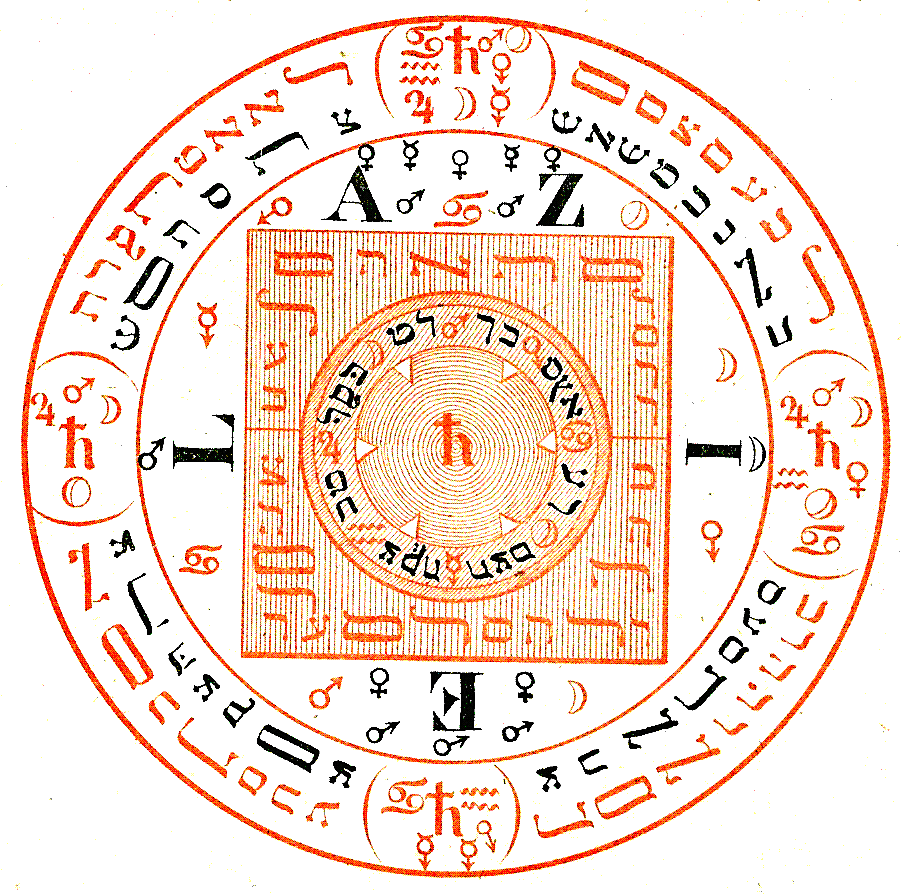 | ||||||||||||||||||
Figure 111. ARIEL. Seal or Character for Coercion and Obedience.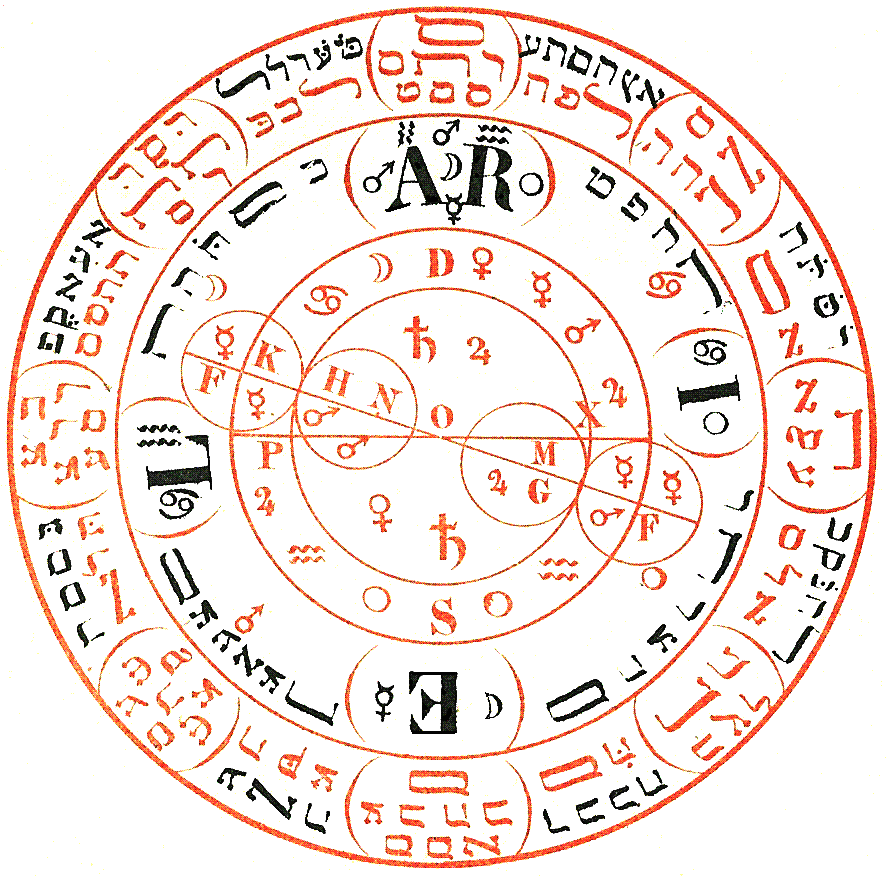 Figure 112. MARBUEL. Seal or Character for Coercion and Obedience.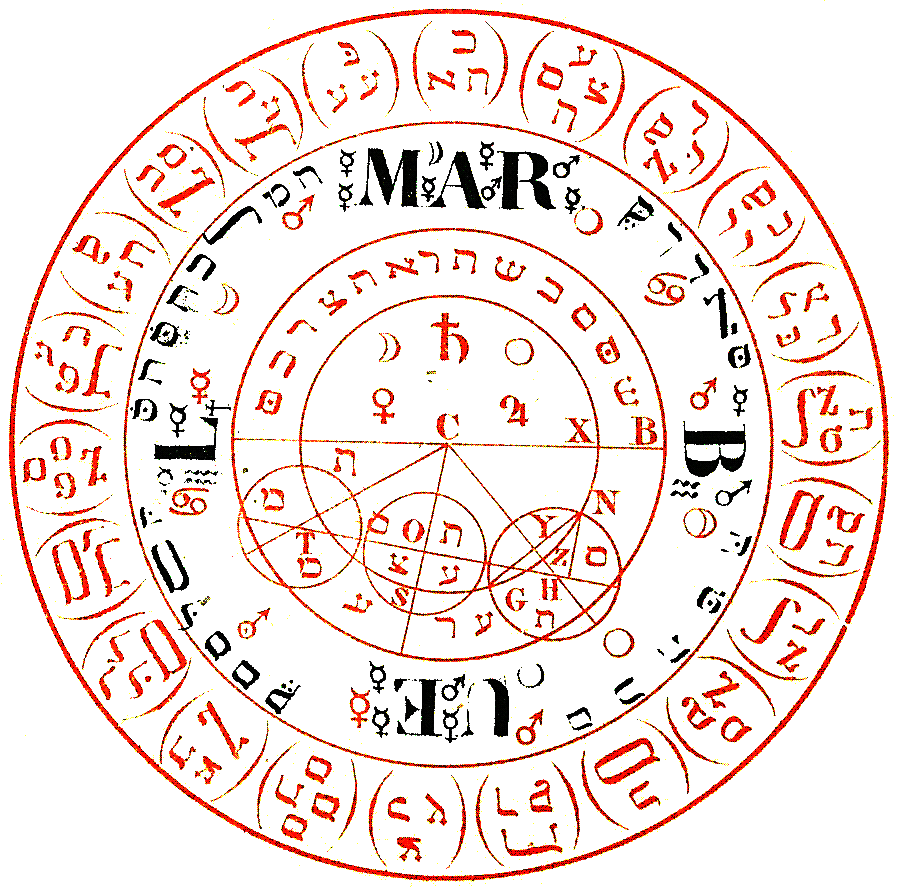 Figure 113. MEPHISTOPHILES. Seal or Character for Coercion and Obedience.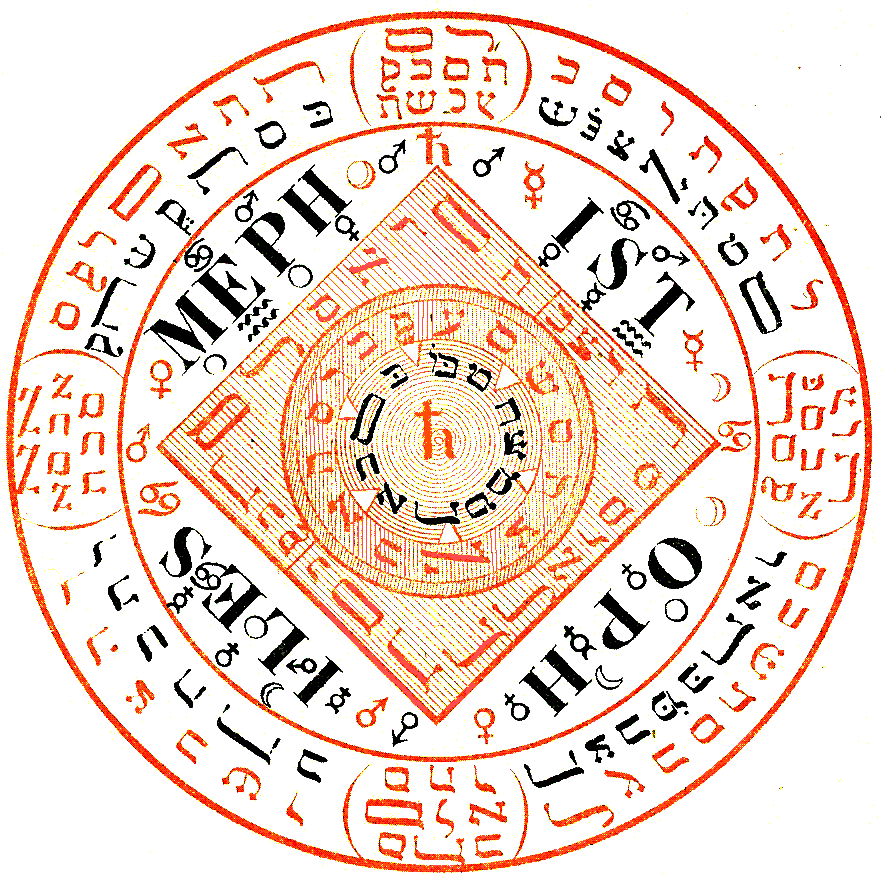 Figure 114. BARBUEL. Seal or Character for Coercion and Obedience.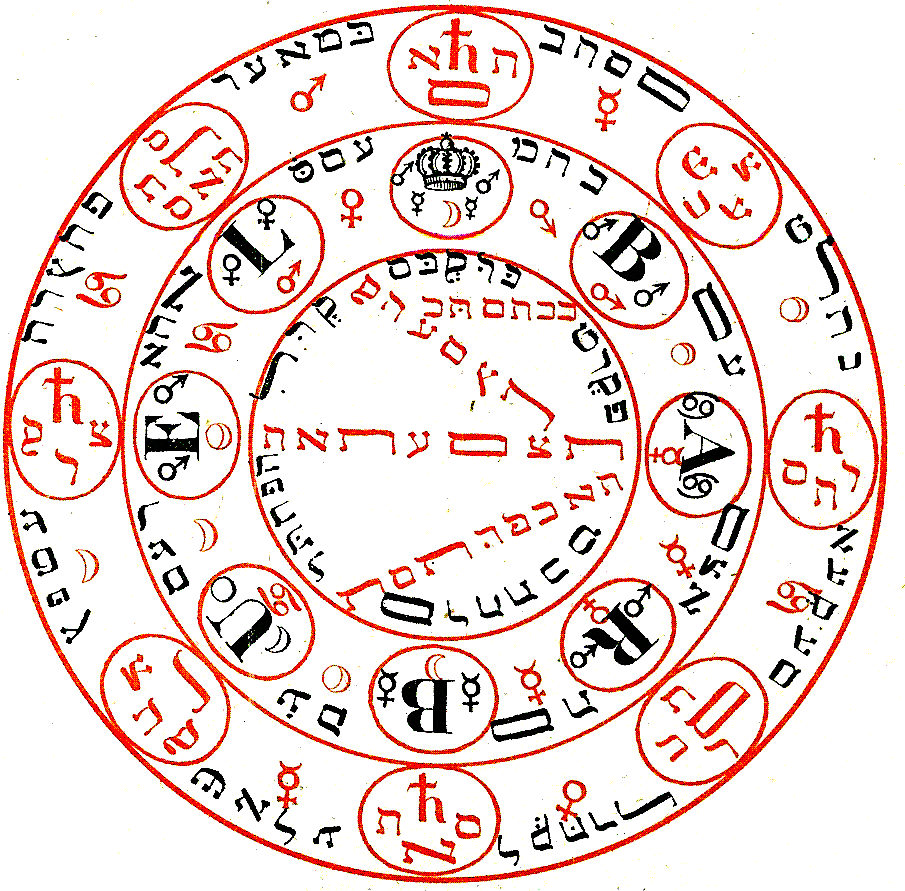 Figure 115. AZIABEL. Seal or Character for Coercion and Obedience.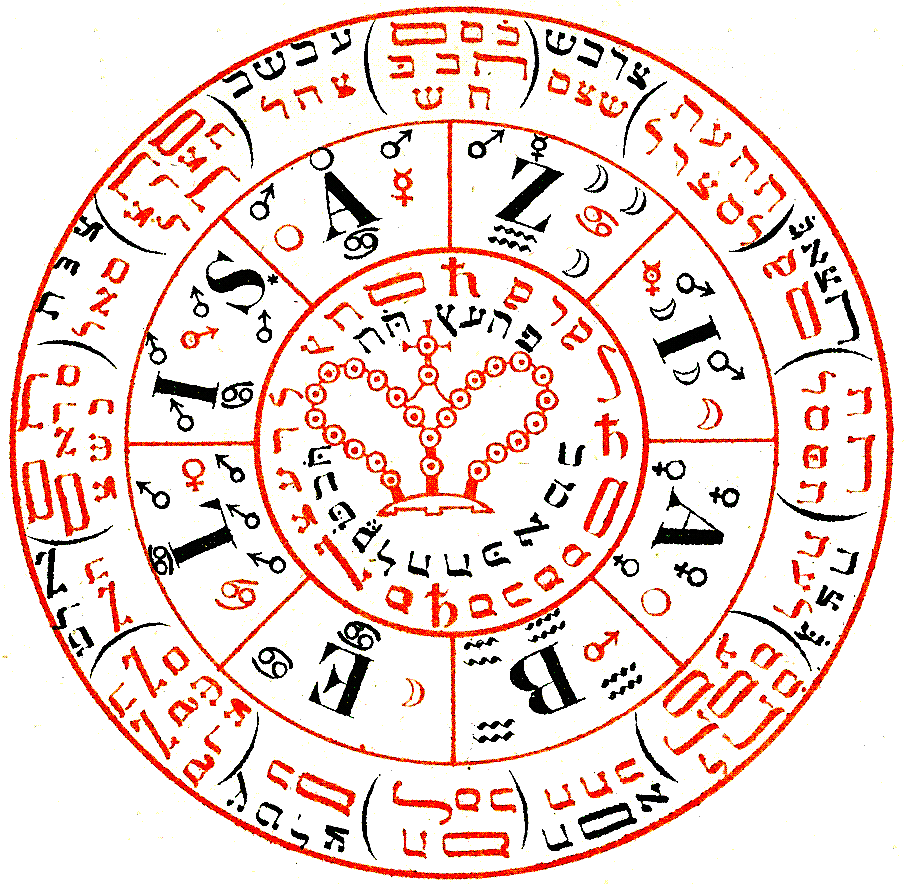 | ||||||||||||||||||
Figure 116. ANIQUEL. Seal or Character for Coercion and Obedience. | ||||||||||||||||||
Zijmuorsobet, Noijm, Zavaxo, Quehaij, Abawo, Noquetonaij, Oasaij, Wuram, Thefothoson, Zijoronaijwetho, Mugelthor, Yzxe, Aglopuaij, Huzije, Surhatijm (†) Sowe, Oxursoij (†) Zijbo, Yzweth (†) Quaij, Salarthon (†) Waij, Weahaij (†) Qijroe, Sardowe (†) Xoro, Wugothoswethij, Kakowe, Ykquos, Zehatho (†) Aba (†). |
19. EE: "Zijmuorsobet, Noijm, Zavaxo, Quehaij, Abawo, Noquetonaij, Oasaij, Wuram, Thefotoson, Zijoronaifwetho, Mugelthor, Yzxe, Agiopuaij, Huzije, Surhatijm, Sowe, Oxursoij, Zijbo, Yzweth, Quaij, Salarthon, Qaij, Qeahaij, Qijrou, Sardowe, Xoro, Wugofhoswerhij, Kaweko, Ykquos, Zehatho, Aba." K5: "(Zymuorsobet) Moym) Zvaxo) Quehay) Abawo) Noquetonay) Oasay) Wuram) Thefothoson) Zyoronaywetho) Mugethor) Yzxe) Agloquay) Hyzye) Surhatym (&dagger) Sowe) Oxursoy (†) Zybo) Yzweth (†) Quay) Salarthon (†) Way) Weahay (†) Qyroe) Sardowe (&dagger) Xoro) Wugothoswethy) Kawowe (†) Ykquos) Zebatho (†) Aba (&dagger)." | |||||||||||||||||
|
*A†m†e†n.*
Apparitio, or the Apparition, | ||||||||||||||||||
|
Is almost instantaneous upon these mysterious words and procedure. As
soon as they appear, however, address them and compel them to obedience
with the following coactionis:20
|
20. coactionis: binding. | |||||||||||||||||
BINDING OF MOSES.21Zebaoth, (†) Abatho, Tetragrammaton ††† Adonaij (†) Abathoij (†) Xijhawe (†) Aglaij, Quohowe (†) Agla (†) Muijroshoweth (†) Phalowaij (†) Agla (†) Theos (†) Messias, Zijwethororijm* (†) Feghowo (†) Aba (†) Mowewo (†) Choe (†) Adonaij (†) Cewoe, Christohatos (†) Tetragrammaton. |
21. EE: "Zebaoath, Abatho, Tetragrammaton, Adonaij, Abathoij, Xijhawe, Aglaij, Quohowe, Agla, Muijroshoweth, Phalowaij, Agla, Theos, Messias Zijwethororijm, Feghowo, Aba, Mowewo, Choe, Adonaij, Cewoe, Christohatos, Tetragrammaton." K5: "Zebaoth (†) Abatho) Tetragrammaton ††† Adonay (†) Abathoy (†) Xyhawe (†) Aglay) Quohowe (†) Agla (†) Muyroshoweth (†) Phaloway (†) Agla (†) Theos (†) Messias) Zywethororym* (†) Feghowo (†) Aba (†) Mowewo (†) Choe (†) Adonay (†) Cewoe) Christohatos (†) Tetragrammaton)" | |||||||||||||||||
|
*A†m†e†n.*
INSTRUCTIONS.Since the spirits will now appear quickly, bring your desires forward honestly, as if before your fellow-man, without fear, for nothing can harm you, much rather, all must serve you and yield obedience and serve you according to your wishes. In this connection, be careful that you do not compromise in any degree with the spirit for all this power, and word of might, which Moses, Aaron and Solomon used according to the revelations of God, are sufficient to compel the spirits to reveal to you the treasures of the earth and sea, and to give them to you without harm and deception.
* Mihi * Fausto * Crede (†) Experto *
REMARKS.AZIEL is a very prompt treasure-spirit of the earth and of the sea. He appears in the form of a wild ox. ARIEL is a very serviceable spirit, and appears in the form of a ferocious dog. He commands the lost treasures of the land and sea. MARBUEL appears in the form of an old lion. He delivers the treasures of the water and the land, and assists in obtaining all secret knowledge and honors. MEPHISTOPHILES is ready to serve, and appears in the form of a youth. He is willing to help in all skilled arts, and gives the spiritus Servos, otherwise called "familiares." He brings treasures from the earth and from the deep very quickly. BARBUEL is a master of all arts and all secret knowledge, a great master of all treasure. He is very accommodating, and appears with alacrity in the form of a wild hog.
AZIABEL is a prince of the water and mountain-spirits and their
treasures. He is amiable, and appears with a large crown of pearls.
| ||||||||||||||||||
|
ANIQUEL22 appears in the form of a serpent of Paradise. He confers great wealth and honors according to wish. |
22. EE: ANITUEL. | |||||||||||||||||
* APPENDIX * MAGICUS
The Seals or General Characters of the Seven Great Princes of Spirits
must be written upon virgin parchment, with the blood of butterflies, at
the time of full moon; besides this, know that the Seven Great Princes
of Spirits have among them some of the legions of crown-spirits which
were expelled from Heaven, ita ex Revelatione Traditio. VI. et VII.
libri Mosis. Amen.†††
Mundus ater cum illis
Me pactum dicit habere, Sed me teque Deus Te illo custodiat omnes. D. I. F. VALEDICTIO OR DISMISSAL OF THE SPIRITS.
Since the spirits have now served you according to your wish, dismiss
and discharge them as follows:
| ||||||||||||||||||
Zebaoth † Theos † Yschyros † Messias † Imas † Weghaymko † Quoheos † Roveym † Christoze † Abay † Xewefaraym † Agla † |
23. EE: "Zebaoth, Theos, Yschyres, Messias, Imas, Weghaymnko, Quoheos, Roveym, Christoze, Abay, Xewefaraym, Agla." | |||||||||||||||||
|
And now depart in the name of God; praise, live and thank God to the END.II.TABELLAE RABELLINAESPIRITI-COMMANDO,id est MAGIAE ALBAE et NIGARAE CITATIO † GENERALISUpon all Spirits, Good and Evil.ROMAEVaticano ad Arcanum Pontificatus under Pope Alexander VI., printed in
| ||||||||||||||||||
Aba † Alpha † Omega † Hewozywetony † Xewerator † Menhatoy † Queo † Zuwezet † Rumoy † Ruwetze † Quano † Duzy † Xenthono † Rohmatru † Xono † Xonozebethoos † Zebaoth † Aglay † Tetragammaton † Adonay † Theos † Yschyroroseth1 † Zumquvos † Nywe † Athanatos † Thoy † Quyhet † Homor † Wethoum † Ywae † Ysgeboth † Oray † Zywo † Ysgewot † Zururogos † Zuy † Zywethorosto † Rurom † Xuwye † Xunewe † Keoso † Wecato † Zyweso † Tetragrammaton. |
1. EE: Ysehyroroseth. | |||||||||||||||||
|
Pronounce the name of the good or evil ††† spirit distinctly, when he will appear very suddenly; you may then address him. COARCTIO OR THE BINDING OF SPIRITS.Theohatatos † Quyseym † Gefgowe † Phagayr † Messias † Amen. MONARCHIA OF THE GOOD SPIRITS FAMILIARESto cite for all human ministration are the following:
These are the Princes of the (IX.) Choir of Angels. They have among them many
1,000 times 1,000 without end
Millia Millium sine Fine Dicentium Sanctus, Sanctus, Sanctus. | ||||||||||||||||||
|
These angel princes appear very willingly to human beings to help and serve them in all things, as well as the following: *†*†*†*
|
||||||||||||||||||
BONI SPIRITUS, or GOOD SPIRITS.Chymchy * Asbeor * Yzazel * Xomoy * Asmoy * Diema * Bethor * Arfose * Zenay * Corowe * Orowor * Xonor * Quiheth * Quato * Wewor * Gefowe * Gorhon * Woreth * Hagyr * Welor. ††† | ||||||||||||||||||
ACHARONTICI SPIRITUS2 |
2. EE: ACHARONTICA SPIRITUS. | |||||||||||||||||
|
Even though Evil, they are still Familiar or Ministering Spirits, and Ready to Serve. Thebot * Wethor * Quorthonn * Ywote * Yrzon * Xysorym * Zuwoy * Puchon * Tulef * Legioh * Xexor * Woryon. † *†*†*†*INSTRUCTION. | ||||||||||||||||||
|
Concerning the Magia Alba,3 take notice, that all good spirits must be cited when the moon is full, the Princes of the (IX.) Choir of angels as well as other good angel-spirits.
Concerning the Magia Nigra,4 take notice, that the VII. Princess of
Devils must be cited in new moon, other evil spirits are cited the most
readily in the dark of the moon, or at the time of an eclipse of the sun or
moon. The circle already described, as coercive of hell, is for all spirits.
|
3. Magia Alba: White magic. EE misreads "Magia Albia". 4. Magia Nigra: Black magic. |
|||||||||||||||||
VALEDICTIO, OR DISMISSAL,of all good and bad spirits according to the tradition of the Tabella Rabellini, out of the Sixth and Seventh Books of Moses.
Theos † Zebaoth † Adonay † Ischiros † Zaday †
Messias † Salomos † Yweth † Thoros † Yzheto †
Thyym † Quowe † Xehatoym † Phoe † Tetragrammaton.
| ||||||||||||||||||
|
Now pronounce the name of the spirit and let him depart in peace. Deus Principium et Finis.5 |
5. Deus Principium et Finis: God, the beginning and the end. | |||||||||||||||||
|
| ||||||||||||||||||
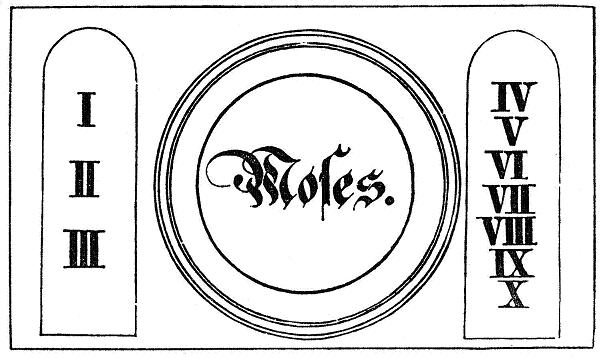
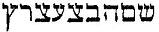 5
Tetragrammaton Chaddai, Channaniah äl Elyon,
Chaye, Ayscher, Adoyah, Zawah, Tetragrammaton,
Awiel, Adoyah, Chay, Yechal, Kanus, Emmet,
thus spake the Lord of Hosts to me Moses.
5
Tetragrammaton Chaddai, Channaniah äl Elyon,
Chaye, Ayscher, Adoyah, Zawah, Tetragrammaton,
Awiel, Adoyah, Chay, Yechal, Kanus, Emmet,
thus spake the Lord of Hosts to me Moses.


 seal is also ex Bibl. arcan. Thoro. I.
If this Seal is buried in the earth, where treasures
exist, they will come to the surface of themselves, without any
presence in plane lunio.
seal is also ex Bibl. arcan. Thoro. I.
If this Seal is buried in the earth, where treasures
exist, they will come to the surface of themselves, without any
presence in plane lunio.

 8
8
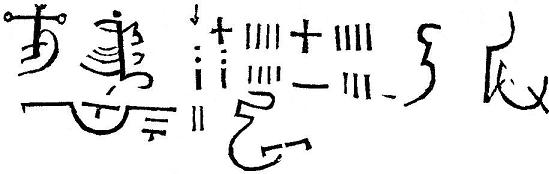
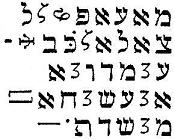
 .2 Figure 63.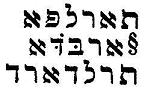
 or
or 


 ), are visible in the heavens on the day of exorcism,
either singly or together.
), are visible in the heavens on the day of exorcism,
either singly or together.